
KSI Luxembourg Hosts a Special Literary Night Featuring Han Kang's Greek Lessons
글쓴이홍보협력팀
태그
작성일 2025-02-11
조회수181

KSI Luxembourg Hosts a Special Literary
Night Featuring Han Kang's Greek Lessons
> Exploring the depth of Korean literature through Han Kang's fifth novel, Greek Lessons
> Around 20 participants discussed the novel, engaging in a unique experience of self-reflection and connection with one another
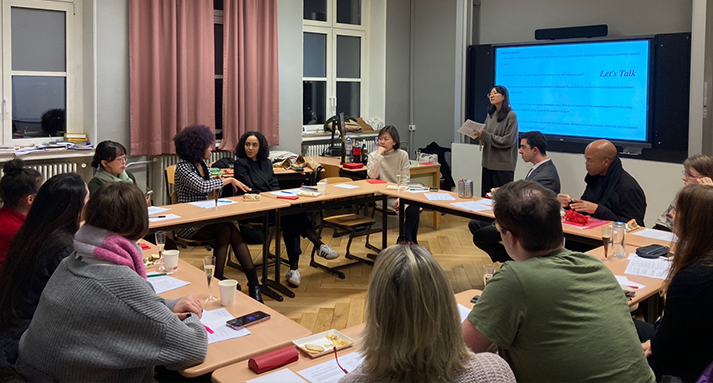
On December 13, KSI Luxembourg hosted a Korean literature book club. This gathering was particularly meaningful
as it was the first meeting held after Han Kang’s Nobel Prize in Literature win. Over the course of 2 hours and
30 minutes, approximately 20 participants came together to share their thoughts and experiences, delving into
the depth of Korean literature through Han Kang’s fifth novel, Greek Lessons.
Located in Luxembourg, a country characterized by its multicultural and multilingual environment due to its
geographical position bordering Belgium, France, and Germany, KSI Luxembourg serves as a unique bridge that
brings together people from diverse nationalities and backgrounds through Korean literature.
Han Kang’s Greek Lessons tells the story of a woman who loses her ability to speak and a man gradually losing
his sight, as they embark on a journey of mutual understanding and healing through the ancient language of
Greek. Participants explored the novel’s themes of “language and silence, loss and recovery, and the essence of
existence,” reinterpreting its messages from their individual perspectives.
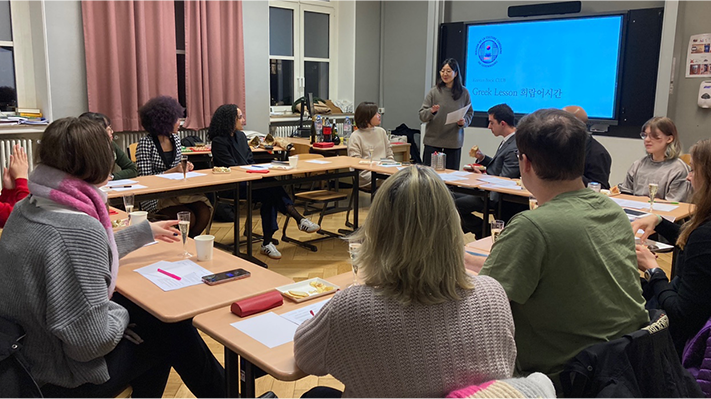 KSI Luxembourg Teacher Explaining the Main Themes of Greek Lessons and the Event Format
The session began with a large-group discussion to gain a deeper understanding of the book. Participants
explored a range of questions, from literary ones like “Which part of the novel felt most distinctly Korean to
you?” to more nuanced inquiries such as “Did Han Kang’s poetic sensibility resonate even through the translated
sentences?” Through these discussions, the group delved into the universality and uniqueness of Korean
literature. Teachers from KSI enriched the discussion by providing in-depth explanations of the novel's Korean
cultural context, aiding the participants’ understanding.
The event then transitioned into small-group discussions, where participants brought the novel’s themes into
their daily lives to foster deeper self-reflection. Each participant selected a particularly memorable passage
from the novel and shared their interpretations, revealing a variety of perspectives on the work. One
participant commented, “Learning Korean is a precious time where I can escape from everything else and focus
solely on myself. I could deeply relate to the protagonist finding refuge in learning Greek.” This participant
noted that the novel helped them rediscover the significance of learning Korean in their own life through the
lens of Korean literature.
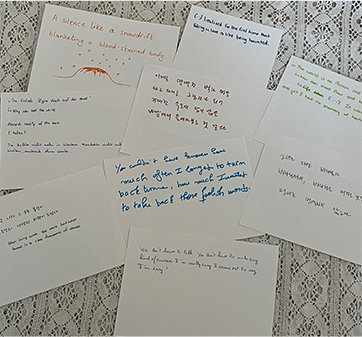
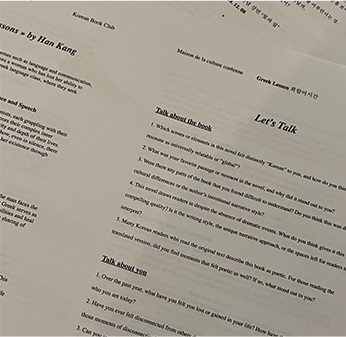
(Right Photo) A portion of the handouts distributed to participants
In the final part of the book club, participants read excerpts from Han Kang’s Nobel Prize in Literature
acceptance speech together, discussing the messages the author intended to convey. The sentence, “Isn’t it by
exploring the gentlest aspects of humanity—embracing that undeniable warmth—that we truly learn to live?” deeply
resonated with the participants.
This gathering was more than just a reading session; it was a unique experience where participants from diverse
backgrounds came together to understand and connect through Korean literature. One participant shared, “Reading
together made it much easier to understand, and it made me want to learn more about Korea. Given the depth of
the discussions, I believe we could discover even more if we revisit this book in another session,” expressing
great satisfaction.
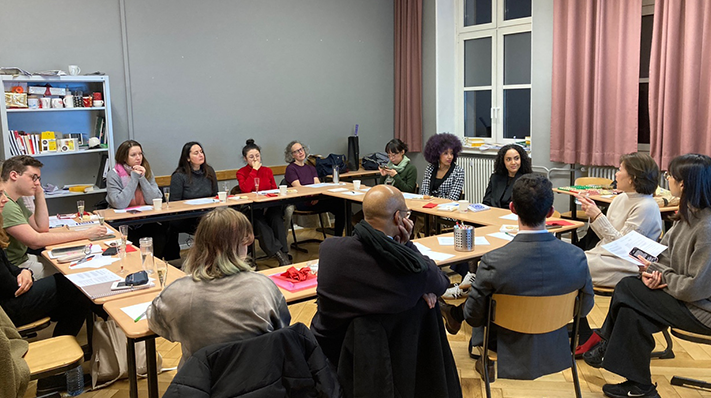 Participants sharing their interpretations of the novel's meaning during small-group discussions
Choi Jin-young, Director of KSI Luxembourg, remarked, “This Korean literature club provided students with a
meaningful opportunity to share their perspectives and emotions and to discover new insights. We aim to continue
offering rich and diverse experiences of Korean culture to the local community through the medium of Korean
literature.”
The book club participants actively discussed their suggestions for books to read at the next session. KSI
Luxembourg plans to continue holding monthly book clubs, offering participants opportunities to connect life and
literature and experience new learning through Korean literature and culture.
Article by Lee bo-hyun, correspondent at the KSI Luxembourg