Adding Tradition to K-Pop Meet Le Thi Quynh Nhu, Grand Prize Winner in the Vietnam Region of the 2026 KSI Korean Culture Contest
글쓴이홍보협력팀
태그
작성일 2026-09-18
조회수89

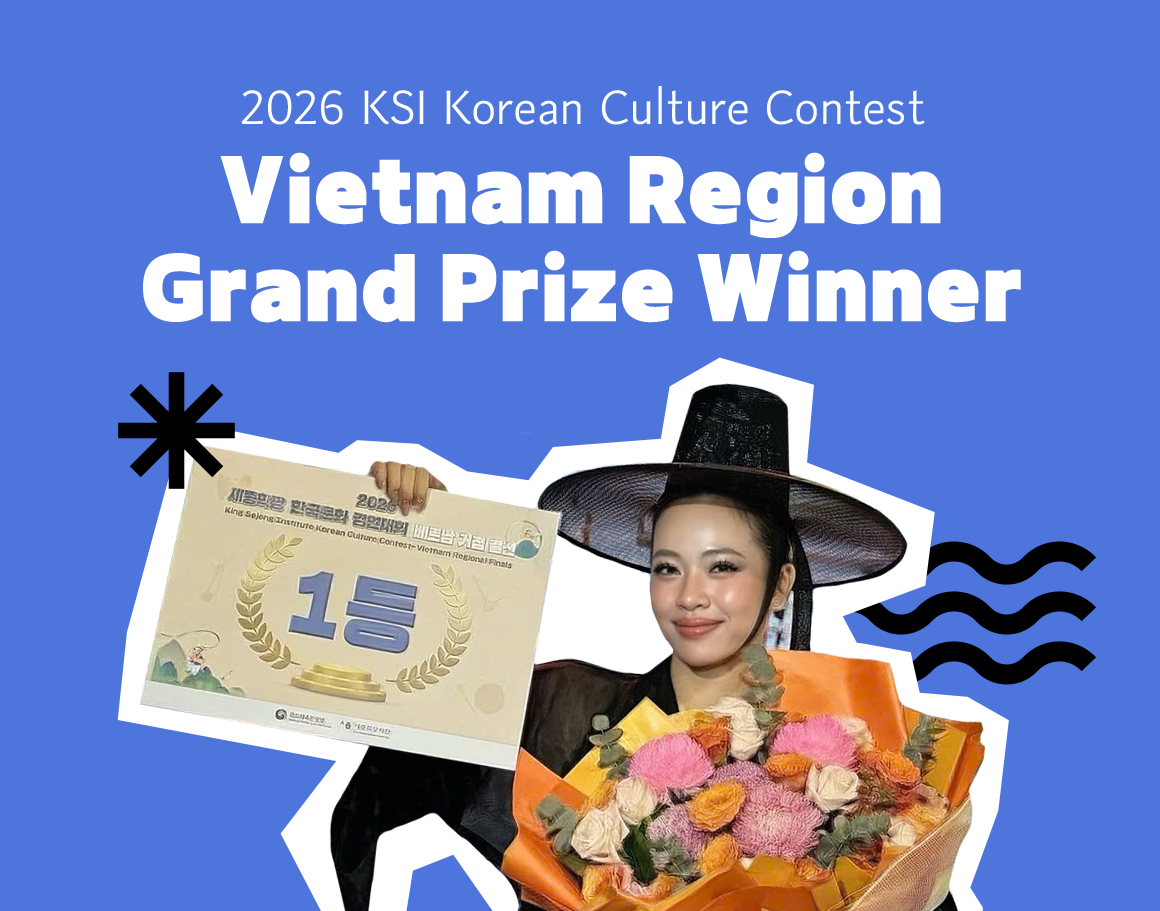
Adding Tradition to K-Pop
Meet Le Thi Quynh Nhu, Grand Prize Winner in the Vietnam Region
of the 2026 KSI Korean Culture Contest
of the 2026 KSI Korean Culture Contest
The King Sejong Institute Foundation (KSIF) held the 2026 KSI Korean Culture Contest for the first time this year, giving KSI learners around the world an opportunity to the skills and passion they have developed through learning about Korean culture. The contest was held in three categories: K-pop dance, traditional music, and traditional dance. Applications were accepted until July 12 from individual KSI learners or clubs of up to 10 learners from the same institute.
Taking into account the different circumstances of KSIs around the world, the contest was divided into the general region and the Vietnam region, with preliminary and final rounds held online for the general region and in person for the Vietnam region. A total of 15 teams that passed the preliminary round took the stage at the Vietnam regional final on August 22. Among nine K-pop dance teams, four traditional music teams, and two traditional dance teams, the Grand Prize (KSIF Chairperson Award) went to learner Le Thi Quynh Nhu of KSI Hanoi 3, Vietnam. Le Thi Quynh Nhu performed an original solo choreography set to K-pop music, pairing it with a costume she designed herself to create a performance that brought tradition and modernity together. Monthly Knock-Knock spoke with Le, who works as a choreographer and dance instructor and dreams of becoming a cultural creator connecting Korea and Vietnam.
Taking into account the different circumstances of KSIs around the world, the contest was divided into the general region and the Vietnam region, with preliminary and final rounds held online for the general region and in person for the Vietnam region. A total of 15 teams that passed the preliminary round took the stage at the Vietnam regional final on August 22. Among nine K-pop dance teams, four traditional music teams, and two traditional dance teams, the Grand Prize (KSIF Chairperson Award) went to learner Le Thi Quynh Nhu of KSI Hanoi 3, Vietnam. Le Thi Quynh Nhu performed an original solo choreography set to K-pop music, pairing it with a costume she designed herself to create a performance that brought tradition and modernity together. Monthly Knock-Knock spoke with Le, who works as a choreographer and dance instructor and dreams of becoming a cultural creator connecting Korea and Vietnam.
Shall We Watch Le Thi Quynh Nhu’s Performance?

※ Click the image to open YouTube.
Q. Hello, and congratulations on winning an award at the 2026 KSI Korean Culture Contest. Please introduce yourself and share how you feel about winning.
A. Hello. My name is Le Thi Quynh Nhu. I work as a choreographer and dance instructor in Vietnam, and I am also learning the Korean language and Korean culture at a King Sejong Institute. It is truly an honor, and it feels like a dream, to receive such a major award at the 2026 KSI Korean Culture Contest. I would like to sincerely thank the judges who appreciated the choreography and performance I prepared amid such intense competition, as well as everyone who cheered me on.
Q. Please introduce the King Sejong Institute you attended. What moment at the institute remains most memorable to you?
A. KSI Hanoi 3, Vietnam, where I studied, is more than a place to learn Korean. It is a place that inspired me to better understand the many charms of Korean culture. What I remember most are the moments when I talked with my teachers and classmates about Korean culture and K-pop, sharing our passion with one another. The learning and experiences I gained at KSI became a solid foundation for planning the choreography and costume for this performance.
Q. What motivated you to participate in the 2026 KSI Korean Culture Contest?
A. As a choreographer and dance instructor, K-pop dance is both the language I am most familiar with and one I love deeply. I wanted to go beyond simply dancing and bring together, on one stage, my understanding of Korean culture gained through KSI, my own choreography style, and a costume I designed myself. I decided to take on this contest because I wanted to express the appeal of Korean culture through a single performance in which dance and costume came together.
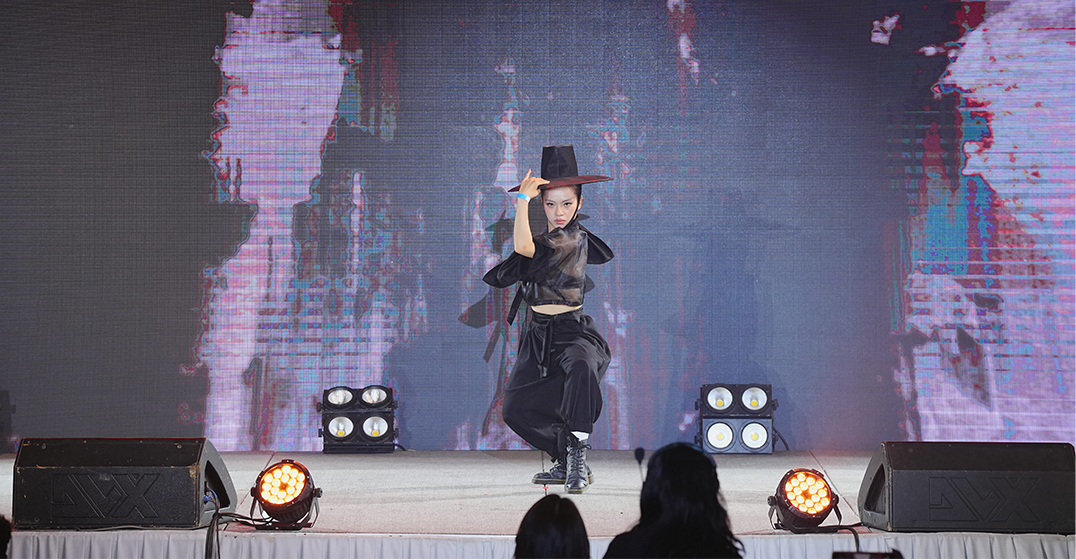
Learner Le Thi Quynh Nhu delivering a powerful performance to “BAD”
Q. Please tell us about the performance you presented at the contest. Was there a special reason you chose or planned this performance?
A. I presented an original solo choreography to ATEEZ’s “BAD,” which was released in June. I designed the choreography to highlight the song’s powerful beat and energy while creating a contrast between delicate emotional lines and dynamic movements. In particular, I thought the song matched the Jazz Funk style that I can express with the greatest confidence, and that it would allow me to show my strengths as both a choreographer and a dancer.
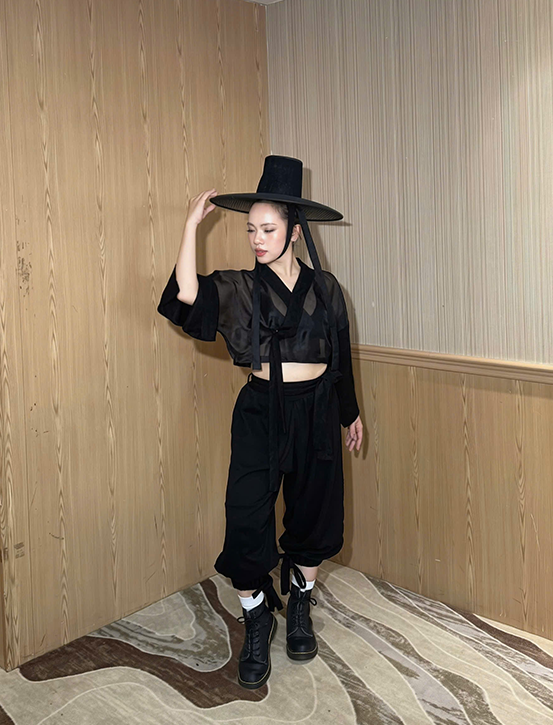
Learner Le Thi Quynh Nhu wearing the stage costume she designed herself
Q. Was there a particular appeal of Korean culture that you wanted to express in your own way while preparing for the contest?
A. One of the elements I focused on most for this contest was the stage costume I designed myself. I envisioned a costume that would harmonize modern sensibility with the traditional beauty of Korea. Through it, I wanted to convey the message that no matter how much the times change and evolve, the value and beauty of tradition never disappear. By adding a costume with traditional elements to a modern K-pop choreography, I hoped to express the charm of Korean culture through my own sensibility.
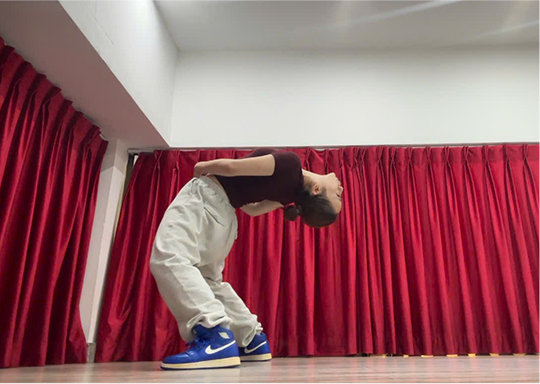
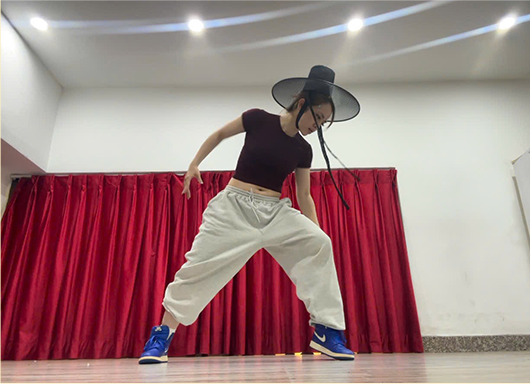
Learner Le Thi Quynh Nhu focusing on choreography practice ahead of the final round
Q. What was the most difficult part of preparing for the contest, and how did you overcome it?
A. Because it was a solo performance, the greatest pressure came from having to fill the entire stage on my own. It was also a demanding challenge in terms of time and physical stamina because I had to create the choreography while also designing and making the costume myself. Still, I wanted to fully realize the idea of “the harmony of tradition and modernity” on stage. By practicing the choreography every day and checking the costume repeatedly, I improved the performance little by little and polished it to a higher level.
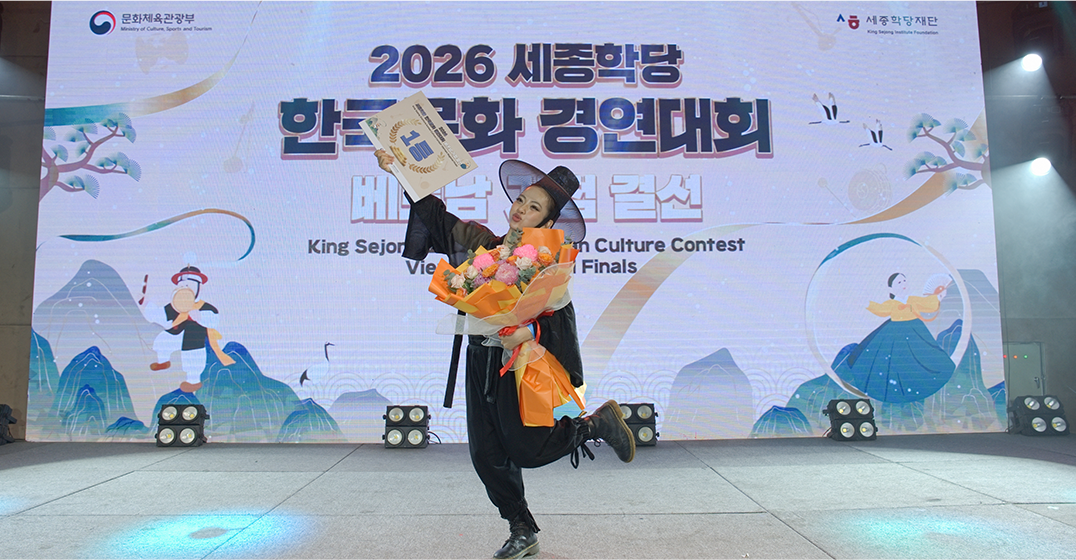
Learner Le Thi Quynh Nhu posing for a commemorative photo after winning the Grand Prize
Q. Are there any areas of Korean culture you would like to learn more about or challenge yourself with in the future? We are also curious whether this experience has given you any new goals or plans.
A. In the future, I would like to learn more deeply not only about Korean traditional dance, but also about modern costume design that uses hanbok and traditional patterns. Through this experience, my goal of growing into a comprehensive cultural creator who brings together K-pop choreography, costume design, and the Korean language has become even clearer. I hope to express what I have learned through creative performances and contribute to cultural exchange between Korea and Vietnam.
Q. Lastly, is there anything you would like to say to KSI learners around the world who are studying Korean language and Korean culture?
A. The journey of learning Korean language and Korean culture opens up a wide stage where you can freely express your passion and creativity. Deeply understand tradition, add your own modern sensibility to it, and create your own story. If you learn with sincerity and enjoy taking on challenges, you will surely achieve shining results. Keep going, everyone!