Online and Offline Practical Training Held for 2026 Newly Designated KSI Operating Institutions
글쓴이홍보협력팀
태그
작성일 2026-09-18
조회수111

Online and Offline Practical Training Held for
2026 Newly Designated KSI Operating Institutions
2026 Newly Designated KSI Operating Institutions
> Supporting the stable pilot operation of new KSIs and strengthening practical capabilities in the field
> From guidance on operation procedures and training on operation plans and budget plans to Q&A sessions and one-on-one consultations
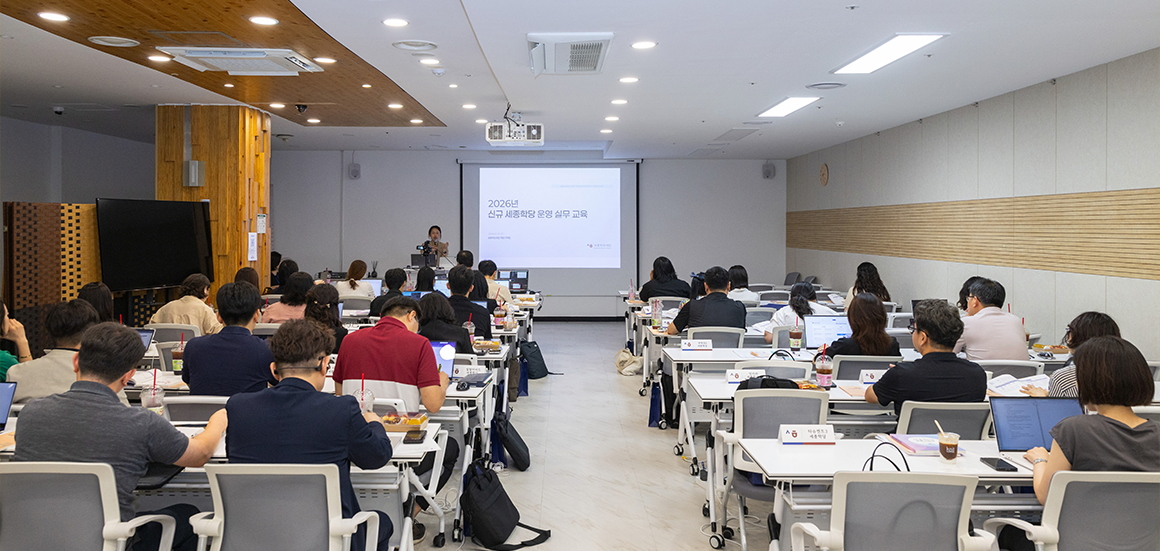
The King Sejong Institute Foundation (KSIF) held training for 2026 newly designated KSI operating institutions on Wednesday, August 12, at SpaceShare Seoul Station Center 3 in Jung-gu, Seoul. The training was designed to help Korea-based and local overseas operators of newly designated KSIs learn the practical knowledge needed to operate a KSI and prepare for stable pilot operation. Earlier, the KSIF formed a KSI designation review committee composed of experts from fields such as Korean language education and international cultural exchange. After comprehensively reviewing applicant institutions’ operational capacity, educational environments, and local demand for Korean language education, the KSIF designated 29 new KSIs in 23 countries on June 30.
The training was held in a hybrid format, with Korea-based KSI representatives attending onsite and overseas representatives joining online. Recorded videos were also provided separately for operating staff who had difficulty participating because of time differences or institute operating schedules.
The training was held in a hybrid format, with Korea-based KSI representatives attending onsite and overseas representatives joining online. Recorded videos were also provided separately for operating staff who had difficulty participating because of time differences or institute operating schedules.
◇ Practical Training Ready to Apply in the Field, from Operational Procedures to Budgeting
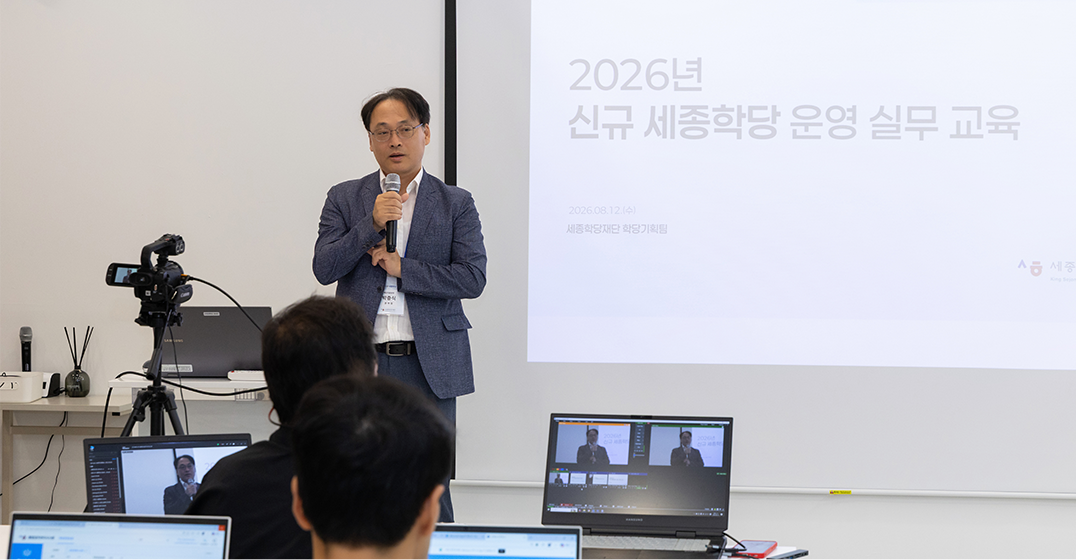
Park Chung-sik, Head of the KSI Support Headquarters, delivering opening remarks before the training began
The training began with opening remarks and schedule guidance from Park Chung-sik, Head of the KSI Support Headquarters. It then continued with practical, operations-focused sessions covering topics necessary for KSI management, including new KSI operation procedures and guidelines, how to prepare an operation plan, key points to note when budgeting and executing budgets, management of dispatched teachers’ service duties, and how to use the Integrated Work Management System (NBMS).
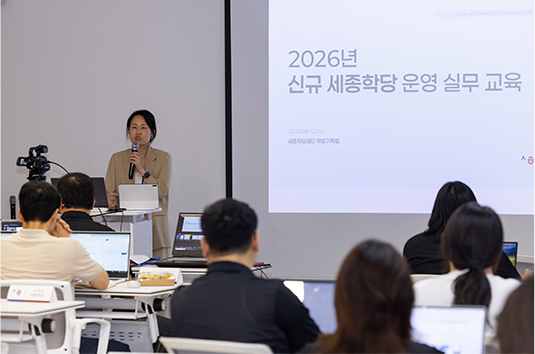
Ahn Hye-shin, Team Leader of the Institute Planning Team, explaining KSI operation procedures and
guidelines
guidelines
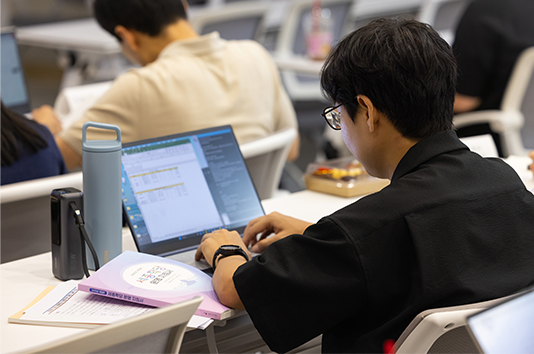
A participant attending the practical training
After each session, Q&A time was provided so staff from newly designated operating institutions could ask KSIF staff directly about points they were curious about while preparing for actual work. Onsite participants were able to clarify questions related to preparing operation plans and budget plans, and through one-on-one consultations with staff members, they received explanations tailored to each institution’s circumstances. Overseas local operators also took part in the training in real time through a videoconferencing platform.
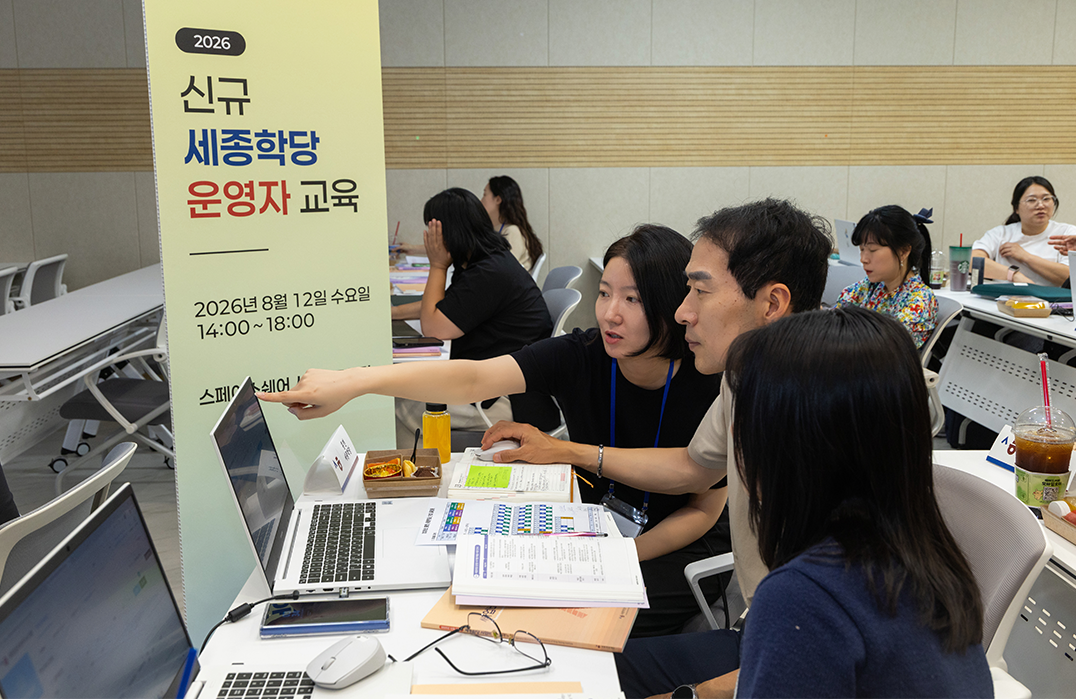
Participants carrying out hands-on practice with support from KSIF staff
“Although I was excited to be designated as a new KSI, some of the detailed work still felt unclear. Hearing the overall explanation onsite today and taking part in one-on-one consultations helped ease many of my concerns.”
- Shim Ji-young, Korea-based operating institution representative for KSI Macao, China
“It was helpful to review the manuals needed for practical work and ask KSIF staff questions directly. I hope there will be more opportunities to continue communicating by sharing experiences and information with one another.”
- Lee Jung-min, Korea-based operating institution representative for KSI Rize, Turkiye
Through this training, operators of new KSIs gained an understanding of the overall flow of institute operations and learned in detail the practical matters needed for pilot operation. The KSIF will continue to support the 29 newly launched KSIs, including the KSI Chile Center, so that they can operate stably in line with local demand for Korean language and Korean culture learning.