Immersed in Traditional Korean Rhythms Discovering the Appeal of Gugak in Montreal
글쓴이홍보협력팀
태그
작성일 2026-09-18
조회수66

Immersed in Traditional Korean Rhythms
Discovering the Appeal of Gugak in Montreal
Discovering the Appeal of Gugak in Montreal
> Participants experienced piri, haegeum, pansori, and samulnori firsthand, learning the rhythms and melodies of traditional Korean music
> Interest in gugak expanded into Korean language learning and cultural exchange
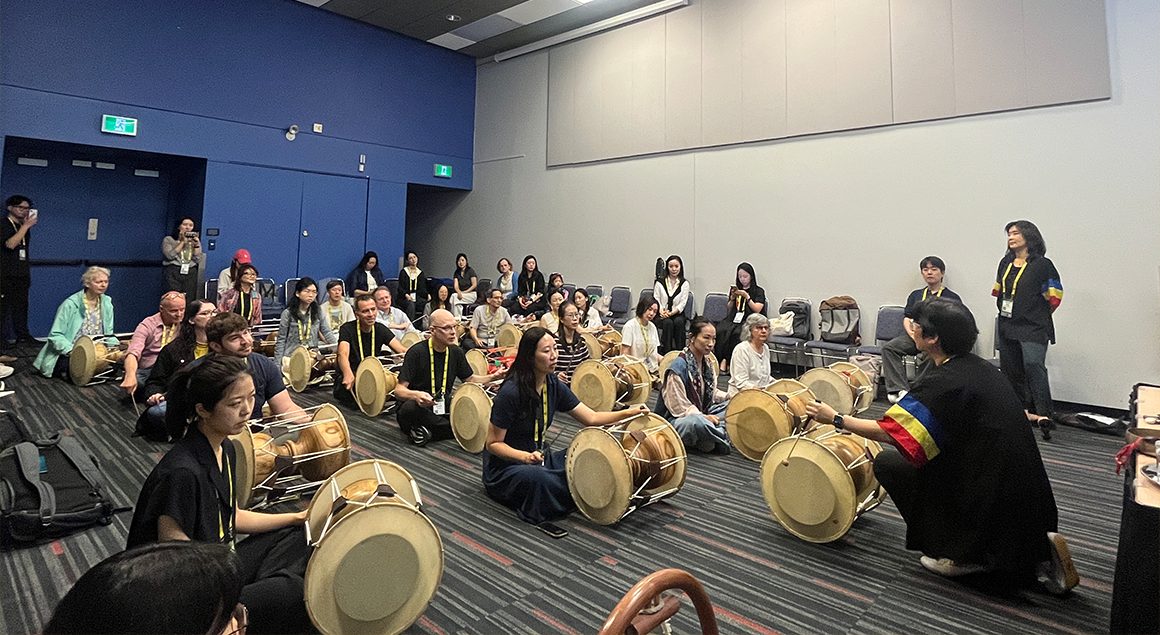
From July 27 to 31, the 2026 International Society for Music Education (ISME) Conference was held in Montreal, Canada. The conference featured sessions and workshops on gugak, introducing traditional Korean music to music education professionals from around the world. In connection with the conference, KSI Montreal, Canada, operated a traditional Korean music workshop over two days, on July 27 and 28.
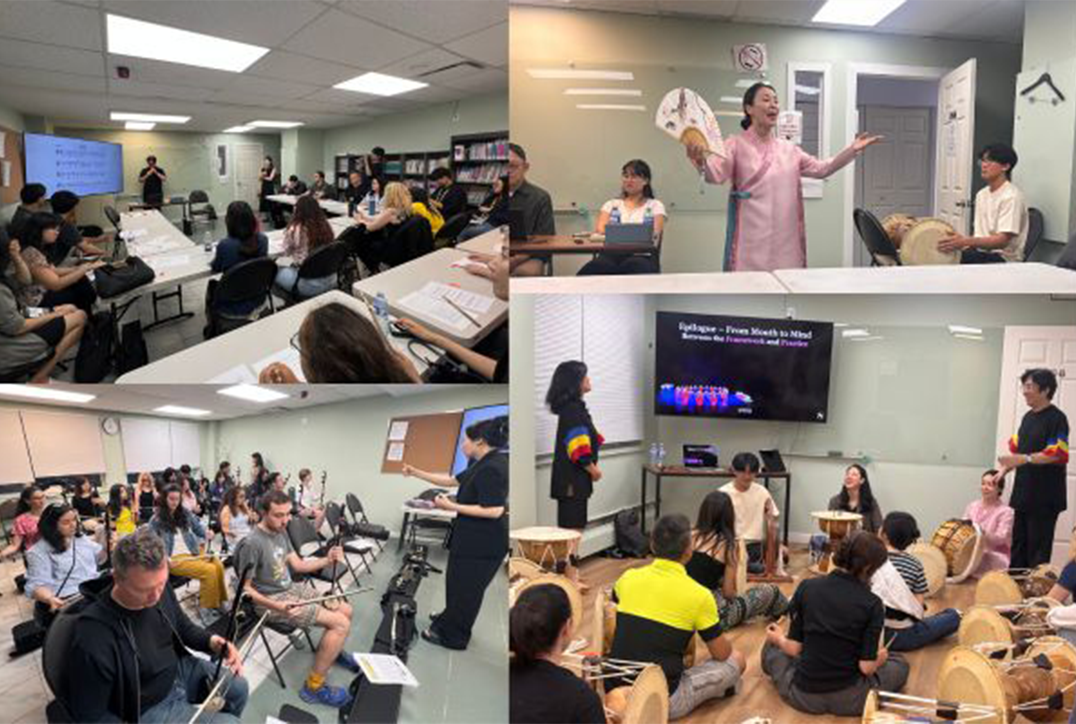
Scenes from piri, haegeum, pansori, and samulnori classes held during the traditional Korean music workshop
Professor Kim Kyung-tae, who participated as a featured presenter at the ISME Conference, and researchers from the Korean Music Education Research Institute (Ipson Lab) served as instructors and introduced piri, haegeum, pansori, samulnori, and other elements of Korean music. Participants did more than simply watch performances; they experienced traditional Korean music firsthand by learning its rhythms and melodies firsthand.
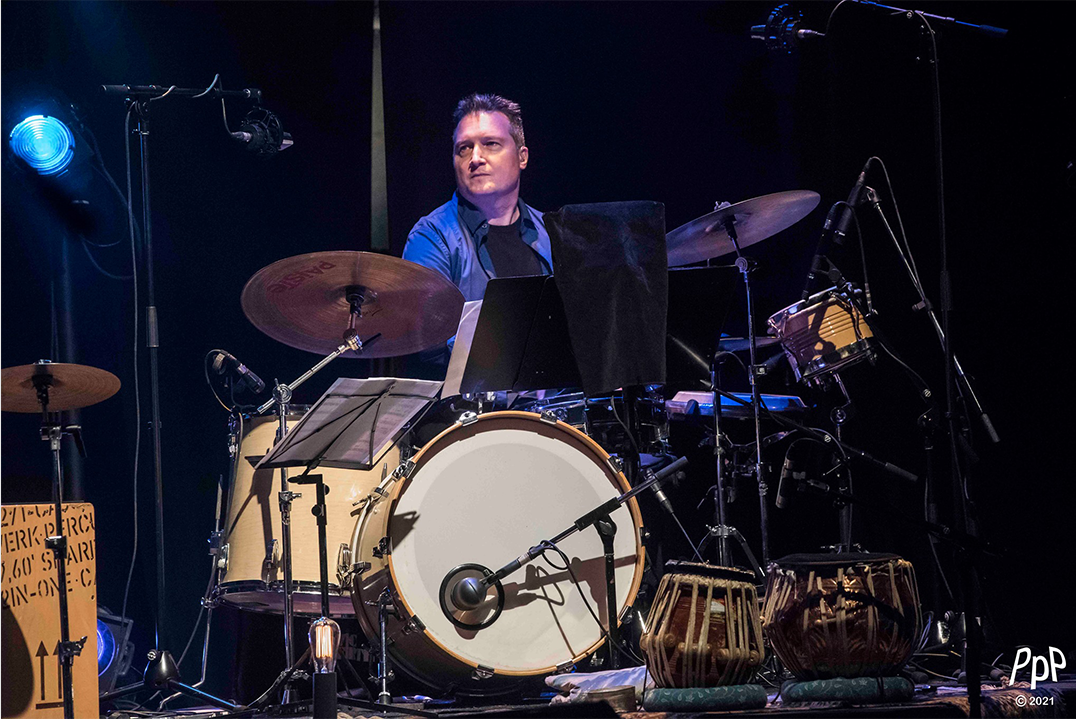
Bertil Schulrabe performing on drums
The workshop also drew local musicians interested in traditional Korean music. Among them was local percussionist Bertil Schulrabe. He first became interested in traditional Korean rhythms while visiting Seoul, where he learned janggu to the melody of piri from Song Min-seop, a composer and gugak musician.
“After learning janggu to the melody of piri from Mr. Song Min-seop in Seoul, I was captivated by the deep and powerful appeal of Korean rhythms. This workshop has strengthened my desire to study janggu in earnest,” said Bertil Schulrabe. “My goal is to incorporate traditional Korean music into my own musical world through collaboration with Korean musicians. I would also like to explore fusion with Indigenous/Ethno Music, which seeks to combine primal sounds and traditional vocal techniques rather than Western classical or modern pop, and to actively introduce traditional Korean music at Asian arts festivals.”
“After learning janggu to the melody of piri from Mr. Song Min-seop in Seoul, I was captivated by the deep and powerful appeal of Korean rhythms. This workshop has strengthened my desire to study janggu in earnest,” said Bertil Schulrabe. “My goal is to incorporate traditional Korean music into my own musical world through collaboration with Korean musicians. I would also like to explore fusion with Indigenous/Ethno Music, which seeks to combine primal sounds and traditional vocal techniques rather than Western classical or modern pop, and to actively introduce traditional Korean music at Asian arts festivals.”
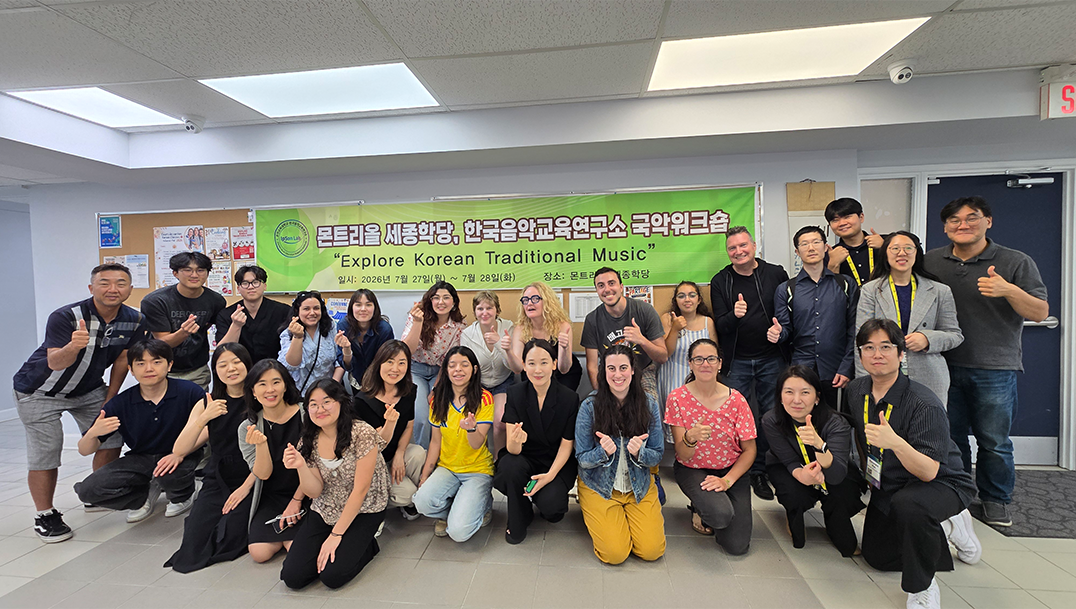
Commemorative photo of members of the Korean Music Education Research Institute and
KSI learners after the workshop
KSI learners after the workshop
For KSI learners who experienced traditional Korean music firsthand, the workshop served as an opportunity to take another step closer to Korean culture. Learner Aurélie Delimal said, “As I came to understand how important rhythm is in traditional Korean music, I became more passionate about learning pansori and Korean.”
Local artists discovered possibilities for incorporating the rhythms and melodies of gugak into their own music, while KSI learners broadened their interest in traditional music into pansori and Korean language learning. By listening to and playing gugak firsthand, participants gained a deeper understanding of Korean language and culture.
Local artists discovered possibilities for incorporating the rhythms and melodies of gugak into their own music, while KSI learners broadened their interest in traditional music into pansori and Korean language learning. By listening to and playing gugak firsthand, participants gained a deeper understanding of Korean language and culture.
Article by Ma Hyun-joo, Correspondent at KSI Montreal, Canada