“We Want to Operate a KSI Too!”… A Record-Breaking Year for New KSI Designations
글쓴이홍보협력팀
태그
작성일 2026-07-24
조회수78

“We Want to Operate a KSI Too!”…
A Record-Breaking Year for New KSI Designations
> 102 institutions in 45 countries apply, marking the highest number of applications and new designations in the past five years
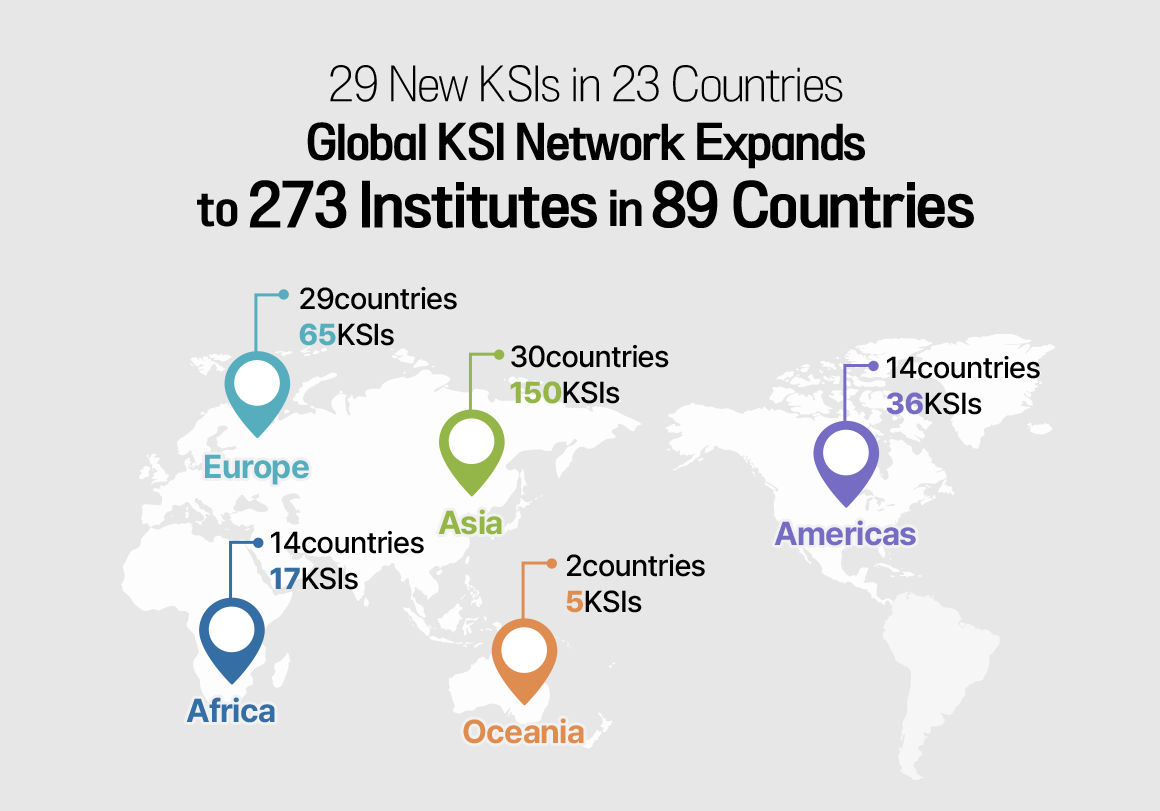
> First KSIs open in Greece, Rwanda, and Sri Lanka, expanding global KSI network to 273 institutes in 89 countries
> Newly designated KSIs, selected through a 3.6-to-1 competition ratio, will begin Korean language education in the second half of the year
The global interest in Korean language learning continues to rise. Last year, the number of King Sejong Institute (KSI) learners surpassed 230,000, with both online and in-person programs showing steady growth. As the demand surges, the KSIF is expanding its educational foundation to ensure more regions have access to Korean language and culture.
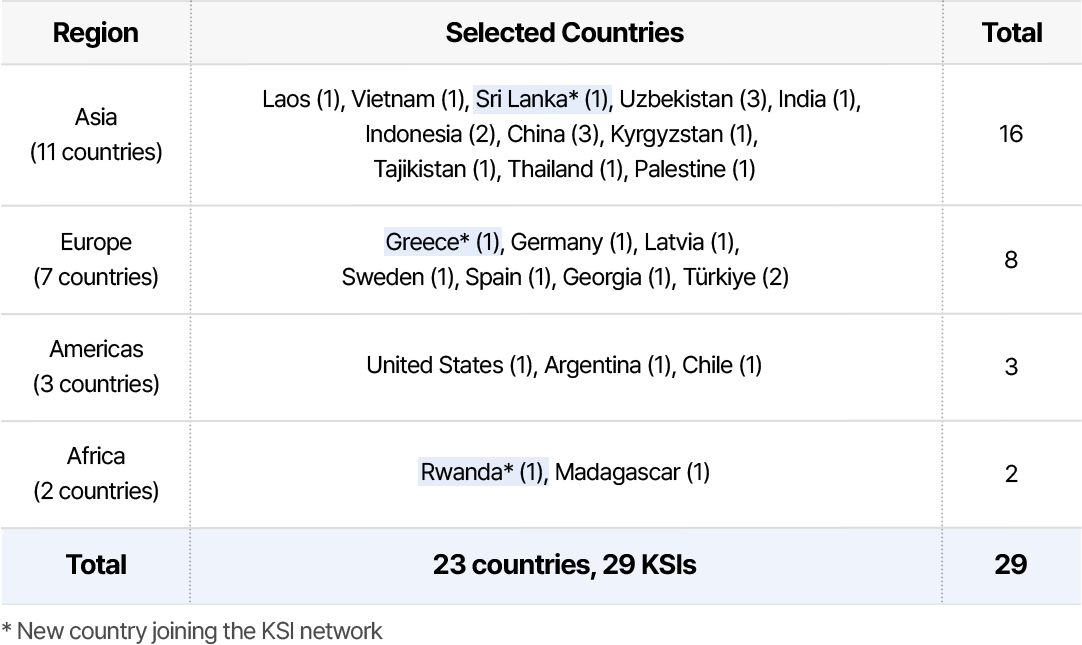
On June 29, the King Sejong Institute Foundation (KSIF) and the Ministry of Culture, Sports and Tourism (MCST) announced the results of the 2026 new KSI designation process. 29 new KSIs in 23 countries were designated this year, bringing the global KSI network to 273 institutes across 89 countries.
On June 29, the King Sejong Institute Foundation (KSIF) and the Ministry of Culture, Sports and Tourism (MCST) announced the results of the 2026 new KSI designation process. 29 new KSIs in 23 countries were designated this year, bringing the global KSI network to 273 institutes across 89 countries.
2026 New KSI Designation Results
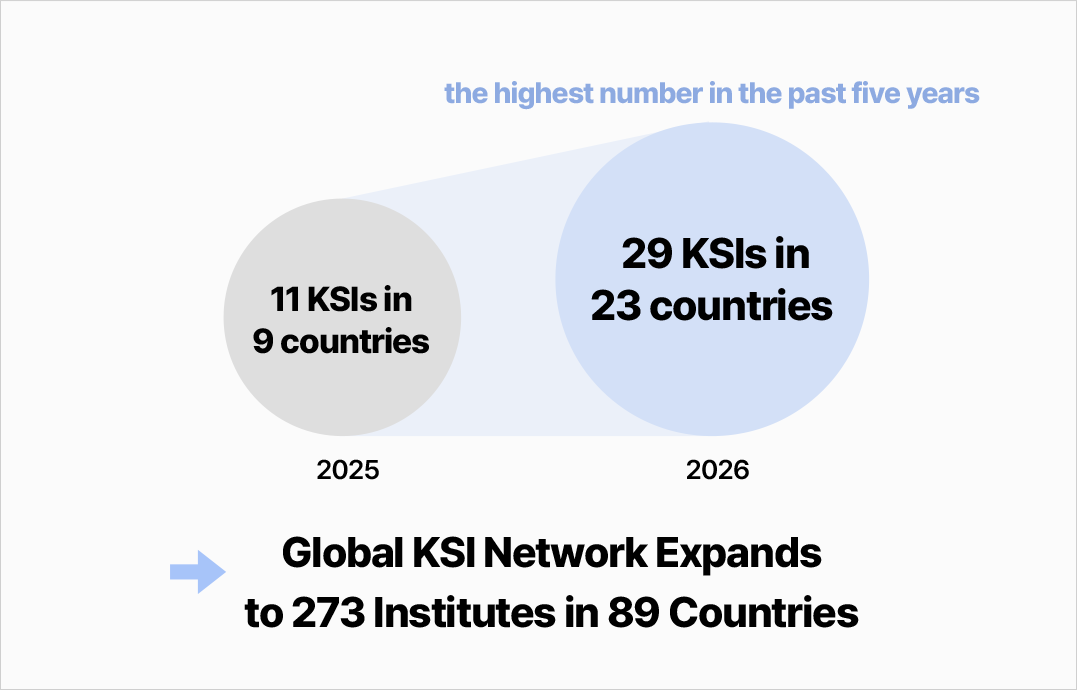
This year"s call for applications attracted 102 institutions from 45 countries, resulting in a competition ratio of 3.6 to 1. This marks the largest volume of applications in the past five years, reflecting the growing demand for Korean language learning and the rising interest in operating KSIs around the world.
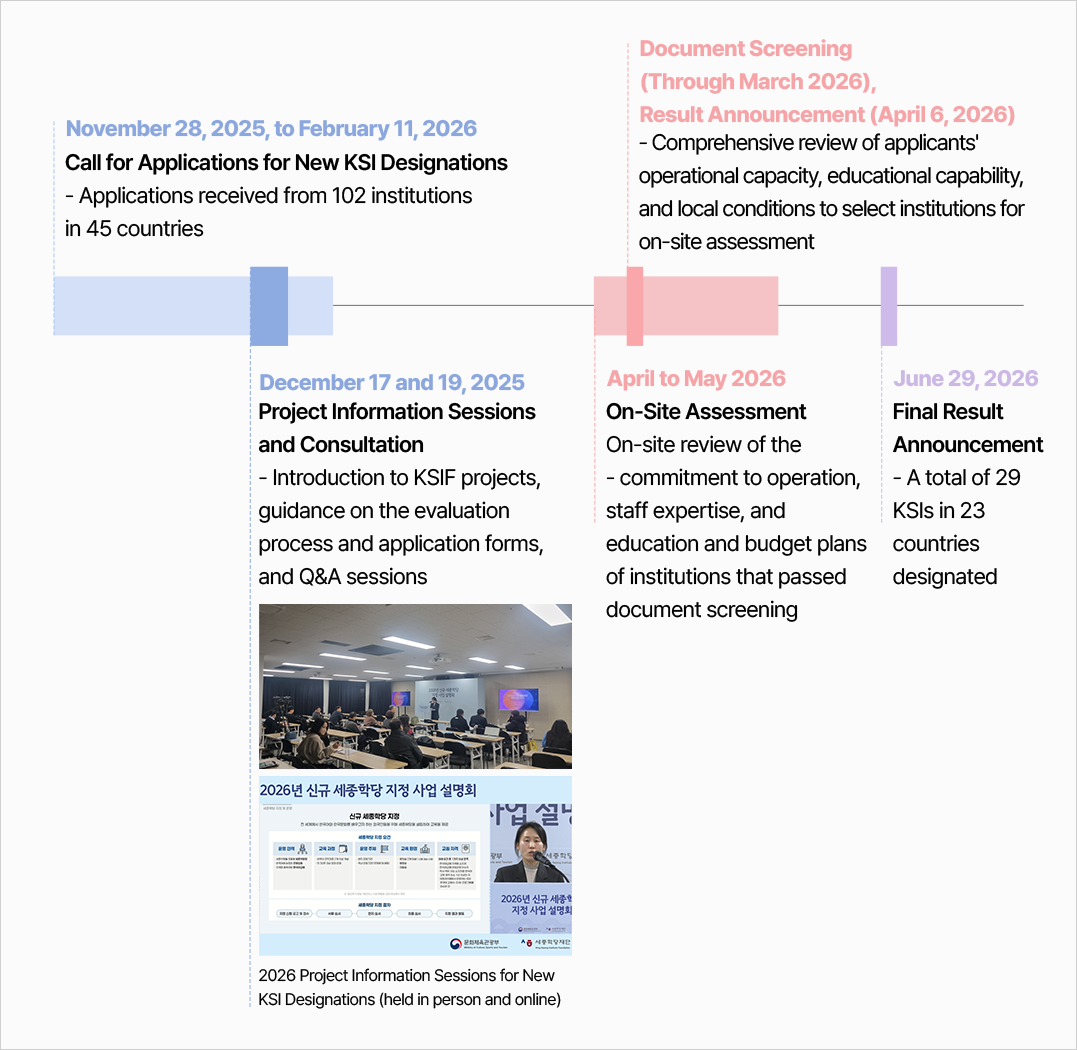
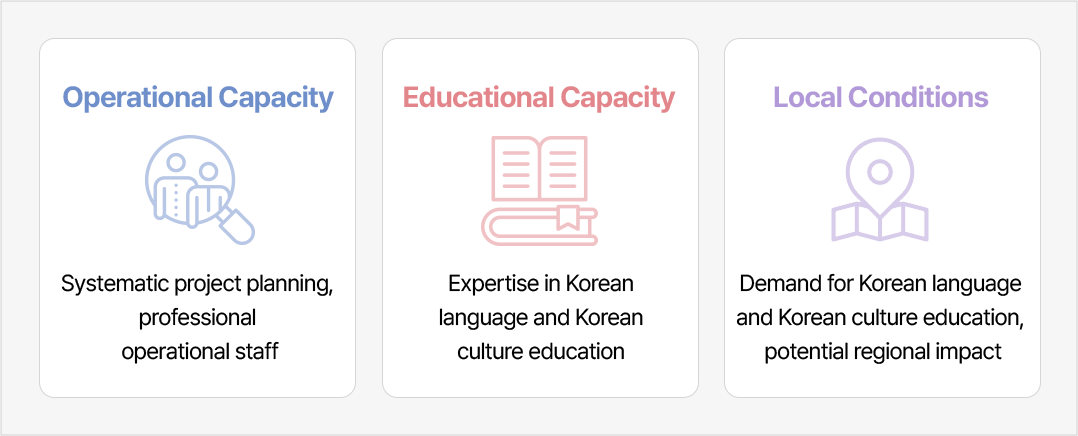
The designation process went beyond a simple open call. The KSIF conducted a comprehensive evaluation, reviewing local demand for Korean language education, educational conditions, and the operational capacity of each institution. After the call for applications began in November last year, project information sessions, document screening, on-site assessments, and a final review were carried out to select the new operating institutions.
The designation process went beyond a simple open call. The KSIF conducted a comprehensive evaluation, reviewing local demand for Korean language education, educational conditions, and the operational capacity of each institution. After the call for applications began in November last year, project information sessions, document screening, on-site assessments, and a final review were carried out to select the new operating institutions.
Inside the 2026 New KSI Designation Process
Document Screening Criteria
◇ First KSI Designations in Greece, Rwanda, and Sri Lanka
This year marks the first time that KSIs have been designated in Greece, Rwanda, and Sri Lanka. With new foundations for Korean language and Korean culture education established in these countries, local learners will have more systematic opportunities to study Korean and experience Korean culture.
Aristotle University of Thessaloniki, Greece"s largest university, will operate a KSI in partnership with Hankuk University of Foreign Studies. There is a high demand for foreign language learning among Greek youth and university students. The “Korea Week” events have also been held in Greece annually since 2014, reflecting the steady popularity of Hallyu.
Until now, however, the country lacked an official educational institution for systematic Korean language learning. In a local university-led survey, 790 students responded that they wanted to learn Korean. The new KSI designation, therefore, is expected to significantly reinforce Korean language and Korean culture education in the country.
Interest in Korean language and culture has also been steadily growing in Rwanda. Korean cultural events have attracted around 1,000 participants, demonstrating ongoing enthusiasm for Hallyu, yet there has been a lack of institutions specializing in Korean language education.
Through this new designation, the International Covenant College University, in partnership with the Embassy of the Republic of Korea in Rwanda, will now provide learners in the African region with more systematic opportunities to study Korean language and culture.
In Sri Lanka, an Employment Permit System(EPS)sending country, demand for study and employment in Korea remains consistently high. Interest in Korean language education, in particular, has been rising among local residents and university students in Matara, an emerging tourism destination in the south.
As the University of Ruhuna and Dongwon Institute of Science and Technology begin jointly operating a KSI this year, local learners are expected to gain access to a diverse range of courses, including TOPIK preparation, Korean for travel, and business Korean, tailored to their specific career goals and learning needs.
Until now, however, the country lacked an official educational institution for systematic Korean language learning. In a local university-led survey, 790 students responded that they wanted to learn Korean. The new KSI designation, therefore, is expected to significantly reinforce Korean language and Korean culture education in the country.
Interest in Korean language and culture has also been steadily growing in Rwanda. Korean cultural events have attracted around 1,000 participants, demonstrating ongoing enthusiasm for Hallyu, yet there has been a lack of institutions specializing in Korean language education.
Through this new designation, the International Covenant College University, in partnership with the Embassy of the Republic of Korea in Rwanda, will now provide learners in the African region with more systematic opportunities to study Korean language and culture.
In Sri Lanka, an Employment Permit System(EPS)sending country, demand for study and employment in Korea remains consistently high. Interest in Korean language education, in particular, has been rising among local residents and university students in Matara, an emerging tourism destination in the south.
As the University of Ruhuna and Dongwon Institute of Science and Technology begin jointly operating a KSI this year, local learners are expected to gain access to a diverse range of courses, including TOPIK preparation, Korean for travel, and business Korean, tailored to their specific career goals and learning needs.
List of KSIs Newly Designated in 2026
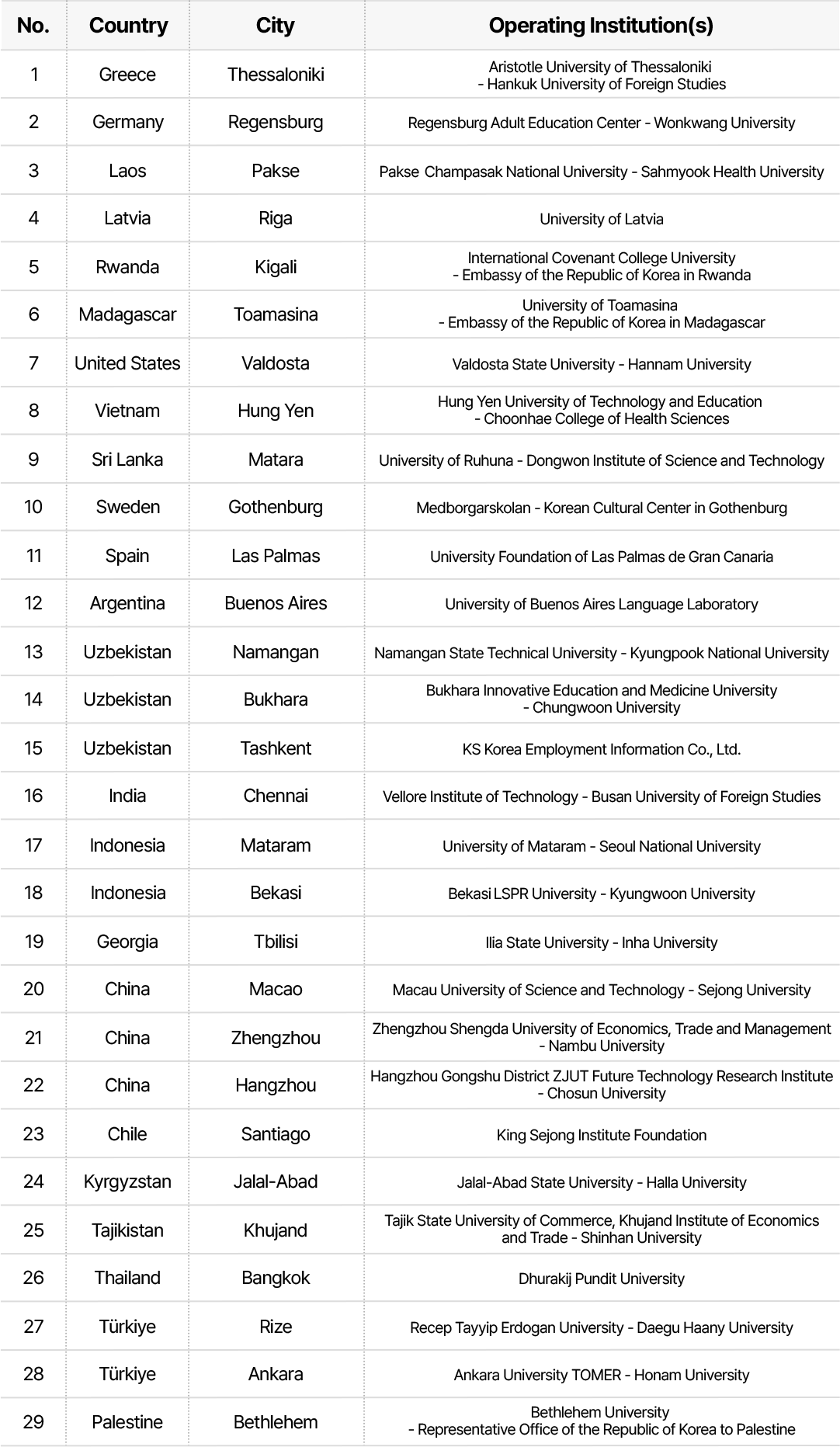
◇ 19 Korean Universities, Including SNU, to Operate KSIs
Another notable feature of this year"s designations is the expanded participation of Korean universities. 19 Korean universities, including Seoul National University, will operate KSIs in partnership with local educational institutions this year; notably, nine of these are first-time participants in the KSI program.
With this increased participation of major Korean universities, KSIs are expected to further strengthen their expertise and operational capacity in Korean language and culture education. The new partnerships will also provide local learners with more systematic educational opportunities while facilitating cooperation between Korean universities and overseas educational institutions.
These new designations hold profound significance as they further strengthen the foundation for Korean language learning in response to growing global demand. The KSIF will continue to expand educational opportunities, ensuring that learners in more regions gain access to Korean language and culture through KSIs.
With this increased participation of major Korean universities, KSIs are expected to further strengthen their expertise and operational capacity in Korean language and culture education. The new partnerships will also provide local learners with more systematic educational opportunities while facilitating cooperation between Korean universities and overseas educational institutions.
These new designations hold profound significance as they further strengthen the foundation for Korean language learning in response to growing global demand. The KSIF will continue to expand educational opportunities, ensuring that learners in more regions gain access to Korean language and culture through KSIs.