KSI Korean Cultural Center, Egypt, Showcases the Flavors of Jeonbuk with K-Food Academy
글쓴이홍보협력팀
태그
작성일 2026-07-24
조회수54

KSI Korean Cultural Center, Egypt,
Showcases the Flavors of Jeonbuk with K-Food Academy
Showcases the Flavors of Jeonbuk with K-Food Academy
> Famous Jeonbuk ingredients and dishes showcased at K-Food Academy
> Participants explored Korean food culture and lifestyle through hansik
The KSI Korean Cultural Center, Egypt, hosted the “2026 K-Food Academy” from May 17 to 21, providing hands-on opportunities to experience Korean food culture and the regional flavors of Jeonbuk. Throughout this special five-day event, participants made and tasted Korean dishes, exploring the philosophy behind hansik (Korean food) and the Korean lifestyle.
The event was jointly organized by the Jeonbuk State Culture and Tourism Foundation, Jeonju University, the Jeonju University RISE Project Group, and the K-Food Industry Research Institute. Designed to enhance the understanding of Korean food culture and promote cultural exchange between Korea and Egypt, the program highlighted the distinct culinary traditions and dishes of the Jeonbuk region.
The event was jointly organized by the Jeonbuk State Culture and Tourism Foundation, Jeonju University, the Jeonju University RISE Project Group, and the K-Food Industry Research Institute. Designed to enhance the understanding of Korean food culture and promote cultural exchange between Korea and Egypt, the program highlighted the distinct culinary traditions and dishes of the Jeonbuk region.
◇ From Fermented Foods to Obangsaek: Stories Embedded in Hansik
The event kicked off with a promotional video showcasing Jeonbuk State, followed by an overview of the academy program, which featured diverse sessions covering healthy foods, fermented foods, royal court dishes, street food, and a professional course.
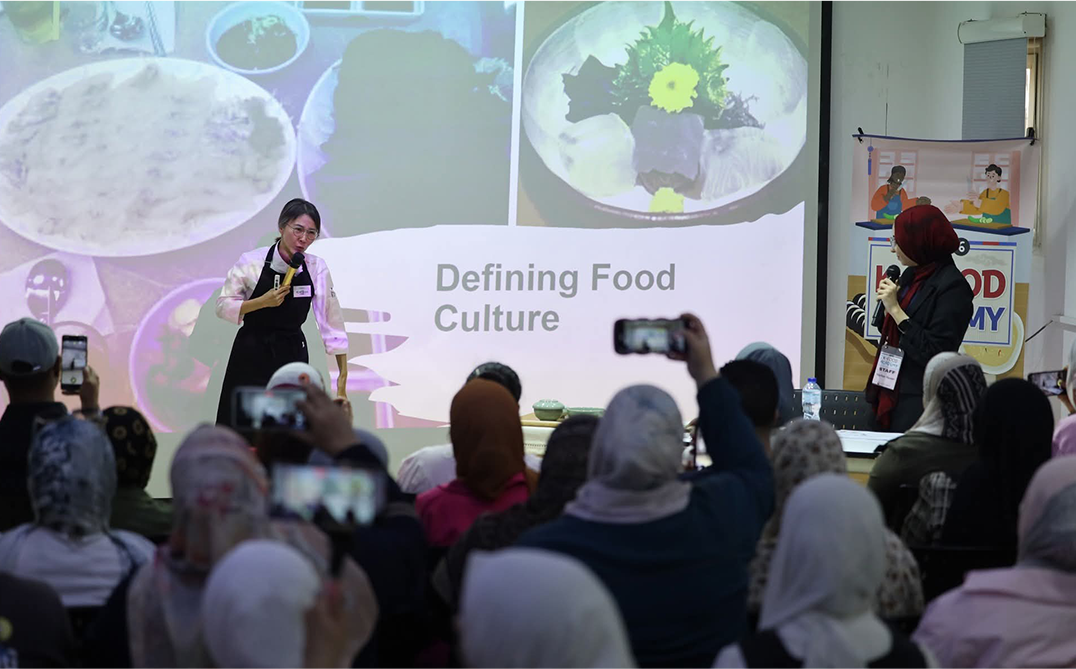
Professor Kim Su-in delivering a lecture on “The Wisdom Inside Korean Food Culture” at the opening ceremony
After the opening, Professor Kim Su-in of Jeonju University delivered a special lecture on “The Wisdom Inside Korean Food Culture,” which explored the history and philosophy of Korean cuisine, the significance of seasonal and fermented foods, the meaning of obangsaek (the five traditional Korean colors), and the importance of a balanced diet. Professor Kim also talked about various aspects of Korean food culture, including the relationship between yin-yang philosophy and health, traditional cooking tools and tableware, and the essential ingredients that define Korean cuisine.
In particular, participants showed a keen interest in the diversity of Korean food, which varies significantly by region and season, as well as Korea’s banchan (side dish) culture. Interactive activities such as Q&A, quizzes, and souvenir giveaways further enlivened the lecture, creating an engaging atmosphere for all participants.
In particular, participants showed a keen interest in the diversity of Korean food, which varies significantly by region and season, as well as Korea’s banchan (side dish) culture. Interactive activities such as Q&A, quizzes, and souvenir giveaways further enlivened the lecture, creating an engaging atmosphere for all participants.
◇ Experiencing the Diverse World of Hansik with Jeonbuk Ingredients
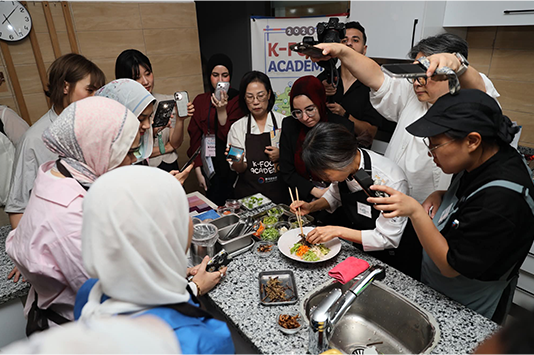
Participants watching a bibimbap-making
demonstration using Sunchang gochujang
demonstration using Sunchang gochujang
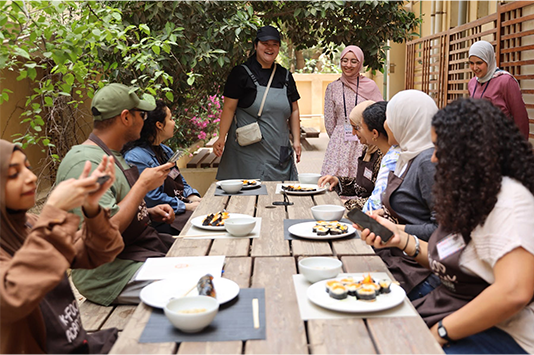
Participants tasting Jeonju-style carrot gimbap
they made together
they made together
Throughout the event, participants joined various hansik workshops featuring local ingredients from Jeonbuk, experiencing Korean flavors and culinary techniques firsthand. The first workshop, held on May 17, introduced participants to one of the most famous Korean dishes: bibimbap with Sunchang gochujang. On May 18, they prepared vegetarian Korean dishes such as dried-namul tteokbokki from Muju and tomato mul-kimchi from Namwon, exploring the diversity of Korean cuisine. They also made sweet potato glutinous rice balls, chicken dumplings, napa cabbage and green onion soup, delving into the wisdom behind Korean fermented and healthy foods.
On May 19, participants prepared modern reinterpretations of Korean dishes, including Jeonju-style carrot gimbap and cheese gamja-jeon. The program also featured a special workshop on royal court cuisine-a hands-on session that allowed participants to experience the delicate culinary techniques and table-setting culture of traditional hansik.
On May 19, participants prepared modern reinterpretations of Korean dishes, including Jeonju-style carrot gimbap and cheese gamja-jeon. The program also featured a special workshop on royal court cuisine-a hands-on session that allowed participants to experience the delicate culinary techniques and table-setting culture of traditional hansik.
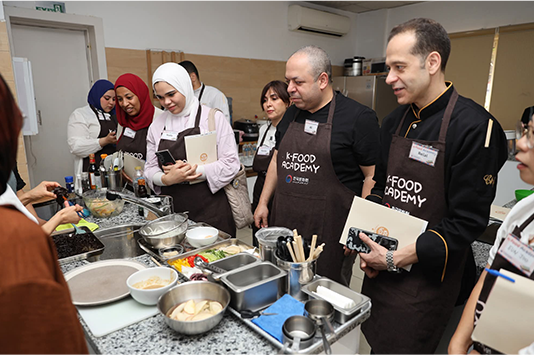
Participants taking part in the professional course
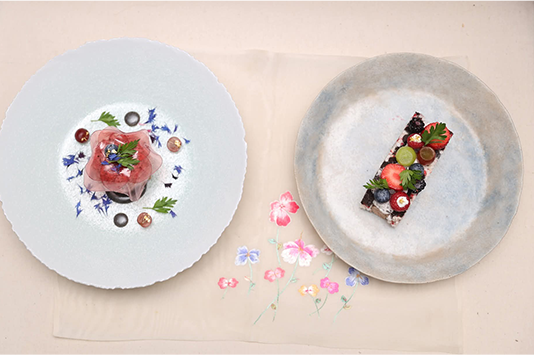
Rice yeot-gangjeong sandwiches and gwapyeon
seolgi prepared during the professional course
seolgi prepared during the professional course
On May 20, an advanced course for professional chefs was held. Participants deepened their understanding of Korean food culture by exploring plating techniques with Jeonbuk ingredients, developing Korean-style brunch dishes, and analyzing menu composition. They also prepared dishes such as seafood naengchae with pine nut sauce, japchae, kimchi salsa and gim-bugak, and rice yeot-gangjeong sandwiches with gwapyeon seolgi, experiencing both the traditional qualities of hansik and its potential for modern application.
◇ Growing Closer to Korea Through Cooking and Sharing
The 2026 K-Food Academy was designed to transcend a simple culinary experience by offering a deeper dive into Korea’s diverse regional culinary traditions. Most of the ingredients were brought directly from Korea to provide participants with more immersive, authentic insights into hansik. Furthermore, each session was limited to eight participants, allowing them to take a more active role in the cooking process.
Participants expressed high levels of satisfaction as they tasted the dishes they prepared during the cooking sessions. Notably, some participants drew attention for their in-depth knowledge of Korean ingredients, immediately recognizing dried bracken even before it was cooked. Such moments underscored the local learners’ profound interest in and understanding of hansik and Korean culture.
Participants expressed high levels of satisfaction as they tasted the dishes they prepared during the cooking sessions. Notably, some participants drew attention for their in-depth knowledge of Korean ingredients, immediately recognizing dried bracken even before it was cooked. Such moments underscored the local learners’ profound interest in and understanding of hansik and Korean culture.
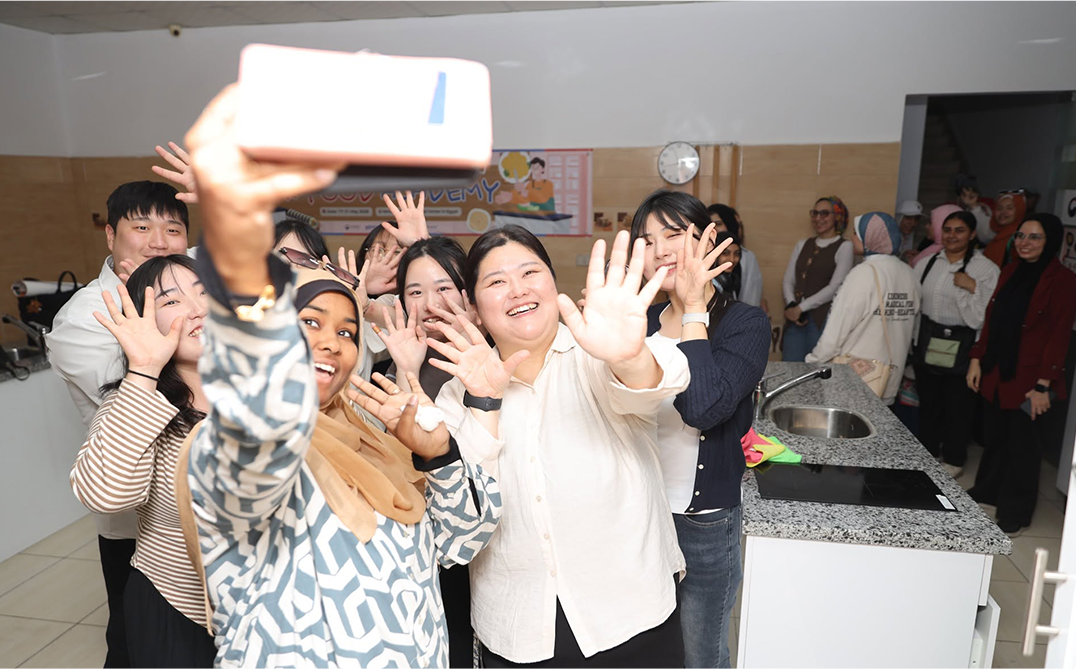
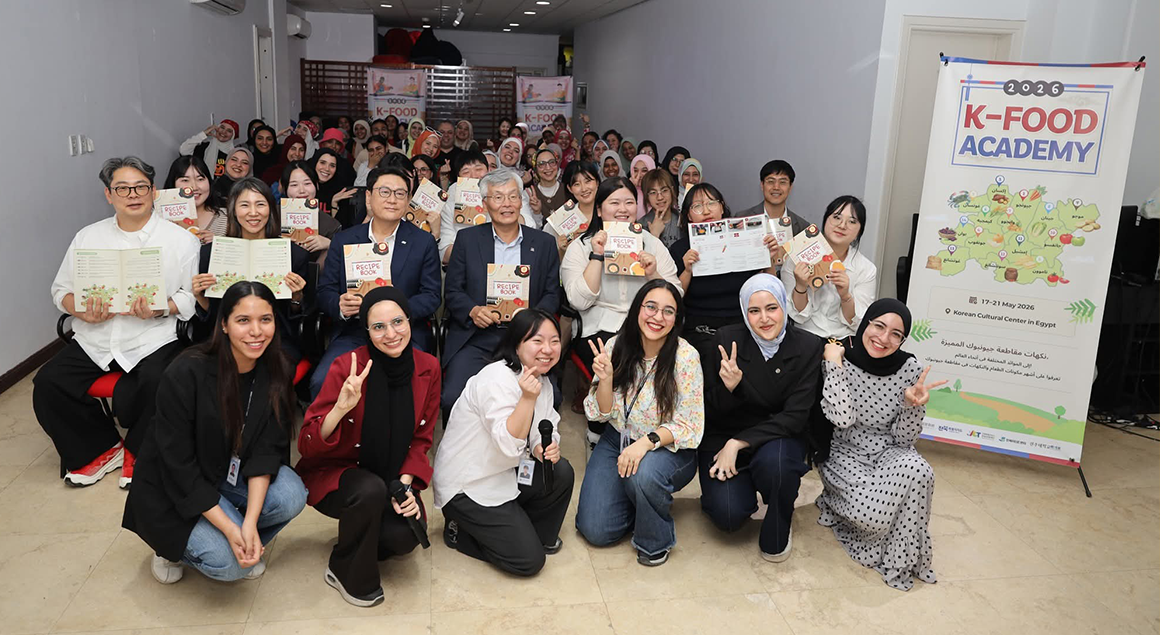
Participants taking a group photo on the final day of the 2026 K-Food Academy
“I hope this event served as an opportunity for participants to view hansik not simply as food, but as a cultural experience that embodies Korean culture and lifestyle. Through this meaningful occasion, we aimed to promote the culinary traditions of Jeonbuk and Korea’s diverse regional cultures to a wider audience.” ___ Shin Soo-jung, Team Leader at KSI Korean Cultural Center, Egypt
Article by Aliya Said, Correspondent at KSI Korean Cultural Center, Egypt