“Delicious” Is Not Enough: Korean Foods and Taste Expressions in “The Legend of Kitchen Soldier”
글쓴이홍보협력팀
태그
작성일 2026-07-24
조회수55

“Delicious” Is Not Enough:
Korean Foods and Taste Expressions in
“The Legend of Kitchen Soldier”
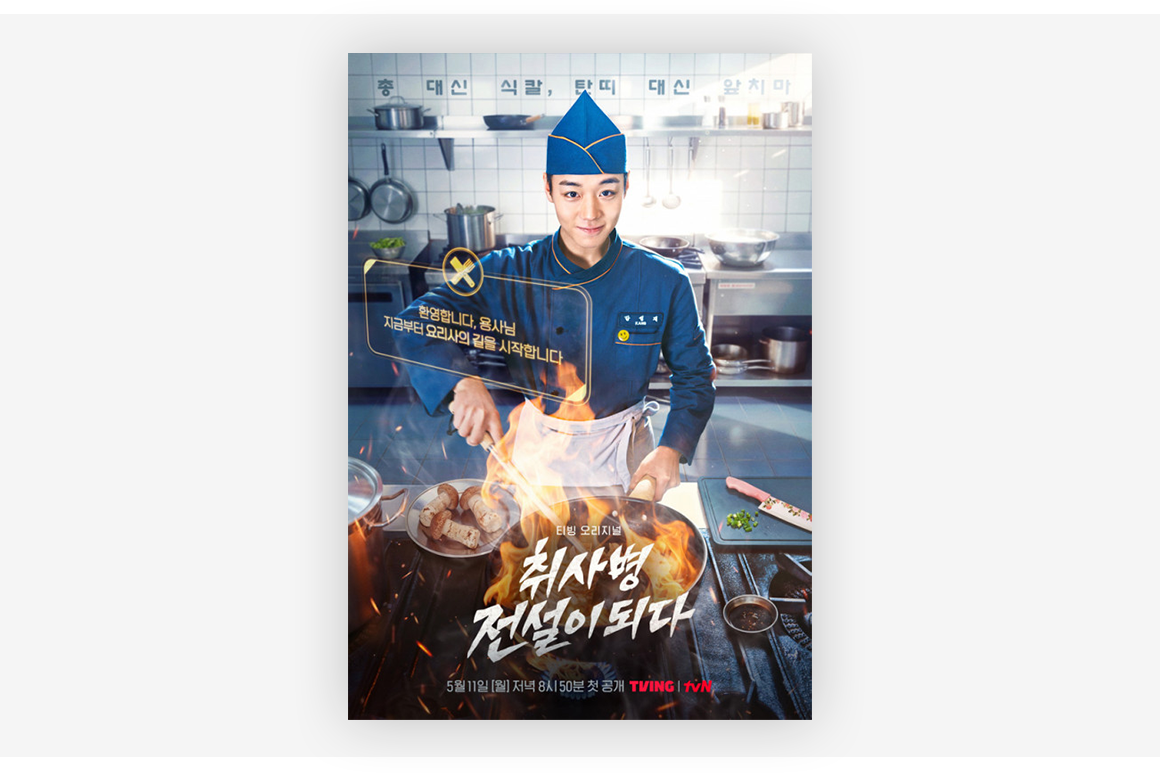
“The Legend of Kitchen Soldier”
> Cooking content is booming in Korea, spanning dramas and variety shows
> Explore Korean food culture and taste expressions through hansik featured in K-content.
“Have you eaten?” “Let’s have a meal sometime.”
These are expressions that Korean learners are likely to hear at least once. At first, they may sound like questions asking whether someone has eaten or suggesting a get-together. In reality, however, they are also the Korean way of asking how the other is doing. For Koreans, bap (rice or meal) is more than a means to fill one’s stomach; it is a symbolic expression of jeong, which means the warm affection and care people share with one another.
Because food holds such an important place in Koreans’ everyday lives and relationships, cooking-themed content has long been loved in Korea. Recently, a wide range of culinary content has attracted attention, from the variety show “Culinary Class Wars” to dramas such as “Bon Appétit, Your Majesty” and “The Legend of Kitchen Soldier.”
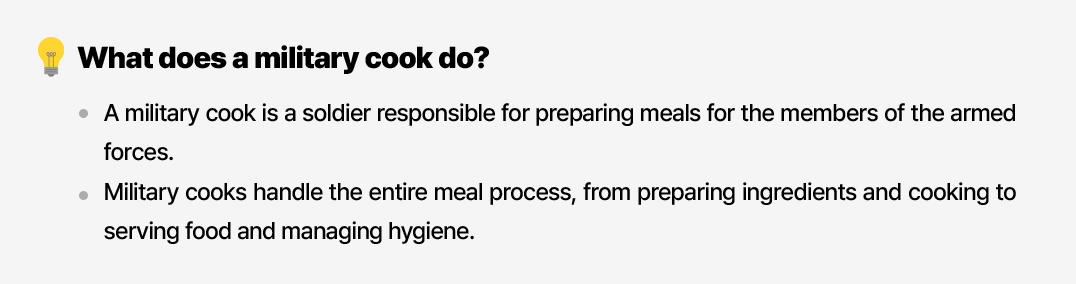
“The Legend of Kitchen Soldier,” in particular, a cooking-themed drama that aired from May to June, follows the growth of a military cook. The series also shows a distinctive side of Korean food culture by portraying food not simply as a meal, but as a medium that brings comfort, memories, and relationships together.
Today, let’s take a closer look at some representative Korean dishes featured in “The Legend of Kitchen Soldier,” along with taste expressions frequently used by Koreans.
These are expressions that Korean learners are likely to hear at least once. At first, they may sound like questions asking whether someone has eaten or suggesting a get-together. In reality, however, they are also the Korean way of asking how the other is doing. For Koreans, bap (rice or meal) is more than a means to fill one’s stomach; it is a symbolic expression of jeong, which means the warm affection and care people share with one another.
Because food holds such an important place in Koreans’ everyday lives and relationships, cooking-themed content has long been loved in Korea. Recently, a wide range of culinary content has attracted attention, from the variety show “Culinary Class Wars” to dramas such as “Bon Appétit, Your Majesty” and “The Legend of Kitchen Soldier.”
“The Legend of Kitchen Soldier,” in particular, a cooking-themed drama that aired from May to June, follows the growth of a military cook. The series also shows a distinctive side of Korean food culture by portraying food not simply as a meal, but as a medium that brings comfort, memories, and relationships together.
Today, let’s take a closer look at some representative Korean dishes featured in “The Legend of Kitchen Soldier,” along with taste expressions frequently used by Koreans.
◇ How Did a Military Cook Become a Legend?
The main character, Kang Seong-jae, one day gains access to a “status window” ability, just like in a game. Each time he completes a cooking quest, his skills improve. Through this, he gradually wins over not only the taste buds but also the hearts of his fellow soldiers, growing into a “legendary military cook.” The drama’s unique blend of fantasy, military life, and cooking adds another layer of fun.
◇ How Koreans Describe Food in K-Content
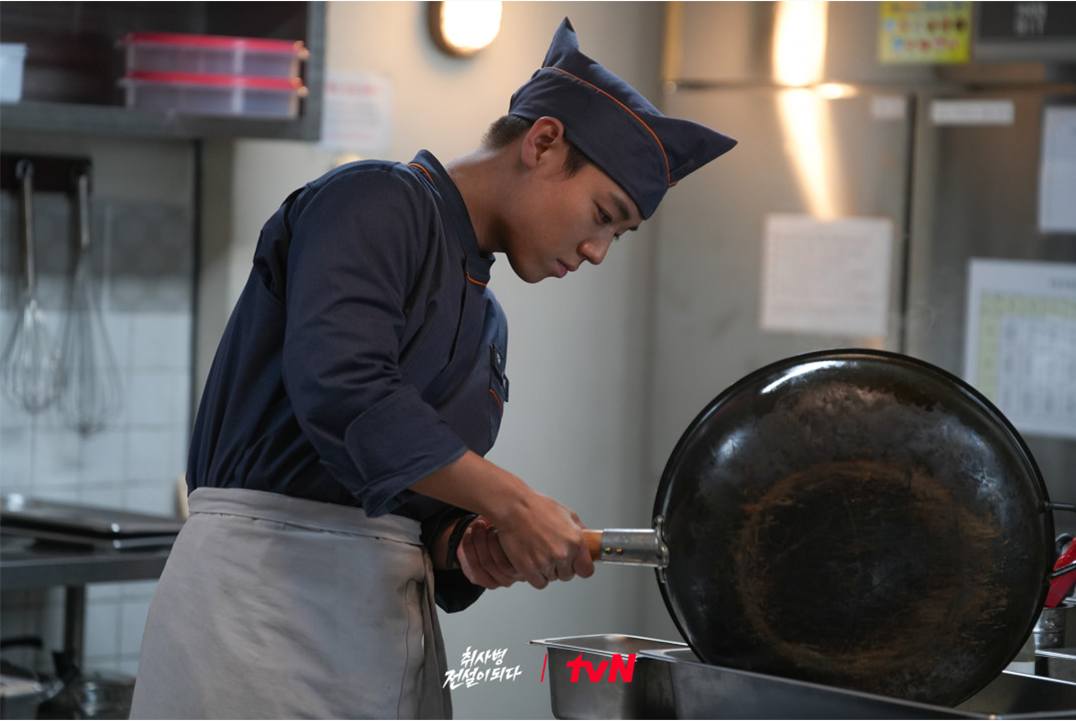
A still from the TVING original series “The Legend of Kitchen Soldier” @tvN
The drama features a range of iconic Korean dishes, including tteokbokki, dakjuk, sanchae bibimbap, and japchae. Just as each food has its own flavor and texture, the Korean language offers a rich variety of expressions to describe them. Here are some commonly used Korean taste expressions, explained with the dishes featured in the series.
Tteokbokki
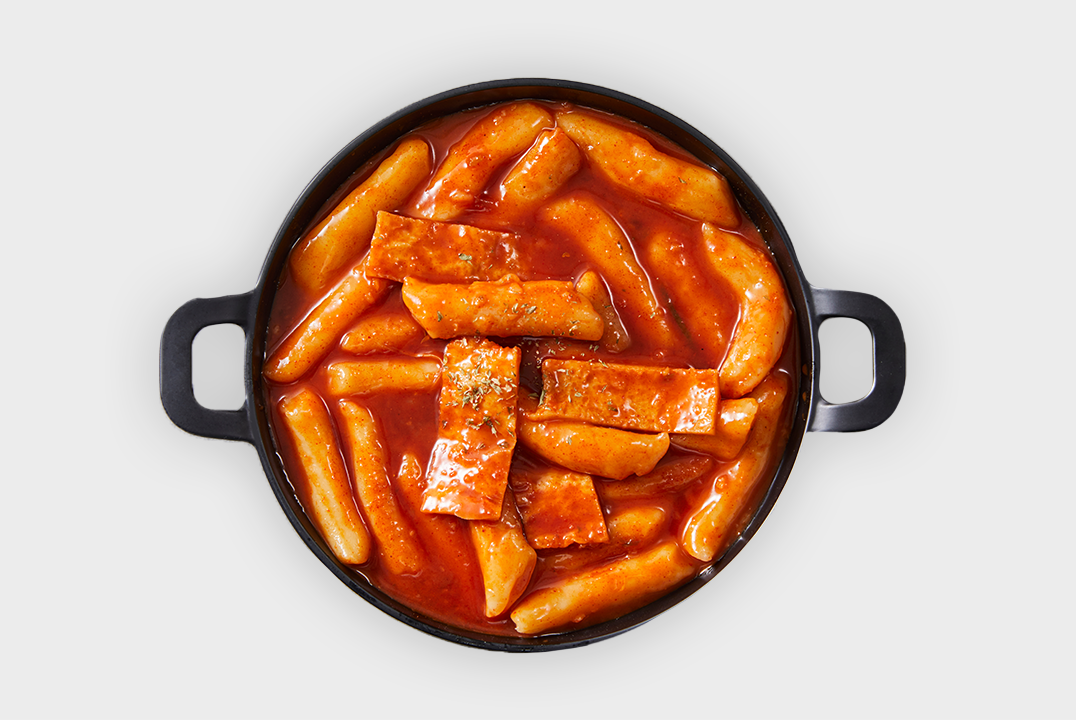
Tteokbokki is featured in Episode 5, when the protagonist, Kang Seong-jae, learns a secret recipe from a former Marine—who runs a local snack bar—to help his mother with her food truck business. The beloved Korean street food is made by stir-frying long rice cakes in a gochujang-based sauce.
When eating tteokbokki, Koreans enjoy using expressions such as “jjolgit-hada” (chewy) and “maekom-hada” (pleasantly spicy). “Maekom-hada” describes a spicy flavor that is not too strong and feels enjoyable. With its pleasant balance of spicy and sweet flavors, tteokbokki is a beloved snack enjoyed by people of all ages.
When eating tteokbokki, Koreans enjoy using expressions such as “jjolgit-hada” (chewy) and “maekom-hada” (pleasantly spicy). “Maekom-hada” describes a spicy flavor that is not too strong and feels enjoyable. With its pleasant balance of spicy and sweet flavors, tteokbokki is a beloved snack enjoyed by people of all ages.
Dakjuk
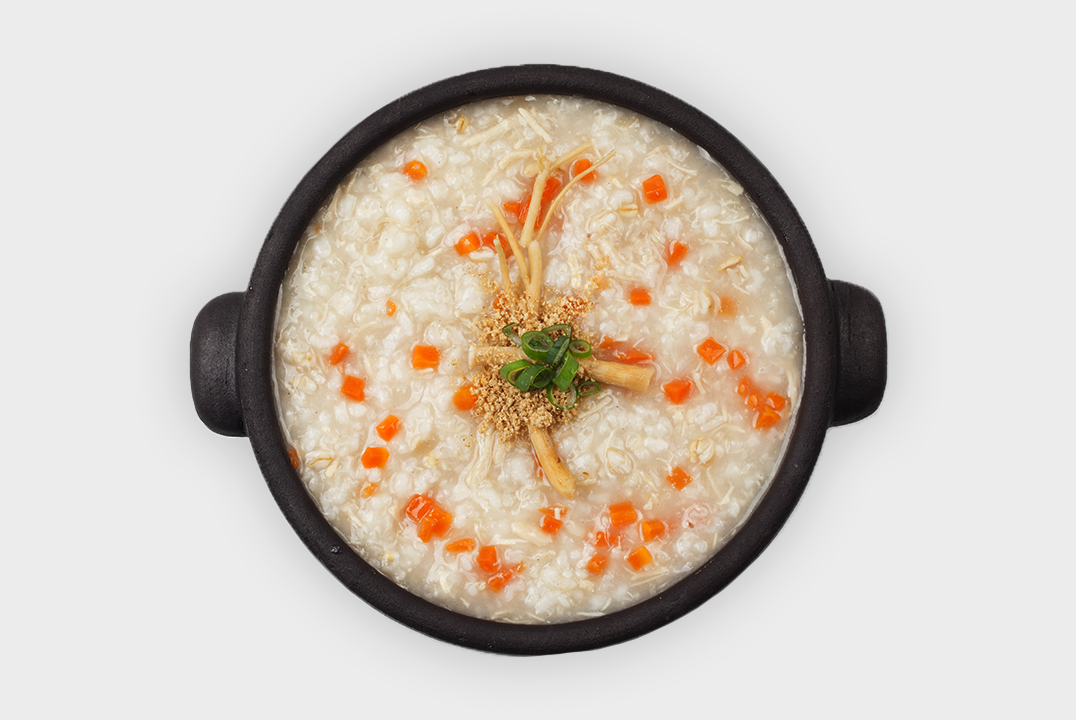
In episode 8, when the outpost faces a food shortage due to record-breaking heavy rain, Kang Seong-jae makes dakjuk using leftover chicken breast. Dakjuk is a Korean-style chicken porridge made by simmering rice for a long time and adding chicken. Soft and easy to digest, it is a dish often prepared to care for those who are unwell or to convey one’s warmth and sincerity.
When eating dakjuk, Koreans commonly use expressions such as “budeureopda” (soft) and “seumseum-hada” (mild and lightly seasoned). “Budeureopda” describes a texture that is tender and easy to chew, while “seumseum-hada” refers to a gentle flavor that is not heavily seasoned or stimulating.
When eating dakjuk, Koreans commonly use expressions such as “budeureopda” (soft) and “seumseum-hada” (mild and lightly seasoned). “Budeureopda” describes a texture that is tender and easy to chew, while “seumseum-hada” refers to a gentle flavor that is not heavily seasoned or stimulating.
Sanchae Bibimbap
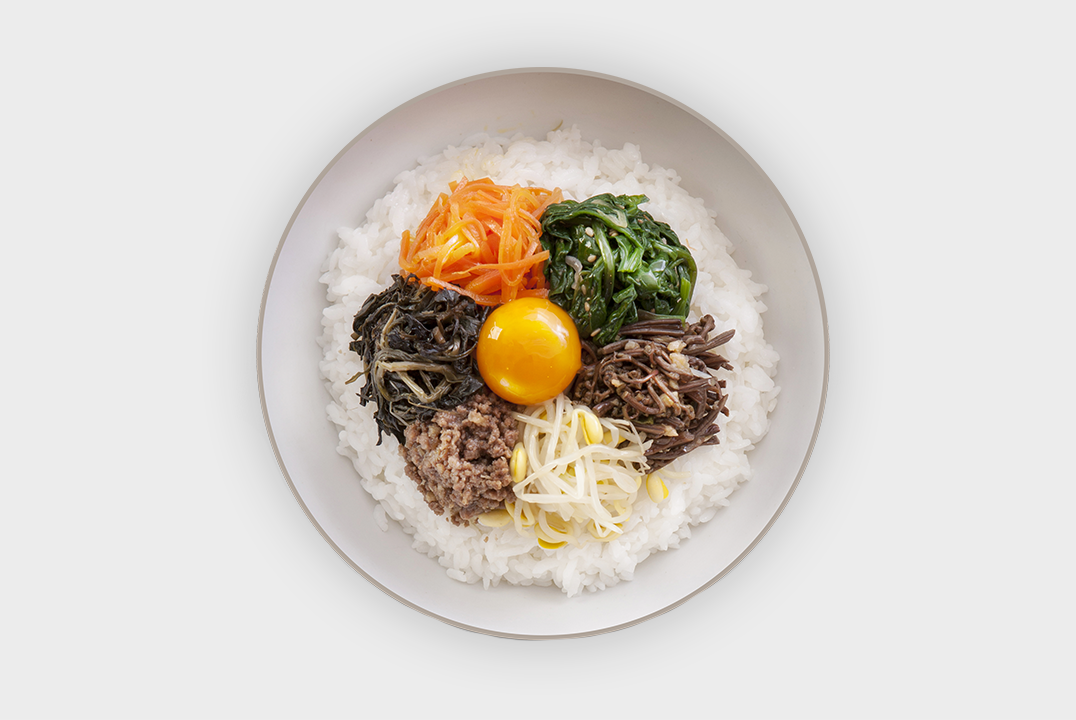
In episode 8, as the characters face a food shortage, another dish comes to their rescue: sanchae bibimbap. The dish is made by placing various mountain vegetables and greens over rice and mixing them with gochujang. Administrative NCO Park Jae-young and Deputy Outpost Commander Cha Seung-woo gather naengi, doraji, chamnamul, and bangpungnamul from the mountains, which Kang Seong-jae turns into a warm, comforting meal for his exhausted comrades.
When eating sanchae bibimbap, Koreans often use expressions such as “hyanggeut-hada” (fragrant) and “dambaek-hada” (clean and light). “Hyanggeut-hada” describes a fresh, subtle aroma, as with namul or herbs, while “dambaek-hada” means a clean flavor that is not greasy or overly stimulating.
When eating sanchae bibimbap, Koreans often use expressions such as “hyanggeut-hada” (fragrant) and “dambaek-hada” (clean and light). “Hyanggeut-hada” describes a fresh, subtle aroma, as with namul or herbs, while “dambaek-hada” means a clean flavor that is not greasy or overly stimulating.
Japchae
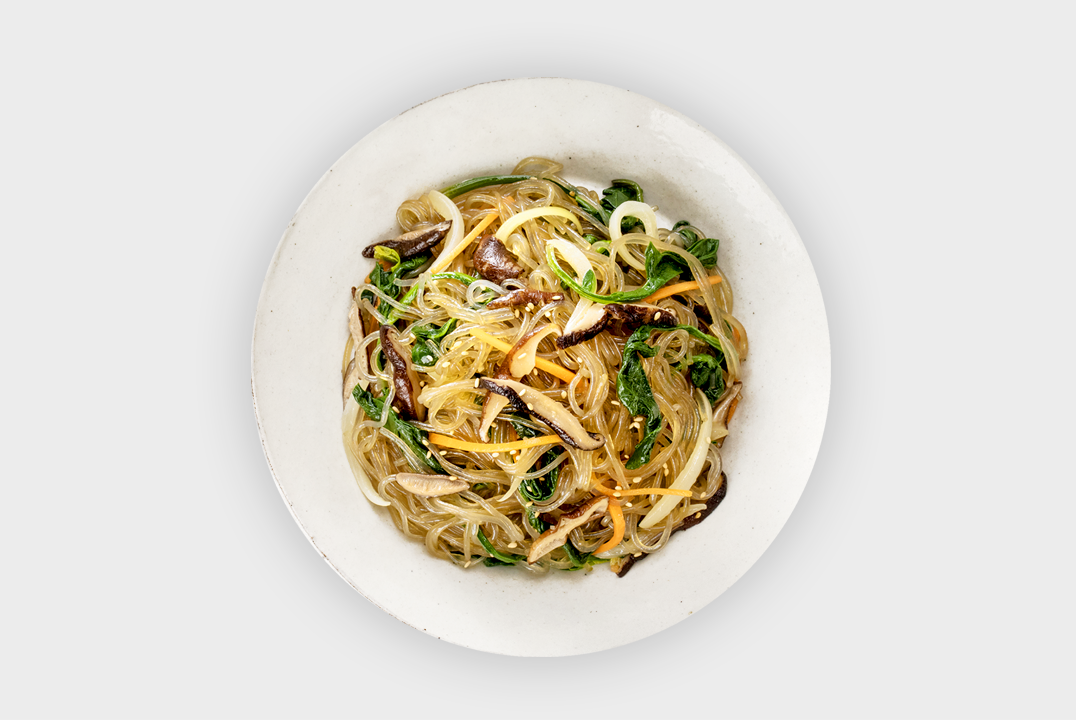
In Episode 9, Kang Seong-jae serves japchae topped with pine mushrooms at the officers’ dining hall. Traditionally prepared for festive occasions, the dish is made by stir-frying glass noodles with beef, mushrooms, onions, and other ingredients in a soy sauce-based seasoning. In the drama, it also appears as a menu item for a special occasion.
When talking about japchae, Koreans enjoy using expressions such as “jjolgit-hada” (chewy) and “gamchilmasi-nada” (to have a deep savory, umami flavor). “Gamchilmasi-nada” is also the perfect way to describe dishes like the pine mushroom japchae in the drama, where an array of ingredients come together in harmony.
When talking about japchae, Koreans enjoy using expressions such as “jjolgit-hada” (chewy) and “gamchilmasi-nada” (to have a deep savory, umami flavor). “Gamchilmasi-nada” is also the perfect way to describe dishes like the pine mushroom japchae in the drama, where an array of ingredients come together in harmony.
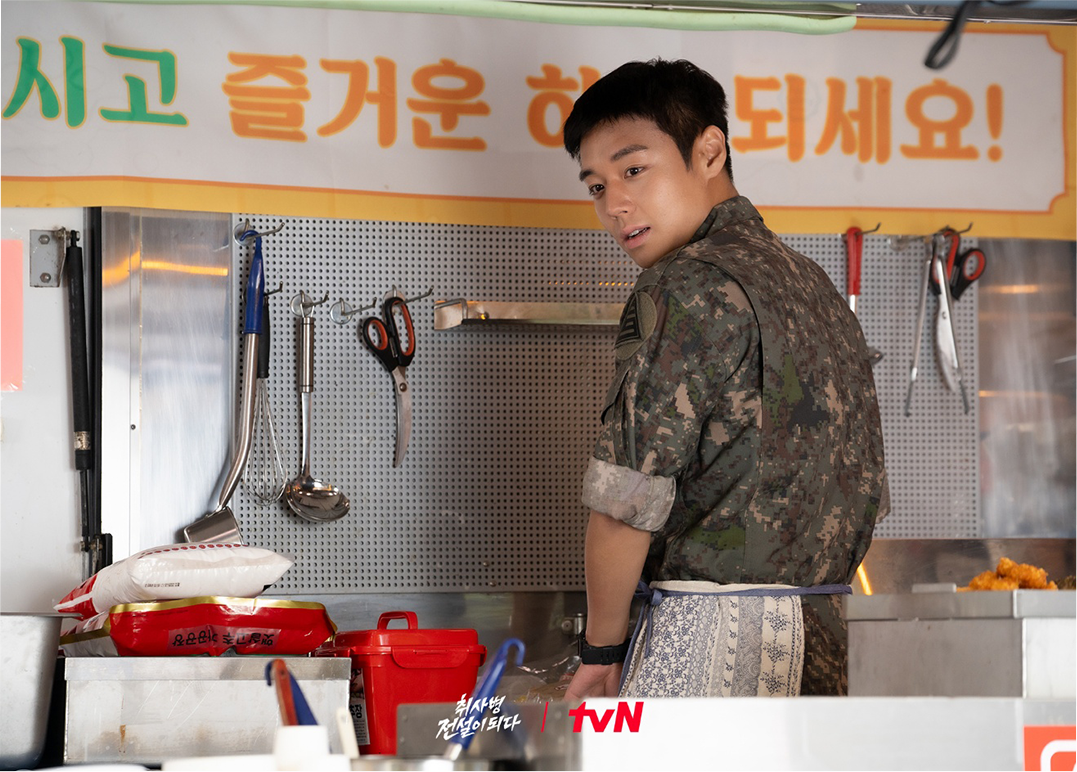
A still from the TVING original series “The Legend of Kitchen Soldier” @tvN
◇ A More Enjoyable Way to Watch K-Content
Food is a popular theme in Korean dramas and variety shows. Whether someone is offering comfort, celebrating a happy occasion together, or sharing feelings with a person they have not seen in a long time, food is almost always at the heart of the scene.
The next time you watch K-content, try paying attention to what the characters eat and what expressions they use to describe the taste; even a simple word like “delicious” can carry the nuanced Korean palate and food culture.
The next time you watch K-content, try paying attention to what the characters eat and what expressions they use to describe the taste; even a simple word like “delicious” can carry the nuanced Korean palate and food culture.