“The Nation Sejong Dreamed Of: It’s Time to Share King Sejong’s Humanism and the Value of Hangeul with the World”
글쓴이홍보협력팀
태그
작성일 2026-06-29
조회수33

“The Nation Sejong Dreamed Of:
It’s Time to Share King Sejong’s Humanism and
the Value of Hangeul with the World”
It’s Time to Share King Sejong’s Humanism and
the Value of Hangeul with the World”
What kind of nation did King Sejong dream of?
What kind of world did he live in?
And what kind of person was he?
The spirit of King Sejong lives on in Hangeul.
Hangeul was a cultural revolution, and it’s now the root of Hallyu.
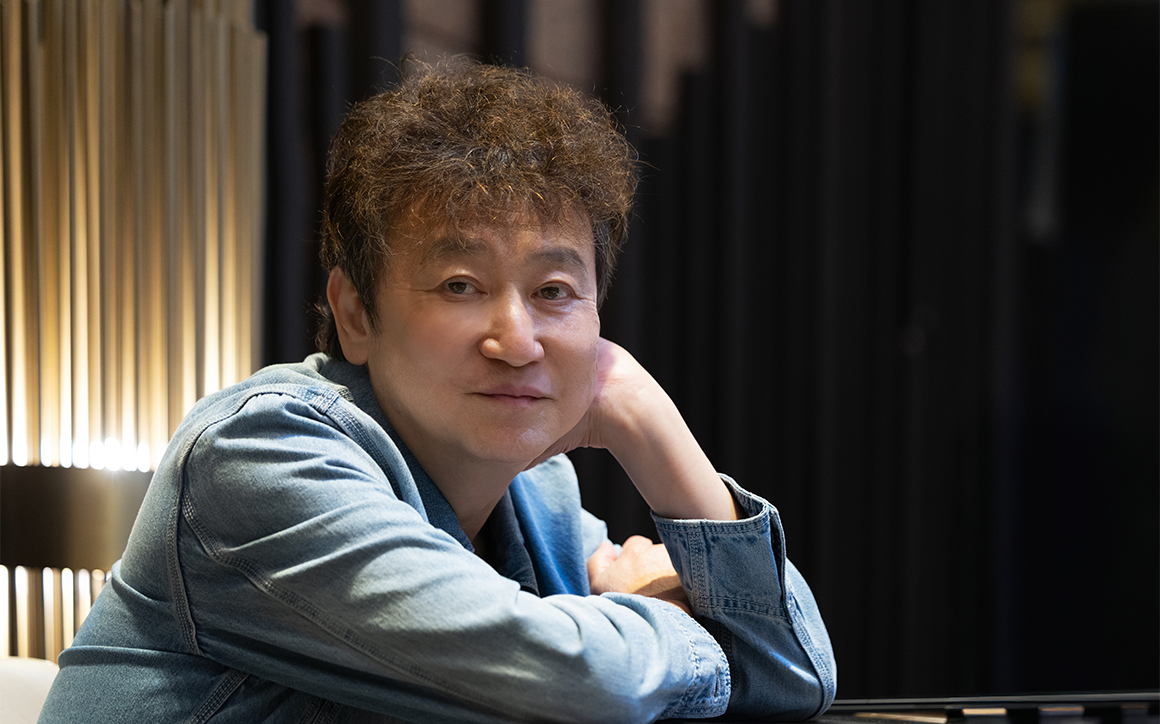
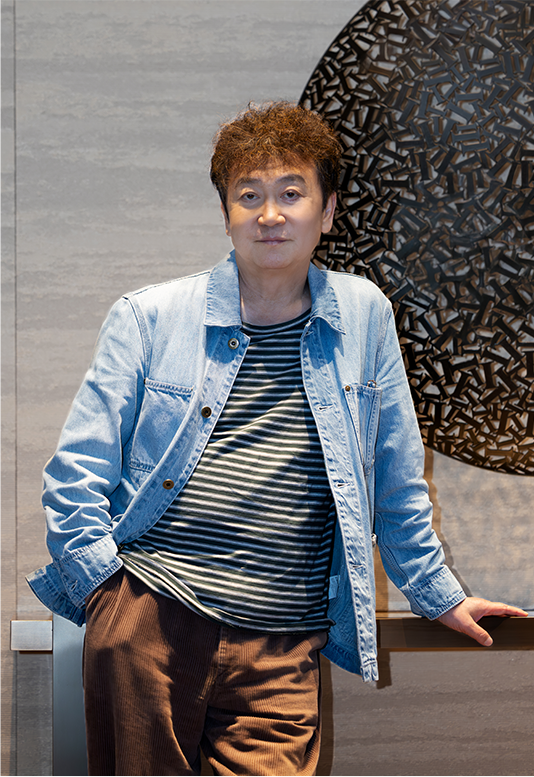
To commemorate the 629th anniversary of King Sejong’s birth (May 15, 1397), we sat down with novelist Kim Jin-myung. His latest novel, The Nation of Sejong, draws on historical records and extensive research to bring to life King Sejong’s vision, the world he inhabited, his human side, and the remarkable story behind the creation of Hangeul.
What kind of world did he live in?
And what kind of person was he?
The spirit of King Sejong lives on in Hangeul.
Hangeul was a cultural revolution, and it’s now the root of Hallyu.
To commemorate the 629th anniversary of King Sejong’s birth (May 15, 1397), we sat down with novelist Kim Jin-myung. His latest novel, The Nation of Sejong, draws on historical records and extensive research to bring to life King Sejong’s vision, the world he inhabited, his human side, and the remarkable story behind the creation of Hangeul.
◇ The Nation Sejong Dreamed Of:
The Creation of Hangeul, Which Changed the Fate of Joseon
The Creation of Hangeul, Which Changed the Fate of Joseon
Q. Your much-anticipated new novel, The Nation of Sejong, has finally been published. What aspects of King Sejong did you want to explore the most through this book, and what inspired you to write it?
A. Mayor Choi Min-ho of Sejong Special Self-Governing City was actually the first person to suggest that I write a novel about King Sejong and the creation of Hangeul. I declined several times because everyone already knows the story behind the creation of Hangeul. Turning such a well-known historical event into a novel would be an enormous challenge for any writer. Plus, the creation of Hangeul is such a monumental and sacred achievement that I was worried I wouldn’t do it justice, so I hesitated to approach it in fictional form.
However, at a certain point, I felt an overwhelming conviction that this was a story I had to tell. People often say that Hangeul is scientific and that the letters were designed based on the shapes of the speech organs. Yet I felt that the existing explanations of its scientific basis were still incomplete. While reflecting on this, I noticed something remarkable. With the exception of ㅇ, every other Korean consonant,ㄱ, ㄴ, ㄷ, and ㄹ, is built upon a single straight stroke. The moment I realized this, I felt compelled to share it with a wider audience.
However, at a certain point, I felt an overwhelming conviction that this was a story I had to tell. People often say that Hangeul is scientific and that the letters were designed based on the shapes of the speech organs. Yet I felt that the existing explanations of its scientific basis were still incomplete. While reflecting on this, I noticed something remarkable. With the exception of ㅇ, every other Korean consonant,ㄱ, ㄴ, ㄷ, and ㄹ, is built upon a single straight stroke. The moment I realized this, I felt compelled to share it with a wider audience.
Q. What do you mean by “built upon a single straight stroke”?
A. There are two important meanings behind that observation.
First, Hangeul is a phonetic alphabet. The effectiveness of any phonetic script depends largely on the simplicity of its symbols. The symbols themselves do not carry meaning. Rather, people agree to assign sounds and meanings to them. When a writing system is too complex, as with certain ancient scripts such as those of the Maya, Egypt, or Babylon, it doesn’t propagate easily. By contrast, Hangeul is built from simple linear strokes. Because of this simplicity, it can be learned and written easily, by anyone. As an analogy, imagine trying to build a house with triangular or cylindrical bricks. Construction would be extraordinarily difficult. Buildings are practical because bricks have simple, regular forms. Likewise, because Hangeul is built from simple straight strokes, it allows for an almost limitless range of combinations. I believe this is one of the reasons Hangeul is such a remarkably scientific writing system.
Second, Hangeul operates according to mathematical principles that can be expressed through 28 factorial combinations—28! Yet formal theories explaining this have been virtually non-existent. One of my motivations for writing this book was to explore those principles more deeply and to share that perspective with readers around the world.
First, Hangeul is a phonetic alphabet. The effectiveness of any phonetic script depends largely on the simplicity of its symbols. The symbols themselves do not carry meaning. Rather, people agree to assign sounds and meanings to them. When a writing system is too complex, as with certain ancient scripts such as those of the Maya, Egypt, or Babylon, it doesn’t propagate easily. By contrast, Hangeul is built from simple linear strokes. Because of this simplicity, it can be learned and written easily, by anyone. As an analogy, imagine trying to build a house with triangular or cylindrical bricks. Construction would be extraordinarily difficult. Buildings are practical because bricks have simple, regular forms. Likewise, because Hangeul is built from simple straight strokes, it allows for an almost limitless range of combinations. I believe this is one of the reasons Hangeul is such a remarkably scientific writing system.
Second, Hangeul operates according to mathematical principles that can be expressed through 28 factorial combinations—28! Yet formal theories explaining this have been virtually non-existent. One of my motivations for writing this book was to explore those principles more deeply and to share that perspective with readers around the world.
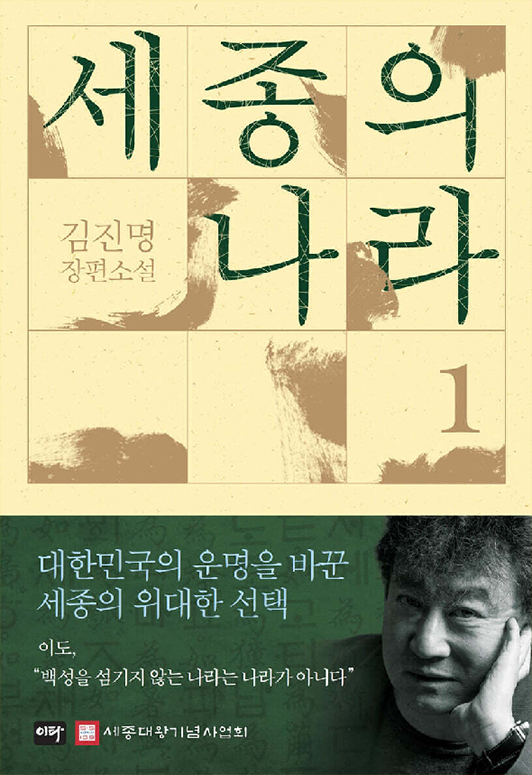
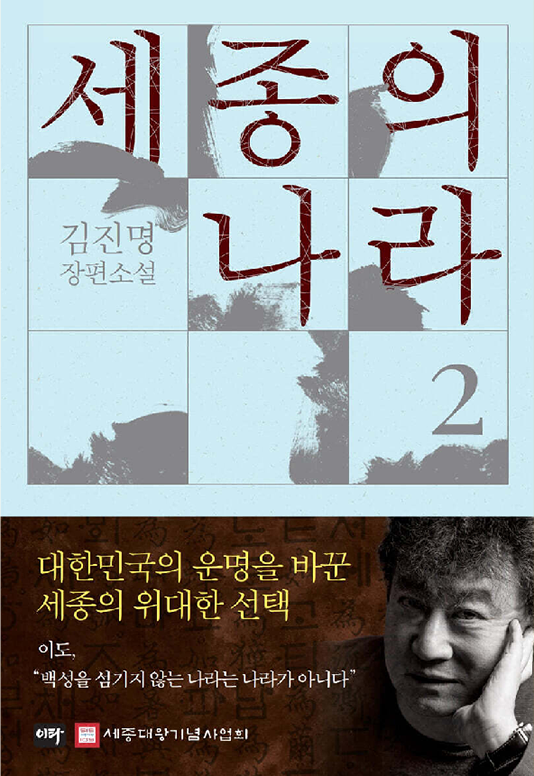
Volumes 1 and 2 of Kim Jin-myung’s novel The Nation of Sejong
Q. The title of your book is The Nation of Sejong. What message did you hope to convey with the title?
A. “The Nation of Sejong” ultimately refers to the nation that King Sejong envisioned. Many people describe Sejong’s philosophy simply as “love for the people,” but that’s not a sufficient explanation on its own. To truly understand his vision, we must first understand the man himself. From a young age, Sejong was an extraordinary reader and arguably one of the most intellectually gifted figures in Joseon. When a person reads extensively and attains deep learning, their intellectual capacity expands, and so does their sense of humanity. Instead of pursuing wealth or power, they begin to ask how they can help people who are struggling. I believe Sejong had reached that stage. Any discussion of his legacy must begin with an understanding of his character, values, and sense of responsibility.
We must also understand the society in which he lived. At the time, the yangban (aristocrats) accounted for only about 4% of the population, yet they controlled the nation. Many devoted themselves to Chinese classics and were loyal to the Chinese emperor rather than serving their own people. Sejong saw this as deeply dysfunctional, and he sought to restore Joseon to what he believed a proper nation should be. To achieve that goal, he sought a way to empower the remaining 96% percent of the population by enabling them to become literate. The creation of Hangeul changed the destiny of Joseon. It was far more than the invention of a writing system; it was a revolution that dismantled a dysfunctional societal framework and replaced it with a healthy structure. It was a cultural revolution! That is the true meaning behind “The Nation of Sejong.”
We must also understand the society in which he lived. At the time, the yangban (aristocrats) accounted for only about 4% of the population, yet they controlled the nation. Many devoted themselves to Chinese classics and were loyal to the Chinese emperor rather than serving their own people. Sejong saw this as deeply dysfunctional, and he sought to restore Joseon to what he believed a proper nation should be. To achieve that goal, he sought a way to empower the remaining 96% percent of the population by enabling them to become literate. The creation of Hangeul changed the destiny of Joseon. It was far more than the invention of a writing system; it was a revolution that dismantled a dysfunctional societal framework and replaced it with a healthy structure. It was a cultural revolution! That is the true meaning behind “The Nation of Sejong.”
◇ The Reason Sejong Created Hangeul:
The Humanism of Sejong, Who Walked with the Vulnerable
The Humanism of Sejong, Who Walked with the Vulnerable
Q. The Nation of Sejong is grounded in historical fact, but also incorporates elements of fiction. During the writing process, which aspect did you approach with the greatest care?
A. The impetus behind my entire body of work is not to write purely fabricated fiction, but to convey meaningful messages about Korea’s politics, economy, culture, history, national security, and diplomacy. Because of this, everything must be built on a clear, factual foundation. The process behind the creation of the phonetic writing system, the societal atmosphere of the era, and the historical framework that supports the narrative are all based largely on fact. In novels, there are characters who embody the values of their time and others who challenge them. In The Nation of Sejong, the principal characters are Han Seok-ri, Kwon Suk-hyeon, and King Sejong. Seok-ri and Suk-hyeon rebel against the constraints of their era, and their love story defies the social norms of the time. Readers will recognize that their story reflects a deeper historical reality. King Sejong created Hangeul to transform precisely that kind of world. I took the utmost care in penning the profound message delivered through these specific characters.
Q. The creation of Hangeul was more than the invention of a writing system. It fundamentally changed the lives of ordinary people. What was the most important point for you when portraying this process in your novel?
A. At the time, virtually everyone opposed the creation of Hangeul, including the Confucian scholars, sadaebu (scholar-officials), yangban, government ministers, and even the scholars of Jiphyeonjeon (Hall of Worthies). I found myself thinking about how agonizing it must have been for Sejong, and how he had to work in secrecy. Although he was king, he had to develop Hangeul under difficult circumstances, slipping out of the palace to meet people in ordinary homes. I hope readers can feel the tension and complexity of that historical moment.
I also wanted to address several common misconceptions. There are alternative theories suggesting that Hangeul was derived from the Phags-pa script or inspired by the patterns of traditional window lattices, but these are entirely false. Likewise, many people assume that the scholars of Jiphyeonjeon created Hangeul collectively. I want to make this explicitly clear: Hangeul was created by King Sejong entirely on his own. At the time, neither the Jiphyeonjeon scholars nor the Joseon literati had studied phonology. Sejong was the one who devoted himself to the subject. Historical records show that when he presented the completed script to the Jiphyeonjeon scholars, they all opposed it. Sejong reportedly challenged them by asking, “What do any of you know about phonology?” The implication was that they knew nothing about it. We must recognize that Hangeul was the sole invention of King Sejong himself.
I also wanted to address several common misconceptions. There are alternative theories suggesting that Hangeul was derived from the Phags-pa script or inspired by the patterns of traditional window lattices, but these are entirely false. Likewise, many people assume that the scholars of Jiphyeonjeon created Hangeul collectively. I want to make this explicitly clear: Hangeul was created by King Sejong entirely on his own. At the time, neither the Jiphyeonjeon scholars nor the Joseon literati had studied phonology. Sejong was the one who devoted himself to the subject. Historical records show that when he presented the completed script to the Jiphyeonjeon scholars, they all opposed it. Sejong reportedly challenged them by asking, “What do any of you know about phonology?” The implication was that they knew nothing about it. We must recognize that Hangeul was the sole invention of King Sejong himself.
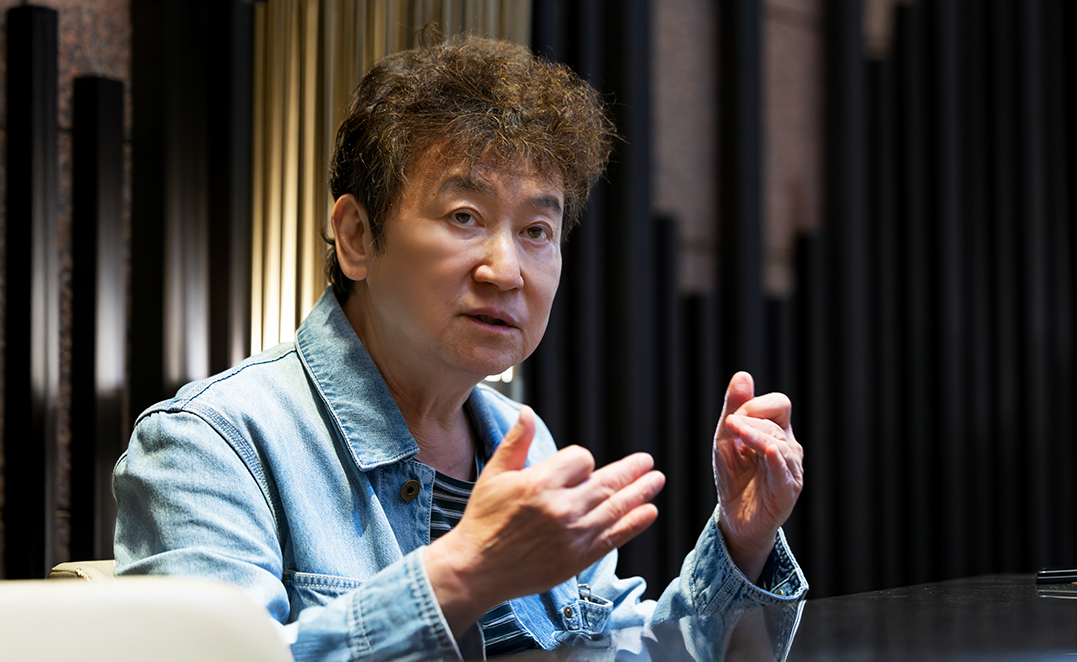
Novelist Kim Jin-myung discussing the research and writing process behind The Nation of Sejong
Q. Is there any historical context or perspective that readers should keep in mind before reading The Nation of Sejong?
A. First, I would point to the fate of Han Seok-ri and Kwon Suk-hyeon. They ultimately leave Joseon and cross the desert on camels. If there were a conventional happy ending, they would have returned home triumphantly, but they explicitly rejected that path. This reflects the reality that Joseon society was not able to embrace people like them. I hope readers keep that in mind as they read and gain a sense of how difficult and unforgiving that society could be. That understanding will help them better appreciate the significance of what Sejong accomplished.
Second, I would ask readers to imagine Korean history without King Sejong. Many of the literati of the time devoted themselves to Chinese classics and the Ming dynasty. A people’s identity is directly tied to their nation’s identity. Had it not been for Sejong, Korea might have been absorbed into China within a few generations. I really want readers to contemplate that gravity.
Finally, image what Korea would be like without Hangeul. We would likely still be writing primarily with Chinese characters, which would mean complete cultural subordination to China, and the global phenomenon of Hallyu, or the Korean Wave, might never have emerged. Now that Korean culture is being embraced around the globe, we have an opportunity and a responsibility to emphasize that Hangeul lies at the root of this phenomenon. Today, an estimated five to six million people worldwide are studying Korean. This is a perfect moment for sharing Hangeul more broadly and communicating its significance to the world. I hope readers will reflect on what Sejong set in motion: by establishing a written language for his people, he helped solidify the Korean identity and—although perhaps unintentionally—laid the foundation for Korean civilization and culture to spread across the globe.
Second, I would ask readers to imagine Korean history without King Sejong. Many of the literati of the time devoted themselves to Chinese classics and the Ming dynasty. A people’s identity is directly tied to their nation’s identity. Had it not been for Sejong, Korea might have been absorbed into China within a few generations. I really want readers to contemplate that gravity.
Finally, image what Korea would be like without Hangeul. We would likely still be writing primarily with Chinese characters, which would mean complete cultural subordination to China, and the global phenomenon of Hallyu, or the Korean Wave, might never have emerged. Now that Korean culture is being embraced around the globe, we have an opportunity and a responsibility to emphasize that Hangeul lies at the root of this phenomenon. Today, an estimated five to six million people worldwide are studying Korean. This is a perfect moment for sharing Hangeul more broadly and communicating its significance to the world. I hope readers will reflect on what Sejong set in motion: by establishing a written language for his people, he helped solidify the Korean identity and—although perhaps unintentionally—laid the foundation for Korean civilization and culture to spread across the globe.
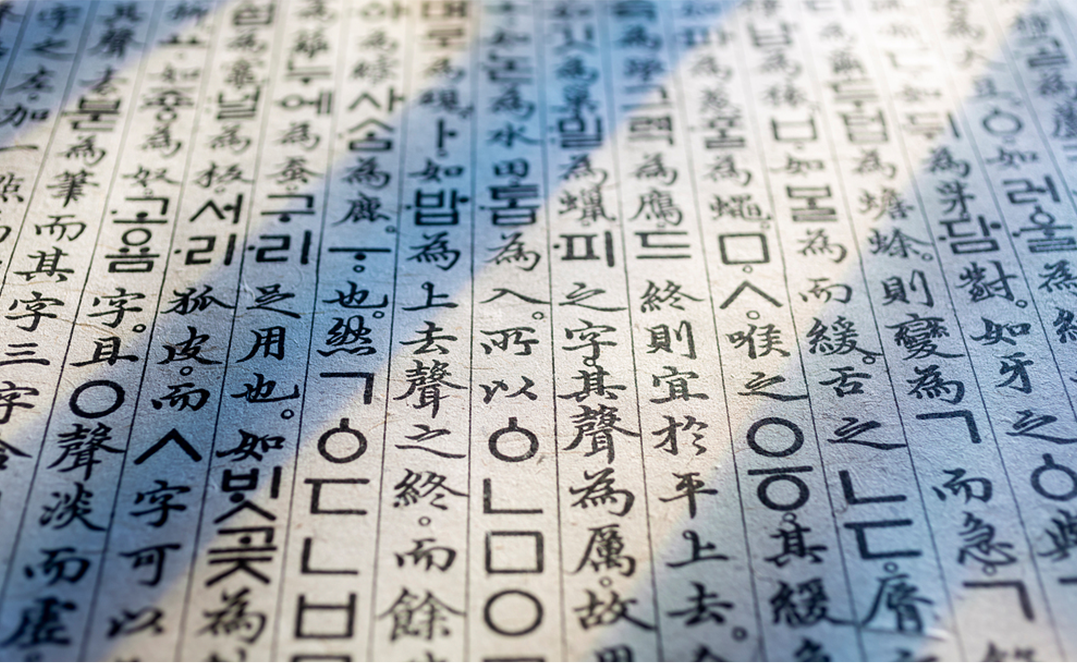
Hunminjeongeum, the original text that laid the foundation for Hangeul
Q. Literacy has become a major topic of discussion in recent years. Grasping context and articulating one’s thoughts clearly are more important than ever. Why do you believe literacy is such a critical skill?
A. People who lack literacy have no distinct aura or personal identity because they are unable to answer the fundamental question, “Who am I?” They are nothing more than hollow shells that merely consume what society feeds them. If people lose the power to think deeply about themselves, it will be impossible to build the normal, healthy nation that King Sejong envisioned. A nation is ultimately run by its citizens. Without literacy, people cannot read critically and make judgments for themselves. Modern society is a contractual, meaning that citizens must constantly deliberate on and negotiate how to run things together. When literacy declines, we lose the very foundation required to operate and sustain our society. It leads not just to personal decline, but to the collapse of democracy and collective communities.
The erosion of literacy is far more terrifying than economic or security concerns, yet very few people seem to realize this. The tech corporations driving our nation’s remarkable digital transformation must now redirect their attention to this literacy crisis. The time has come for businesses to take the collapse of literacy seriously and to lead the effort to build a culture in which citizens read and genuinely understand what they read.
The erosion of literacy is far more terrifying than economic or security concerns, yet very few people seem to realize this. The tech corporations driving our nation’s remarkable digital transformation must now redirect their attention to this literacy crisis. The time has come for businesses to take the collapse of literacy seriously and to lead the effort to build a culture in which citizens read and genuinely understand what they read.
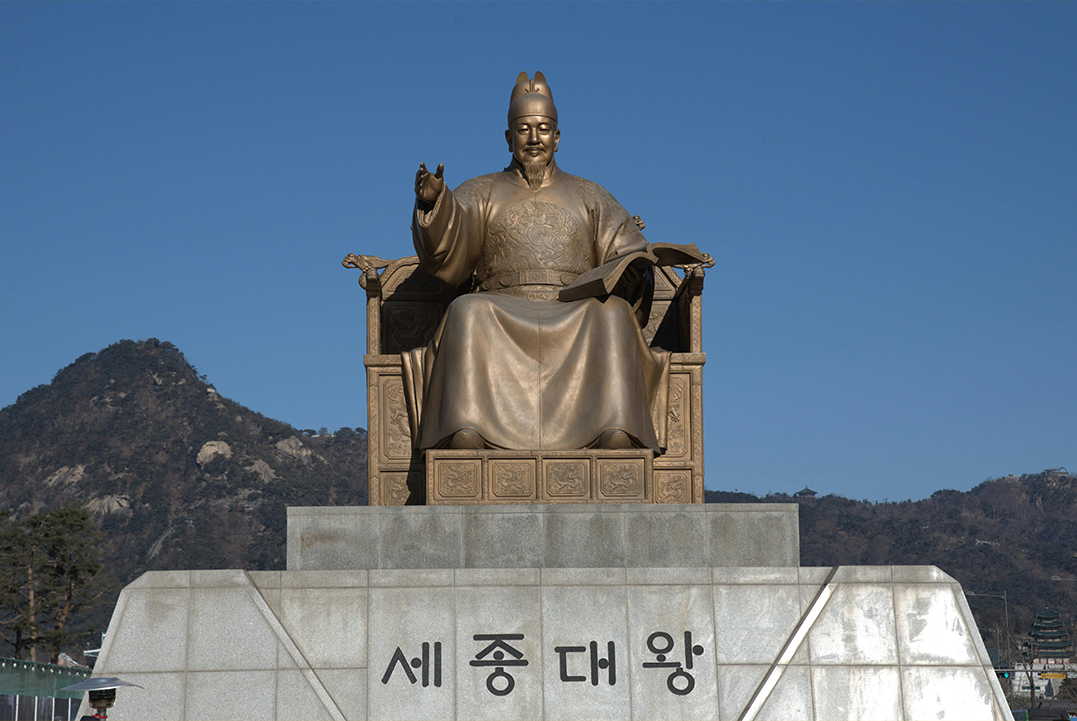
The bronze statue of King Sejong the Great in Gwanghwamun Square, Seoul, Korea
◇ The Spirit of King Sejong: His Greatness and the Value of Hangeul
Q. We recently commemorated the anniversary of King Sejong the Great’s birth (May 15). Why do you believe it’s important for us today to revisit and remember King Sejong’s achievements and legacy?
A. We need to remember the spirit and meaning behind the commemoration of King Sejong’s birth. I believe that his spirit can be understood through three core values. The first is self-reliance and independence. King Sejong believed that a nation can truly stand on its own only when it is grounded in its own strength and culture. That conviction remains just as important today and is something we should continue to honor. The second is solidarity with the vulnerable, which is what I would call Sejong’s humanitarian spirit. The ultimate expression of humanitarianism is creating a world where even the weakest among us can live happily alongside everyone else. This is the singular, essential philosophy that the entire global community must strive toward. The third is Sejong’s leadership. He constantly thought about his people and shared their hardships. It was based on that deep concern and sense of responsibility that he created Hangeul. All Korean citizens should remember the spirit of King Sejong, and the country’s leaders today need to reflect deeply on his example.
Q. As Hallyu continues to spread around the world, more people are learning Korean than ever before. Imagine you are introducing King Sejong’s spirit to Korean language learners. What would you want them to know first?
A. The spirit of King Sejong is woven into Hangeul itself. Above all, it reflects the value I mentioned earlier: walking alongside the vulnerable. As king, Sejong could easily have enjoyed a life of luxury, surrounded by aristocrats and living in comfort. Instead, he chose to focus his attention on ordinary people. He continually asked himself what he could do to improve their lives, and ultimately that reflection led him to create a writing system for them. The Hangeul script is infused with that spirit. If learners of Korean understand that Hangeul carries King Sejong’s spirit of humanity and his commitment to walk alongside the vulnerable, I believe their learning experience will become even more meaningful. It will also inspire greater enthusiasm for learning and help students develop a deeper connection with the language.
Q. King Sejong Institutes serves as a bridge connecting Korea with the world through Korean language education. With this in mind, what direction should KSIs pursue in the future?
A. I hope that KSIs will move forward with even greater ambition and creativity. Today, Korean popular culture is spreading across the globe at an unprecedented pace. Hangeul lies at the heart of this global phenomenon, and interest in the Korean language has never been higher. This is precisely the moment for KSIs to embrace their historical mission and expand their efforts with greater confidence and purpose.
To do so, I believe it is important to establish bold and concrete goals, such as envisioning a future in which 100 million people around the world are learning Korean. Hangeul is one of Korea’s greatest cultural assets on the global stage, and I look forward to seeing KSIs march forward with greater momentum to clearly demonstrate its value and significance to the world.
To do so, I believe it is important to establish bold and concrete goals, such as envisioning a future in which 100 million people around the world are learning Korean. Hangeul is one of Korea’s greatest cultural assets on the global stage, and I look forward to seeing KSIs march forward with greater momentum to clearly demonstrate its value and significance to the world.