KSIF Discusses Strengthening Cooperation in Korean Language Education with Indonesia
글쓴이홍보협력팀
태그
작성일 2026-05-27
조회수106

KSIF Discusses Strengthening Cooperation
in Korean Language Education with Indonesia
in Korean Language Education with Indonesia
> 20-person Indonesian delegation including Deputy Speaker of the People’s Consultative Assembly visited KSIF headquarters in Seocho‑gu, Seoul, on April 24
> President Jeon Woo-yong: “Language is the key to the heart. We will grow together with Indonesia.”
On April 24, the King Sejong Institute Foundation (President Jeon Woo-yong, hereafter referred to as the “KSIF”) held discussions in the KSIF’s main conference room in Seocho-gu, Seoul, on ways of expanding cooperation in Korean language education with Indonesia. The meeting was arranged at the request of Indonesian officials, who had expressed interest in pursuing concrete cooperation in the fields of education and culture at the Korea–Indonesia summit held on April 1.
The session was attended by President Jeon Woo-yong, Secretary General Choi Hyun-seung, and other KSIF officials, along with a delegation of around 20 Indonesian representatives led by Deputy Speaker Edhie Baskoro Yudhoyono of the People’s Consultative Assembly of Indonesia. During the talks, Deputy Speaker Yudhoyono expressed interest in the operational experience of KSIs, and President Jeon stated that the KSIF would “provide cooperation to the fullest extent possible.”
The session was attended by President Jeon Woo-yong, Secretary General Choi Hyun-seung, and other KSIF officials, along with a delegation of around 20 Indonesian representatives led by Deputy Speaker Edhie Baskoro Yudhoyono of the People’s Consultative Assembly of Indonesia. During the talks, Deputy Speaker Yudhoyono expressed interest in the operational experience of KSIs, and President Jeon stated that the KSIF would “provide cooperation to the fullest extent possible.”
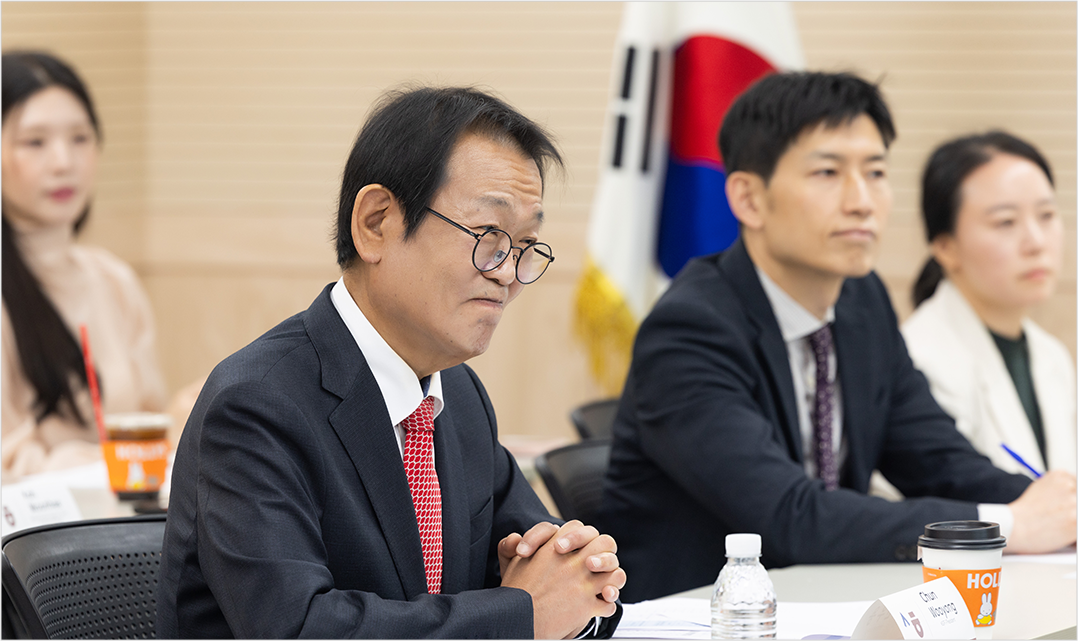
KSIF President Jeon Woo-yong (far left), listening to Indonesian delegates
In his welcoming remarks, President Jeon Woo-yong said, “Language is the key to the heart. Just as Indonesian people have deepened their communication with Korea through the Korean language they learned at KSIs, the KSIF also promises to respect and embrace Indonesian culture as we grow together.” He also outlined three key directions for expanding cooperation between the two countries: expanding the scale of Sejong Culture Academy programs in Indonesia, strengthening educational infrastructure, and developing customized educational programs that reflect local needs and demand.
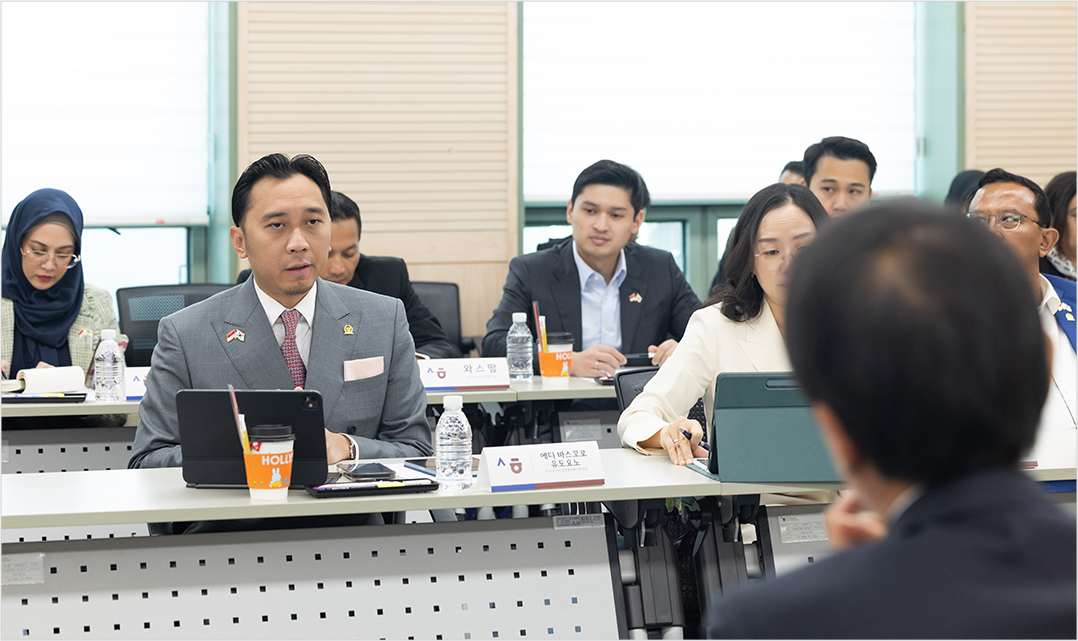
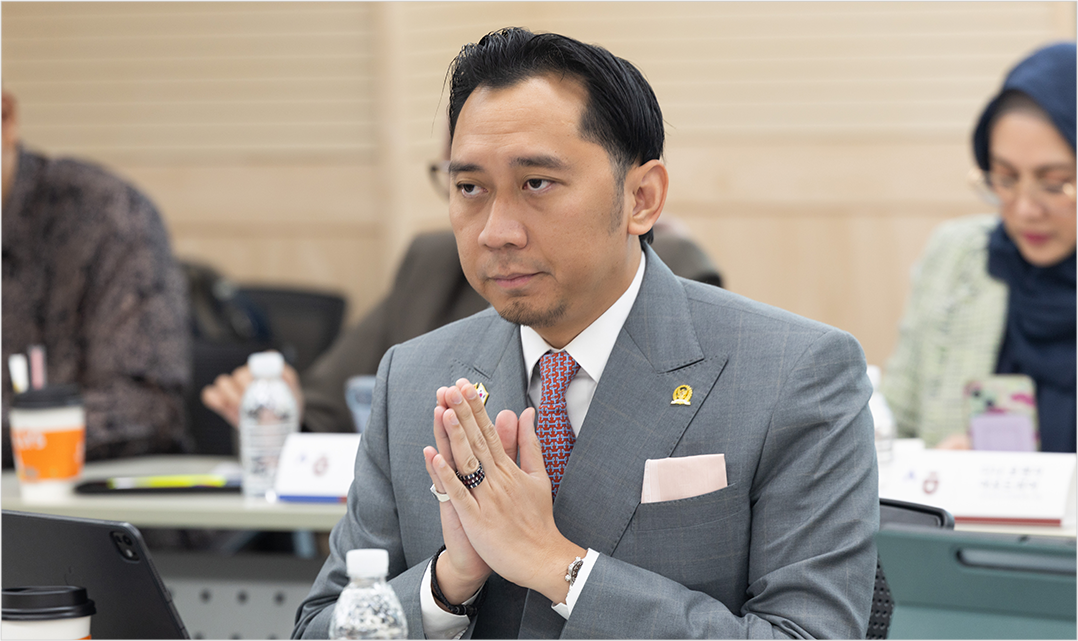
Deputy Speaker Edhie Baskoro Yudohoyono of the People’s Consultative Assembly of
Indonesia listening to KSIF representatives
Indonesia listening to KSIF representatives
There are currently nine KSIs in operation across Indonesia, including in Jakarta and Bandung, which have attracted an average of 3,800 learners annually over the past three years. As an archipelago comprising more than 17,000 islands, Indonesia is home to over 700 local languages, which has created an ongoing challenge of balancing linguistic diversity with national integration. Indonesian officials noted that the KSI system is a successful example of localization within such a multilingual environment. Deputy Speaker Edhie Baskoro Yudhoyono remarked, “We are well aware of the important role of Sejong the Great. KSIs have done a great job of promoting the Korean language and Korean culture, and they are expanding more quickly than Indonesia’s own foreign-language program, Bahasa Indonesia Penutur Asing (BIPA, Indonesian Language for Foreign Speakers).”
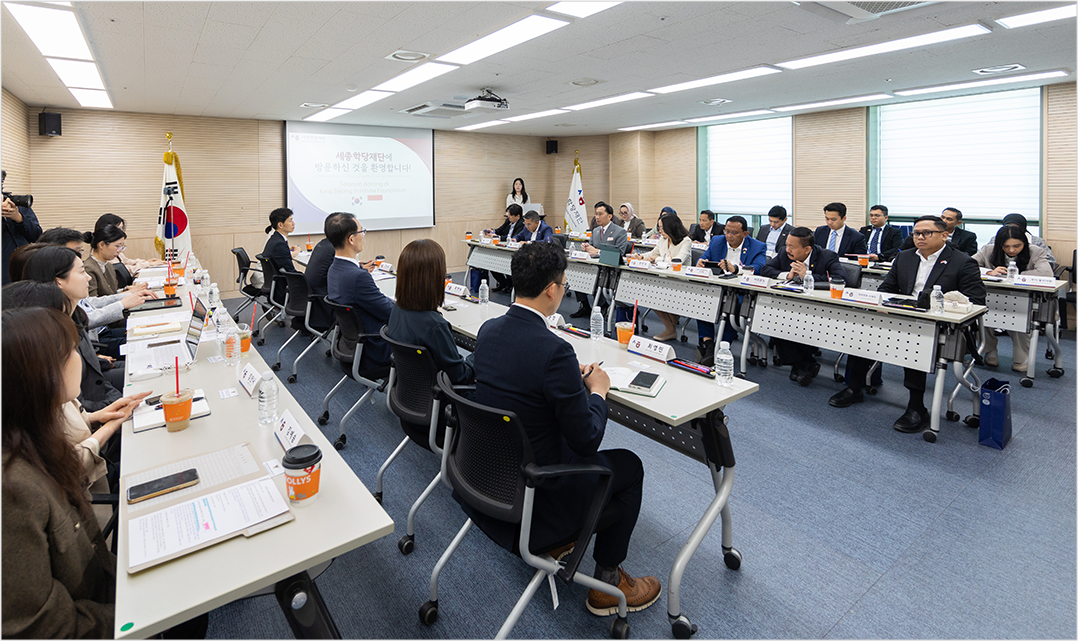
Attendees discussing ways to expand Korean language education and cultural exchanges in Indonesia
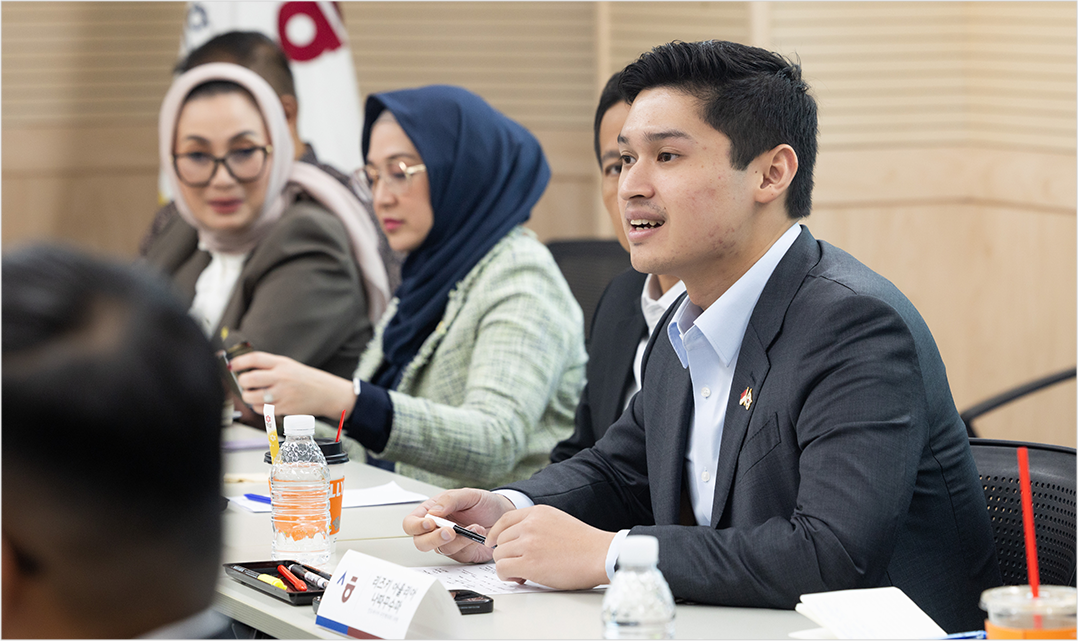
Rizki Aulia Rahman Natakusumah (far right), a member of the People’s Consultative Assembly,
presenting his opinion
presenting his opinion
During the discussions, there was strong interest in expanding the KSI network in Indonesia by designating new branches. Rizki Aulia Rahman Natakusumah, a member of the People’s Consultative Assembly, said, “I hope a KSI can one day be established on every island in Indonesia.” In response, Secretary General Choi Hyun-seung stated, “This year, nine institutions in Indonesia have applied to become KSIs and are currently under review. The KSIF will continue to cooperate actively so that even more organizations can apply in the future.”
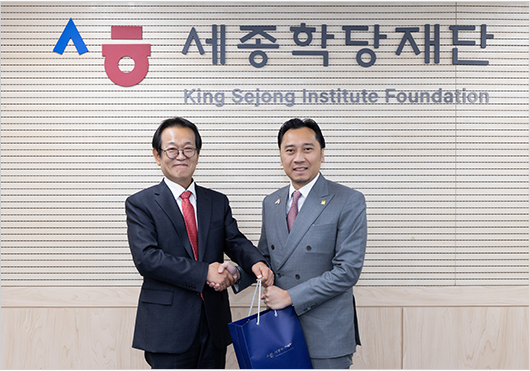
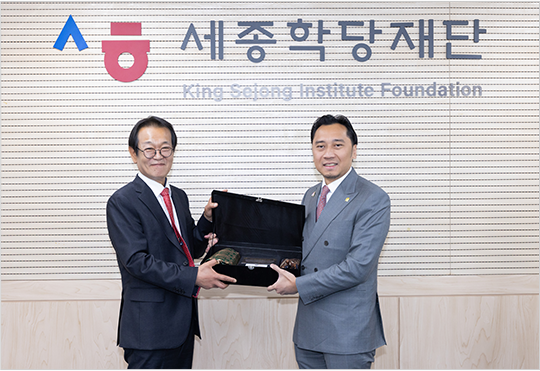
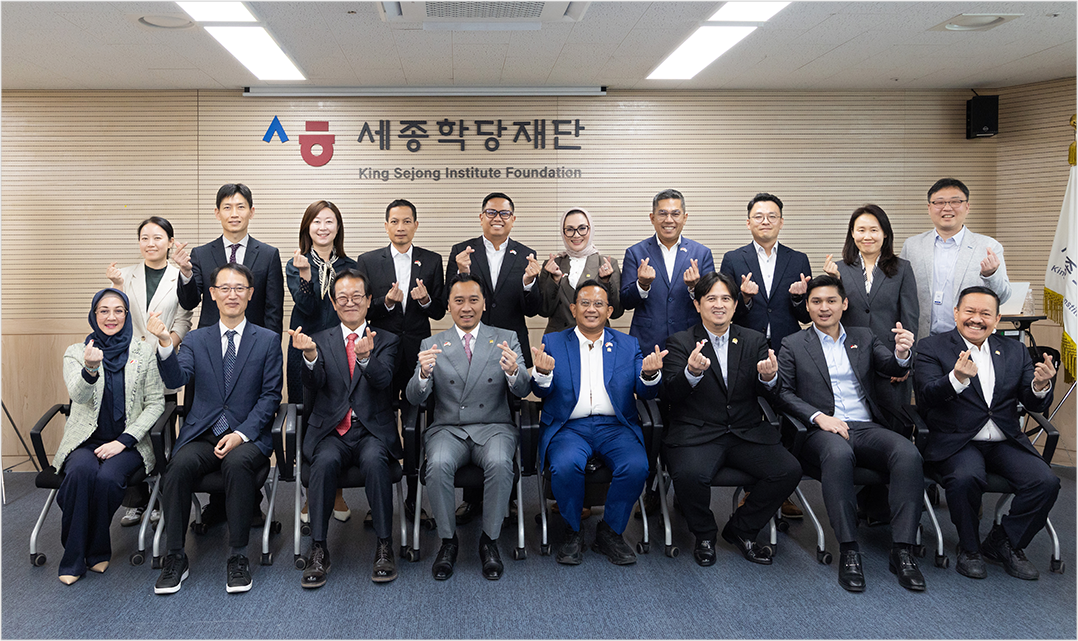
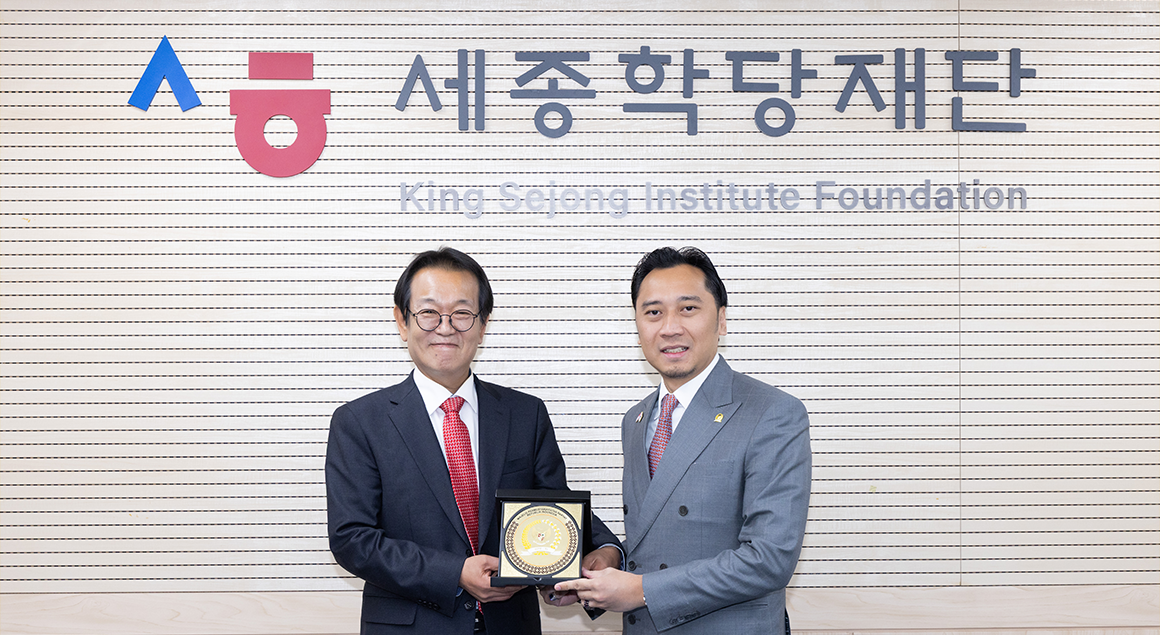
After approximately one hour of discussions and a Q&A session covering key issues in Korean language education, the meeting concluded with an exchange of commemorative gifts and a group photo. The KSIF presented traditional bangjja yugi (hand‑forged bronze tableware) spoon and chopstick sets, while the Indonesian delegation provided a commemorative plaque and traditional cloth symbolizing harmony. The exchange reaffirmed the friendly and cooperative relations between the two countries.
After approximately one hour of discussions and a Q&A session covering key issues in Korean language education, the meeting concluded with an exchange of commemorative gifts and a group photo. The KSIF presented traditional bangjja yugi (hand‑forged bronze tableware) spoon and chopstick sets, while the Indonesian delegation provided a commemorative plaque and traditional cloth symbolizing harmony. The exchange reaffirmed the friendly and cooperative relations between the two countries.