KSIF Creating Hopeful Future Together with Younger Generation
글쓴이홍보협력팀
태그
작성일 2026-05-27
조회수255

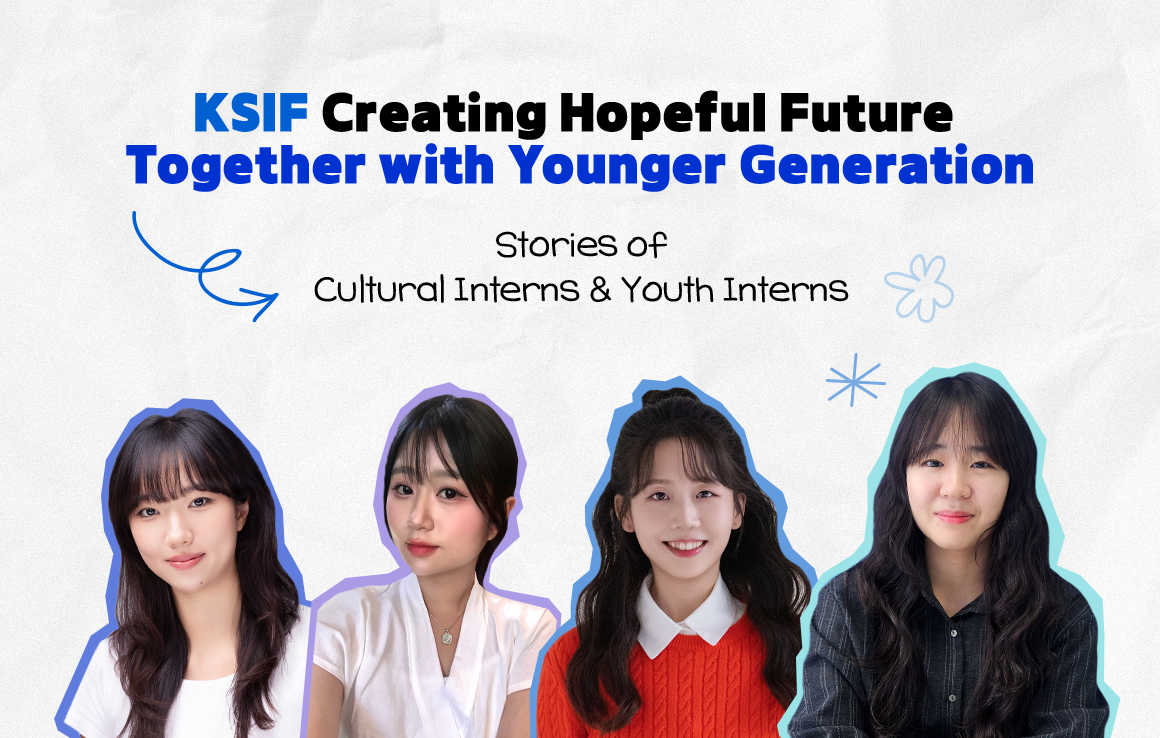
KSIF Creating Hopeful Future
Together with Younger Generation
Together with Younger Generation
> From overseas Cultural Intern Dispatch Program to hands-on youth internships
> Empowering youths with both cultural experiences and opportunities to develop practical skills
◇ Cultural Intern Dispatch Program: Sharing Culture Beyond Language
The King Sejong Institute Foundation (President Jeon Woo-yong, hereafter referred to as the “KSIF”) operates a range of youth participation programs that bring Korean culture directly to the heart of Korean language learning communities worldwide. Among them, the Cultural Intern Dispatch Program is a flagship initiative that promotes K-culture through the perspectives of young people while strengthening their practical capabilities and global awareness at the same time. This month’s issue highlights the lived experiences and achievements of cultural interns through their on-site activities, offering a closer look at their journeys and the impact they’ve made.
The Cultural Intern Dispatch Program supports undergraduate and graduate students in Korea who majored in Korean culture and arts or have relevant experience. Selected students are dispatched to overseas King Sejong Institutes, where they operate cultural education programs tailored to local needs. In 2025, the KSIF also participated in the Ministry of Culture, Sports and Tourism’s Youth K-Culture Global Frontier initiative. Through this collaboration, the program will continue to broaden the global perspectives of young people while strengthening their capabilities in Korean cultural education. By teaching K-beauty, K-pop, traditional crafts, Korean cuisine, Taekwondo, and more, interns provide hands-on cultural experiences to learners and serve as a bridge connecting local communities with Korea.
The Cultural Intern Dispatch Program supports undergraduate and graduate students in Korea who majored in Korean culture and arts or have relevant experience. Selected students are dispatched to overseas King Sejong Institutes, where they operate cultural education programs tailored to local needs. In 2025, the KSIF also participated in the Ministry of Culture, Sports and Tourism’s Youth K-Culture Global Frontier initiative. Through this collaboration, the program will continue to broaden the global perspectives of young people while strengthening their capabilities in Korean cultural education. By teaching K-beauty, K-pop, traditional crafts, Korean cuisine, Taekwondo, and more, interns provide hands-on cultural experiences to learners and serve as a bridge connecting local communities with Korea.
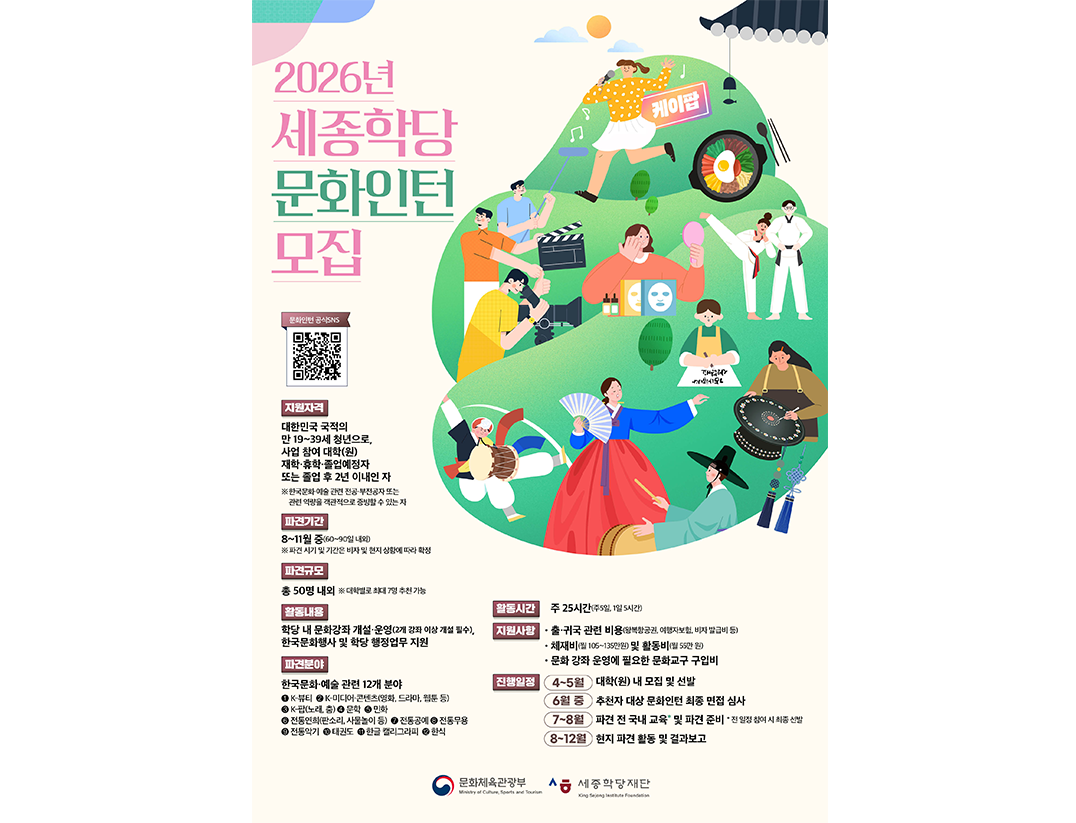
2026 Sejong Institute Cultural Intern Recruitment Poster
Over the past three years, the KSIF has steadily expanded the scale of the Cultural Intern Dispatch Program. In 2025, a total of 49 interns were dispatched to 40 KSIs in 27 countries. For 2026, the KSIF plans to select 50 interns, and 38 universities nationwide are currently participating in the program. The selection process involves university nominations, which finish in May, and interviews in June, followed by domestic training and preparation before the final dispatch to overseas institutes.
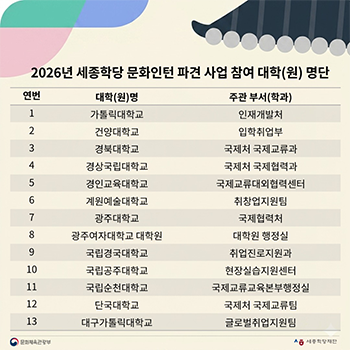
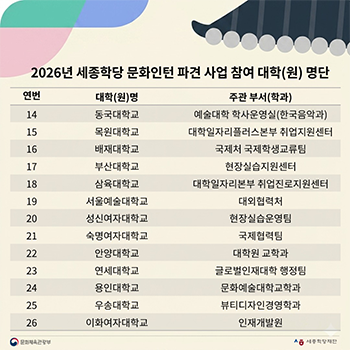
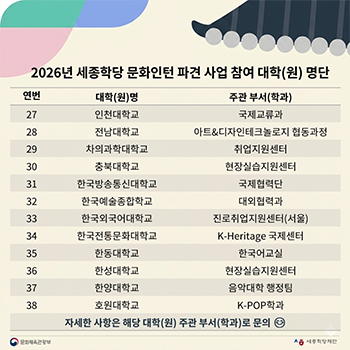
List of Universities Participating in the 2026 Cultural Intern Dispatch Program
◇ Interview with Two Outstanding Cultural Interns of 2025
What kind of meaningful growth have cultural interns experienced while sharing Korean culture overseas? We spoke with two interns selected as the Outstanding Cultural Interns of 2025 to hear their stories from the field.
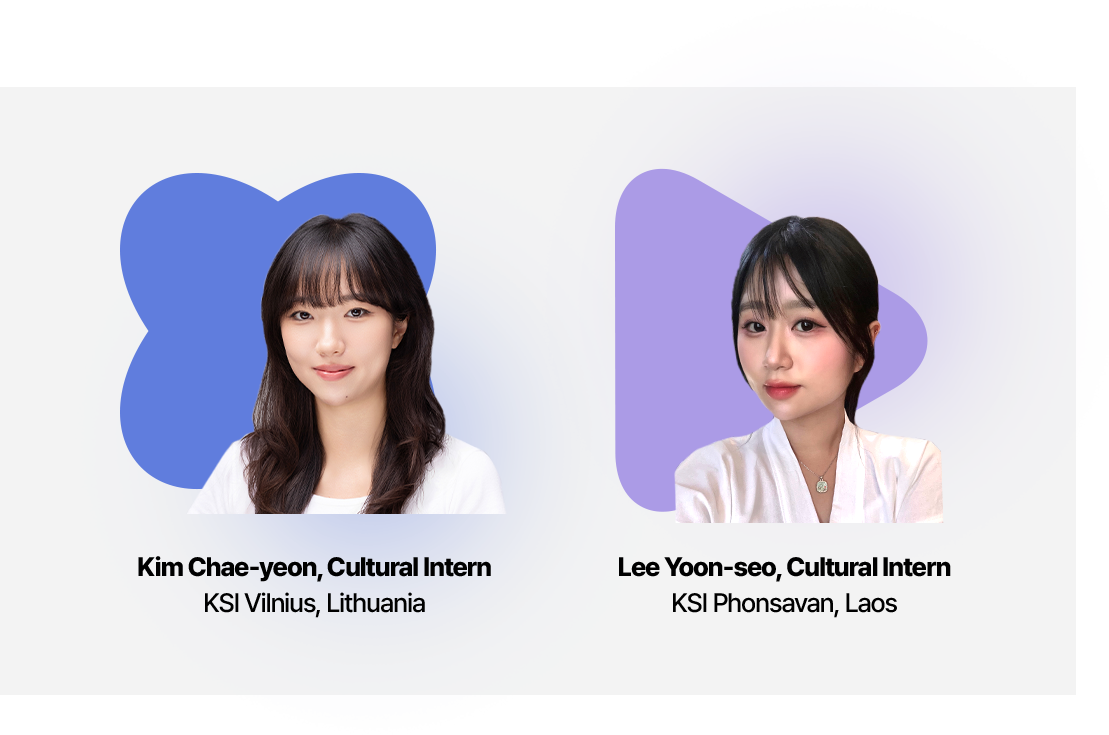
Q. Please introduce yourselves.
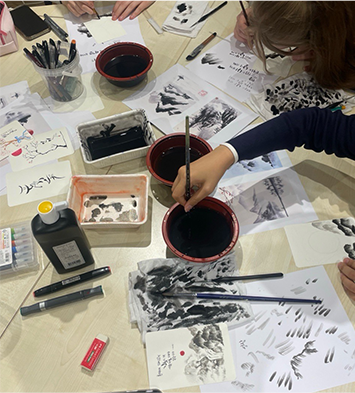
A. (Kim Chae-yeon) Hello. My name is Kim Chae-yeon, and I’m currently majoring in design at Incheon National University. From September to November 2025, I worked as a cultural intern at the King Sejong Institute in Vilnius, Lithuania, where I taught Korean calligraphy and traditional crafts classes.
A. (Lee Yoon-seo) Hello. My name is Lee Yoon-seo, and I served as a cultural intern at KSI Phonsavan, Laos, where I taught K-beauty and K-pop classes. For the K-beauty program, I organized hands-on activities focused on Korean skincare, cosmetics-making, and special effects makeup. To make the classes more engaging, I combined traditional hanbok styling with makeup looks inspired by K-pop idols. I also encouraged participants to compare Korean and Lao beauty traditions to create opportunities to improve understanding between the cultures. The K-pop classes featured interactive activities such as singing Korean songs and playing traditional Korean games. Participants also learned simple Korean expressions through song lyrics.
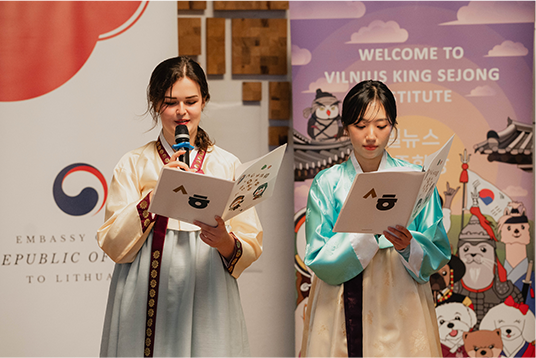
Cultural Intern Kim Chae-yeon (right) hosting
a Hangeul Day event at KSI Vilnius, Lithuania
a Hangeul Day event at KSI Vilnius, Lithuania
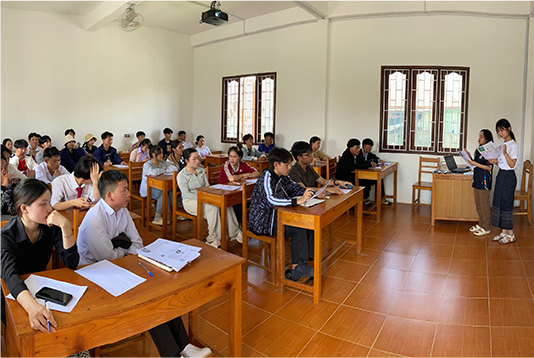
Cultural Intern Lee Yoon-seo teaching a K-beauty class
at KSI Phonsavan, Laos
at KSI Phonsavan, Laos
Q. What was your most memorable moment while working abroad?
A. (Kim Chae-yeon) Among the many activities, the class on the twelve zodiac animals was the most memorable. The learners were enthusiastic about discovering their zodiac signs and comparing the personality traits associated with each sign, and actively interacted with one another. They were also eager to zodiac-themed keyrings themselves. That class was later selected as the most memorable in the course satisfaction survey, which made the experience even more meaningful. I also remember the one-day mother-of-pearl keyring workshop that was held for the general public. Although I had to explain the meaning and history of mother-of-pearl crafts and guide participants through the entire production process in just a short period of time, the participants showed great enthusiasm and satisfaction, which made the experience especially rewarding.
A. (Lee Yoon-seo) For me, the most memorable thing was seeing the learners try out Korean-style makeup during the K-beauty classes and feel as though they were characters from Korean dramas. I was also deeply impressed when participants naturally embraced Korean cheering culture during the K-pop classes. It made me realize that the KSI experience has expanded beyond language learning into genuine cultural exchange. I could truly feel that culture is not delivered one-way, but something shared and experienced together.
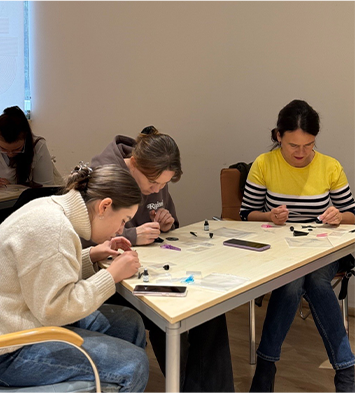
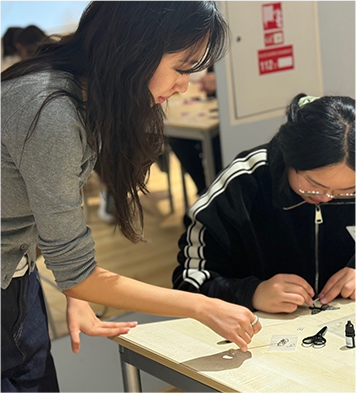
Cultural intern Kim Chae-yeon (KSI Vilnius, Lithuania) conducting a one-day class
on how to make mother-of-pearl keyrings
on how to make mother-of-pearl keyrings
Q. How interested were the local learners in Korean culture, and how did they respond to the programs?
A. (Kim Chae-yeon) The learners showed keen interest in all forms of Korean culture, ranging from traditions to K-pop. I organized a variety of hands-on activities, including mother-of-pearl crafts, traditional Korean knot-making, minhwa (folk art) postcard design, and K-content production so that participants could experience Korean culture in diverse and engaging ways. Most classes saw a lot of participants, especially when there were activities where they could create something themselves. I was particularly impressed by how they produced highly polished works in just a short amount of time. One especially memorable activity was filming a short drama inspired by the Joseon Dynasty. Even learners who were not yet familiar with Korean memorized their lines and participated enthusiastically, which left a deep impression on me.
A. (Lee Yoon-seo) Learners at KSI Phonsavan, Laos, also participated with an open mind and showed great interest in Korean culture. It was rewarding whenever someone said, “I want to learn more about Korean culture,” and I felt a strong sense of responsibility. The experience reminded me that meaningful connections can be formed through culture regardless of language or environment, and it gave me a renewed appreciation for the value of education. The local KSI also actively supported the programs, which made the experience even more meaningful.
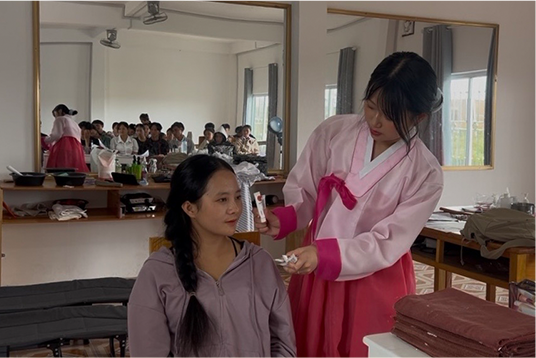
Cultural Intern Lee Yoon-seo (KSI Phonsavan, Laos)
teaching a hanbok makeup class
teaching a hanbok makeup class
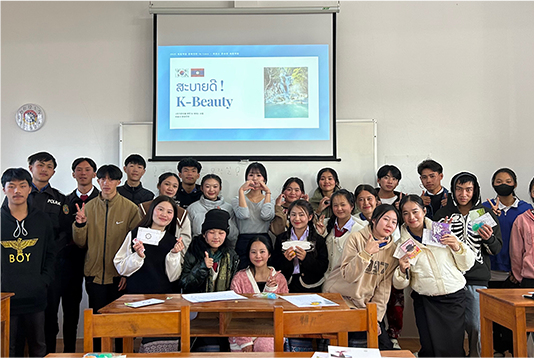
Group photo to commemorate the final K-beauty class
at KSI Phonsavan, Laos
at KSI Phonsavan, Laos
Q. How has your cultural internship experience influenced your career path or dreams?
A. (Kim Chae-yeon) This cultural internship was an invaluable opportunity to broaden the direction of my future career. By planning classes independently and responding flexibly to the learners’ reactions, I strengthened both my problem‑solving skills and my sense of responsibility. It was deeply fulfilling to see the programs I prepared become enjoyable experiences that sparked genuine interest in Korean culture.
I also took part in a variety of official events, including Hangeul Day celebrations, the Game On event, the Bysun Festival, and programs hosted by the embassy, which allowed me to experience cultural exchanges firsthand. Through these activities, I developed a new goal: to grow beyond my background in design and connect with people while sharing Korean culture with the world.
I also took part in a variety of official events, including Hangeul Day celebrations, the Game On event, the Bysun Festival, and programs hosted by the embassy, which allowed me to experience cultural exchanges firsthand. Through these activities, I developed a new goal: to grow beyond my background in design and connect with people while sharing Korean culture with the world.
A. (Lee Yoon-seo) The cultural internship was far more than just an internship for me as well. It marked an important milestone in my career path. I initially joined with the goal of introducing Korean culture, but through the genuine curiosity and enthusiastic participation of the learners, I realized that I was learning and growing even more than them. The connections I formed and the experiences I gained abroad inspired me to continue sharing the value of Korean culture across borders in the future.
◇ KSIF Supports Youths on Path to Employment through Youth Internship Program
In addition to the Cultural Intern Program, the KSIF also operates the experiential Youth Internship Program, which provides Korean youths with opportunities to gain hands-on experience in a domestic public institution while supporting their career development.
The KSIF fully adheres to the government’s youth internship guidelines, and has also introduced a variety of support measures designed to enhance the overall experience and satisfaction of interns. The interns participate directly and indirectly in KSI projects, which gives them a deeper understanding of the KSIF’s work. The program has adopted a three-month rotational assignment system, which enables the interns to gain experience across a wide range of functions and develop practical workplace skills. To actively support career exploration, the KSIF provides mentoring programs, equal access to employee training, collaborative intern projects, mock interviews conducted by employment specialists, and support for participation in job fairs. Thanks to these efforts, internship satisfaction has consistently remained above 92 points.
One particularly meaningful aspect of the program is its direct connection to employment opportunities. Current youth interns receive a one-time partial exemption from the document screening process when applying for regular or permanent contract positions at the KSIF. Outstanding interns are also awarded certificates of completion, which helps ensure that their internship experience can meaningfully support future employment. These efforts have led to tangible results. Over the past three years, 10 out of 40 youths who interned at the KSIF were later hired and continue to work there today. This demonstrates that the Youth Internship Program has evolved beyond a simple experiential program into a meaningful pathway to employment.
Looking ahead, the KSIF plans to further strengthen the program to better support the growth and career development of future generations. This will include reviewing the welfare and benefits policies to ensure there are no disparities between interns and employees, expanding mentor-centered onboarding support, and creating more opportunities for interns to interact with staff members to give them a broader experience and perspective.
The KSIF plans to recruit six youth interns in the first half of this year, the same as in previous years. The recruitment process is scheduled to begin in late May, and the KSIF looks forward to the active participation of talented young people interested in the organization and its mission.
The KSIF fully adheres to the government’s youth internship guidelines, and has also introduced a variety of support measures designed to enhance the overall experience and satisfaction of interns. The interns participate directly and indirectly in KSI projects, which gives them a deeper understanding of the KSIF’s work. The program has adopted a three-month rotational assignment system, which enables the interns to gain experience across a wide range of functions and develop practical workplace skills. To actively support career exploration, the KSIF provides mentoring programs, equal access to employee training, collaborative intern projects, mock interviews conducted by employment specialists, and support for participation in job fairs. Thanks to these efforts, internship satisfaction has consistently remained above 92 points.
One particularly meaningful aspect of the program is its direct connection to employment opportunities. Current youth interns receive a one-time partial exemption from the document screening process when applying for regular or permanent contract positions at the KSIF. Outstanding interns are also awarded certificates of completion, which helps ensure that their internship experience can meaningfully support future employment. These efforts have led to tangible results. Over the past three years, 10 out of 40 youths who interned at the KSIF were later hired and continue to work there today. This demonstrates that the Youth Internship Program has evolved beyond a simple experiential program into a meaningful pathway to employment.
Looking ahead, the KSIF plans to further strengthen the program to better support the growth and career development of future generations. This will include reviewing the welfare and benefits policies to ensure there are no disparities between interns and employees, expanding mentor-centered onboarding support, and creating more opportunities for interns to interact with staff members to give them a broader experience and perspective.
The KSIF plans to recruit six youth interns in the first half of this year, the same as in previous years. The recruitment process is scheduled to begin in late May, and the KSIF looks forward to the active participation of talented young people interested in the organization and its mission.
◇ Interview with KSIF Youth Interns
The Youth Internship Program goes beyond simply providing work experience at a public institution. It serves as a meaningful stepping stone toward real career paths. We spoke with two individuals who began as youth interns at the KSIF and have since become full-time employees to hear how their internship experiences led to valuable learning opportunities where they could cultivate specialized expertise and professional acumen.

Q. What led you to apply for the KSIF Youth Internship Program? What were your initial expectations?
A. When I was a student, I was deeply moved by the news that the Cia-Cia tribe in Indonesia, a community that previously had no written script, had adopted Hangul as its official writing system. Later, when I majored in Chinese and studied foreign languages more deeply at university, I came to appreciate even more the scientific excellence of the Korean language and writing system, as well as the cultural power embedded within them.
As a foreign language major, I had many opportunities to interact with international students. As a resident advisor, I supported their adjustment to life in Korea. The experience was deeply rewarding. Meeting international students who loved the Korean language and Korean culture with such passion inspired me to join the KSIF, which supports that passion in a more official and professional way. At the time I applied for the internship, I hoped to turn the inspiration I had gained from those experiences into practical work by participating directly in KSIF programs and activities.
As a foreign language major, I had many opportunities to interact with international students. As a resident advisor, I supported their adjustment to life in Korea. The experience was deeply rewarding. Meeting international students who loved the Korean language and Korean culture with such passion inspired me to join the KSIF, which supports that passion in a more official and professional way. At the time I applied for the internship, I hoped to turn the inspiration I had gained from those experiences into practical work by participating directly in KSIF programs and activities.
Q. Was there a particular task or experience during your internship that left a strong impression on you? Please share something from your internship that felt more rewarding than you expected, or a time when you discovered some new appeal of the working environment or the work itself.
A. The experience I remember most was supporting operations for the World Korean Educator Conference. At the time, I was an intern in the KSI Planning Team and was responsible for guiding participants during the designation certificate presentation ceremony for newly established KSIs. Although my role itself was small, I still vividly remember how overwhelming it was to actually meet the KSI staff I had only communicated with through emails and phone calls. I was deeply moved by the sight of Korean language educators from across the globe, with various nationalities, ethnic backgrounds, and native languages, coming together under the shared goal of advancing Korean language education. That was the moment I realized that the KSIF’s impact—something difficult to fully grasp from behind an office desk—was genuinely changing lives on the other side of the world. That experience instilled in me a great sense of pride, as I recognized that our roles at the KSIF goes far beyond administrative tasks; we serve as a bridge connecting countries and people.
Q. What made you decide to apply for a full‑time position at the KSIF after your internship? Please also share how the internship experience helped you during the hiring process.
A. Beyond creating meaningful value as part of a public institution serving the public good, the biggest reason I decided to apply again was the people. Even though many youth interns pass through the organization, the KSIF staff never treated me as someone who was only there for a brief time, but rather as a future colleague. They generously shared everything with me, from the fundamentals of the work and career advice to the values the KSIF strives to uphold. This made me feel a genuine sense of belonging and respect, which ultimately convinced me that this was an organization where I could truly thrive and grow.
The internship was also instrumental to my success during the recruitment process. Rather than simply handling assistant-level tasks, I was able to directly experience the overall workflow of public institution projects, from issuing service contracts and evaluating proposals to project operations and final reporting. This gave me a much deeper understanding of the work. One particularly impactful experience was working with the Operations Support Team during the relocation of the KSIF office. Assisting with asset inspections and equipment logistics helped me better understand the organization as a whole.
Ultimately, these experiences transformed my final interview. I was so nervous that day, but simply walking back into the familiar environment, where I had already invested so much passion and care, provided a sense of comfort and the confidence I needed.
The internship was also instrumental to my success during the recruitment process. Rather than simply handling assistant-level tasks, I was able to directly experience the overall workflow of public institution projects, from issuing service contracts and evaluating proposals to project operations and final reporting. This gave me a much deeper understanding of the work. One particularly impactful experience was working with the Operations Support Team during the relocation of the KSIF office. Assisting with asset inspections and equipment logistics helped me better understand the organization as a whole.
Ultimately, these experiences transformed my final interview. I was so nervous that day, but simply walking back into the familiar environment, where I had already invested so much passion and care, provided a sense of comfort and the confidence I needed.
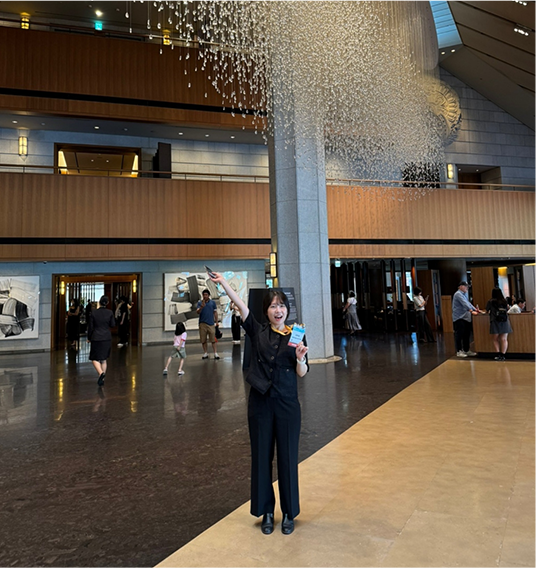
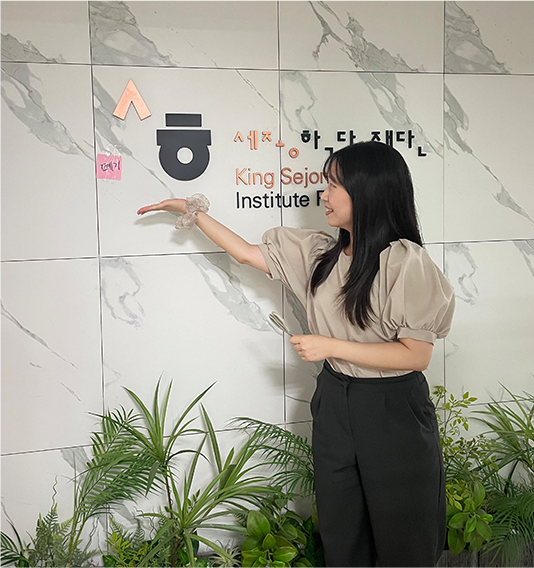
Senior staff Kim Hee-nae during her youth internship program
Q. What kind of work are you currently responsible for in the Educational and Cultural Affairs Team? How is it different from or related to your experience as an intern?
A. I was fortunate to join the Educational and Cultural Affairs Team, which oversees the World Korean Educator Conference. This experience left a deep impression on me during my internship. The biggest change compared to my internship is, without question, the weight of responsibility. Back then, I played a small supportive role for projects and learned by observing. Now, as a staff member, I work to ensure projects are carried out successfully from start to finish.
I experienced two distinct departments during my internship, the KSI Planning Team and the Operations Support Team, so I was able to build a broad base of practical knowledge. As a result, whenever operational issues arise or departmental support is required, I can navigate the organization with precision, identifying the relevant departments and exact points of contact without hesitation. But most important were the meaningful relationships I built during my internship. These have allowed me to thrive in a familiar and supportive environment. I also participate in informal clubs with colleagues, which adds energy and enjoyment to what would otherwise become a very demanding work life.
I experienced two distinct departments during my internship, the KSI Planning Team and the Operations Support Team, so I was able to build a broad base of practical knowledge. As a result, whenever operational issues arise or departmental support is required, I can navigate the organization with precision, identifying the relevant departments and exact points of contact without hesitation. But most important were the meaningful relationships I built during my internship. These have allowed me to thrive in a familiar and supportive environment. I also participate in informal clubs with colleagues, which adds energy and enjoyment to what would otherwise become a very demanding work life.
Q. Please say a few words for people considering applying for the youth internship program.
A. Everyone needs to start somewhere, but it’s not easy to find a place that recognizes that and gives you a chance. I understand better than anyone how overwhelming it can feel to take the very first step into the world of employment. The KSIF opened the door for me during that time of uncertainty. During my six months as a youth intern, I was able to personally experience the influence and impact of the KSIF’s public mission of promoting the Korean language and Korean culture around the world. A professional career spans decades, so where we choose to begin is a defining milestone that shapes the direction of our life. By taking the opportunity to become a youth intern at the KSIF, you will be taking that first step well. I first formed ties with the KSIF as a youth intern, and I hope to continue my journey here through middle age, later adulthood, and even old age. I sincerely look forward to seeing many of you join us on the KSIF’s journey ahead.
Q. What led you to apply for the KSIF Youth Internship Program? What were your initial expectations?
A. During my time as an exchange student, I began thinking about how to most effectively convey Korean to foreign learners. That motivated me to pursue certification in Korean language teaching and sparked my interest in the King Sejong Institute Foundation. I was particularly drawn to the KSIF’s role in promoting the Korean language at the national level, which encouraged me to apply.
As a language and literature major, I had spent a lot of time learning foreign languages myself. Because of that, I believed that a public institution dedicated to promoting the national language could provide tremendous value to learners, which naturally deepened my interest in the KSIF’s work. When I began the internship, I hoped that I would be able to observe and learn how the KSIF’s programs were actually operated, if only indirectly.
As a language and literature major, I had spent a lot of time learning foreign languages myself. Because of that, I believed that a public institution dedicated to promoting the national language could provide tremendous value to learners, which naturally deepened my interest in the KSIF’s work. When I began the internship, I hoped that I would be able to observe and learn how the KSIF’s programs were actually operated, if only indirectly.
Q. Was there a particular task or experience during your internship that left a strong impression on you? Please share something from your internship that felt more rewarding than you expected, or a time when you discovered some new appeal of the working environment or the work itself.
A. The most memorable experience during my internship was working as a staff member at the World Korean Educator Conference. This was my first external assignment, and it was such a large-scale event. Seeing the actual operations firsthand left a very strong impression on me. While working in the office, it was difficult to fully grasp the true scale of the KSIF’s programs or how they operated in practice. But at the conference, I was able to witness those things firsthand. Seeing the palpable passion of Korean language educators from around the world made me appreciate the KSIF’s mission even more. Watching the staff operate booths and explain the KSIF’s programs to attendees left a particularly strong impression on me. I wanted to be the one standing there the following year. That’s what ultimately solidified my decision to pursue a full-time career at the KSIF.
Q. What made you decide to apply for a full‑time position at the KSIF after your internship? Please also share how the internship experience helped you during the hiring process.
A. I believe one of the greatest advantages of working as an intern was the opportunity to communicate closely with the current staff. While helping for prepare meetings, I reviewed the materials carefully, and whenever I had meals with staff members, I would ask questions about the KSIF that I had been curious about. They always kindly took the time to explain the KSIF’s projects and the work they were carrying out.
Hearing directly from professionals who were active in the field was far more helpful and meaningful than simply reviewing information on the website or in press releases. More importantly, it allowed me to hear authentic stories from the workplace firsthand. I believe that these experiences gave me a much deeper understanding of the KSIF. The valuable insights and practical experiences I gained during my internship became important assets when I was preparing my application documents and during the interviews, and I believe they were a significant advantage throughout the hiring process.
Hearing directly from professionals who were active in the field was far more helpful and meaningful than simply reviewing information on the website or in press releases. More importantly, it allowed me to hear authentic stories from the workplace firsthand. I believe that these experiences gave me a much deeper understanding of the KSIF. The valuable insights and practical experiences I gained during my internship became important assets when I was preparing my application documents and during the interviews, and I believe they were a significant advantage throughout the hiring process.
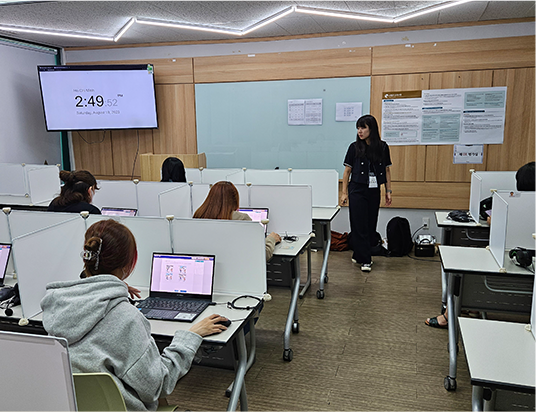
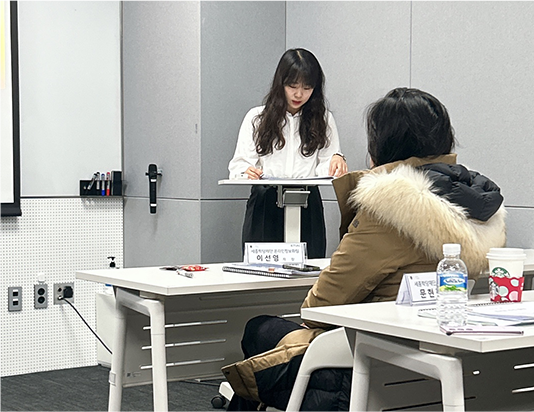
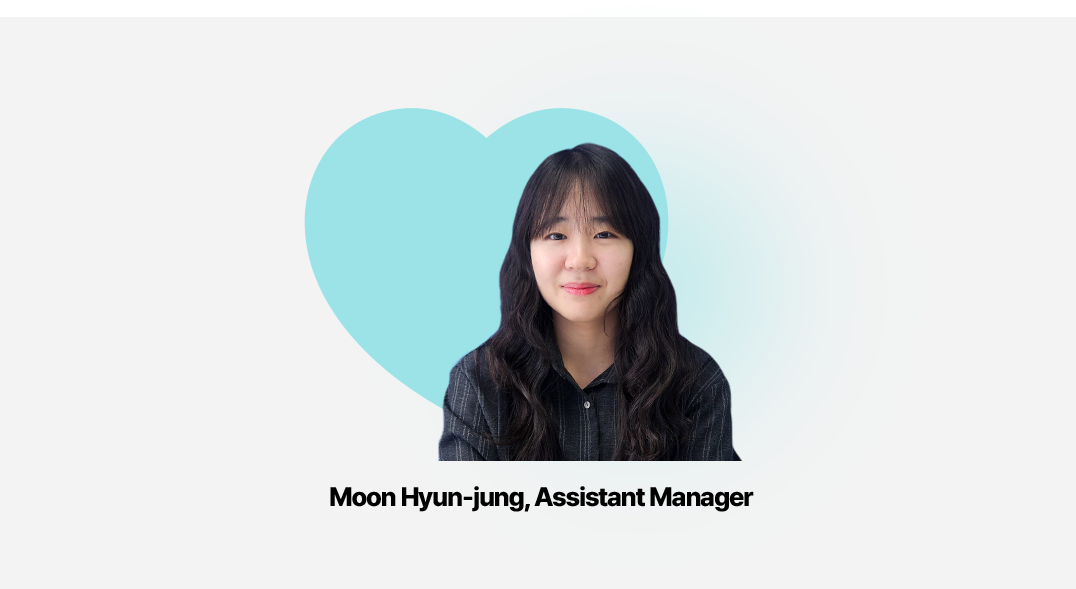
Moon Hyun-jung, a former youth intern
who is now working as an assistant manager on the SKA Team
who is now working as an assistant manager on the SKA Team
Q. What kind of work are you currently responsible for in the Sejong Korean Language Assessment Team? How is it different from or related to your experience as an intern?
A. I am currently part of the Sejong Korean Language Assessment (SKA) Team, where I oversee operations for the SKA, a Korean proficiency test designed to comprehensively evaluate the Korean communication abilities of learners worldwide. Our work extends beyond assessing the proficiency levels of learners, including students enrolled at KSIs. We are trying to broaden the global recognition and practical utility of SKA scores so they can serve as valid credentials for university admissions and employment visas. We are also working to expand the scale of test administration to provide more opportunities for examinees, while also improving testing environments and enhancing overall test-taker satisfaction.
As a language and literature major who has taken numerous foreign language exams, it is very meaningful to me to be on the operational side of Korean language assessment. As a test-taker, I often wondered, “Who is responsible for making all of this happen?” So it’s a unique experience to be engaged in the work directly. My own experiences taking foreign language assessments both in Korea and abroad continue to help me in my current role. I’m very happy with my current role. By managing the SKA booths each year at the World Korean Educator Conference, I’m directly fulfilling the professional goals I set during my internship. Also, many of the relationships I built as an intern continue to flourish today.
As a language and literature major who has taken numerous foreign language exams, it is very meaningful to me to be on the operational side of Korean language assessment. As a test-taker, I often wondered, “Who is responsible for making all of this happen?” So it’s a unique experience to be engaged in the work directly. My own experiences taking foreign language assessments both in Korea and abroad continue to help me in my current role. I’m very happy with my current role. By managing the SKA booths each year at the World Korean Educator Conference, I’m directly fulfilling the professional goals I set during my internship. Also, many of the relationships I built as an intern continue to flourish today.
Q. Please say a few words for people considering applying for the youth internship program.
A. If you are interested in the KSIF, do not to hesitate to apply. It took me multiple attempts, including the youth internship, before I became a full‑time staff member. In the end, what helped me most were the things I saw and experienced directly in the field. I still vividly remember the profound sense of fulfillment and joy I felt when I reunited, this time as a colleague, with the staff members who had supported and cared for me during my internship. Because I received so much kindness and support myself, I now approach my work with the goal of offering that same encouragement to others. I sincerely hope many people will take on the challenge and apply.