What’s Happening Inside and Outside Korean Language Classrooms Amid the Rapidly Changing Situation in the Middle East?
글쓴이홍보협력팀
태그
작성일 2026-05-27
조회수146

What’s Happening Inside and
Outside Korean Language Classrooms
Amid the Rapidly Changing Situation in the Middle East?
Outside Korean Language Classrooms
Amid the Rapidly Changing Situation in the Middle East?
> Passion for learning at KSIs continues despite geopolitical volatility
> Updates from KSI Center Sharjah, UAE, and KSI Riyadh, Kingdom of Saudi Arabia
Following the recent ceasefire between the United States and Iran, diplomatic efforts have been underway to negotiate a formal end to the conflict. Although tensions still remain, local communities are gradually returning to normal life, and educational activities have resumed as well. Amid these circumstances, local King Sejong Institutes are continuing to provide Korean language education and maintain close connections with learners. Oh Ju-won, Director of KSI Center Sharjah, UAE, and Lee Tae-yeol, Operations Officer at KSI Riyadh, Saudi Arabia, share updates from the field.
◇ KSI Center Sharjah, UAE, Continues to Provide Education Amid Crisis through Online Classes
KSI Center Sharjah, UAE, is located in Sharjah, the third-largest emirate in the UAE after Abu Dhabi and Dubai. The center operates from the first floor of the Women’s Library at the University of Sharjah. This semester, it is offering 13 classes in four course levels, primarily for students from the University of Sharjah. Recently, the number of local Emirati learners has increased significantly, with approximately 100 students currently enrolled.
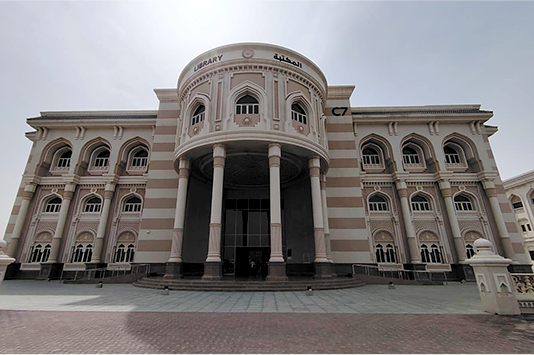
Women’s Library at the University of Sharjah,
home of KSI Center Sharjah
home of KSI Center Sharjah
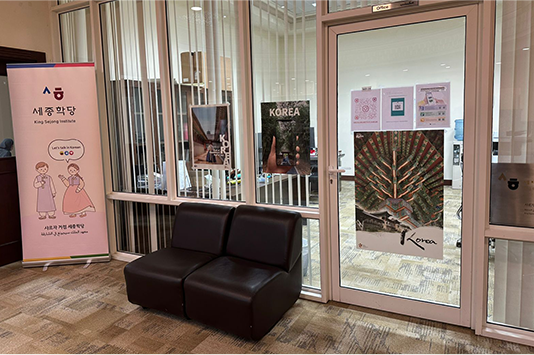
Entrance to KSI Center Sharjah
As educational institutions across the region shifted to remote learning in the wake of war, KSI Center Sharjah, UAE, transitioned to fully online classes. A group chat room was created for each class as a communication channel between the teacher and the students. In addition to sharing class announcements and providing learners with guidance in their studies, this allowed operational updates to be promptly communicated amid the rapidly changing situation. At a time when the course of the conflict and the duration of online instruction were both unpredictable, these chat rooms were essential in minimizing disruptions and ensuring continued student participation.
Safety Above All: Real-Time Information Sharing Through a 16-Organization Emergency Network
Ensuring the safety of learners and instructors was the highest priority during the initial response. In accordance with government mandates, faculty transitioned to remote work in early March, and all classes shifted simultaneously to online platforms. On March 8, after the Ministry of Foreign Affairs of the Republic of Korea elevated the travel advisory for Gulf countries to Level 3 (“Recommendation to Leave”), all teachers dispatched to the UAE temporarily returned to Korea. Throughout this period, local administrative staff monitored regional developments and the status of the institute on the ground while maintaining communication with the KSIF.
Safety Above All: Real-Time Information Sharing Through a 16-Organization Emergency Network
Ensuring the safety of learners and instructors was the highest priority during the initial response. In accordance with government mandates, faculty transitioned to remote work in early March, and all classes shifted simultaneously to online platforms. On March 8, after the Ministry of Foreign Affairs of the Republic of Korea elevated the travel advisory for Gulf countries to Level 3 (“Recommendation to Leave”), all teachers dispatched to the UAE temporarily returned to Korea. Throughout this period, local administrative staff monitored regional developments and the status of the institute on the ground while maintaining communication with the KSIF.
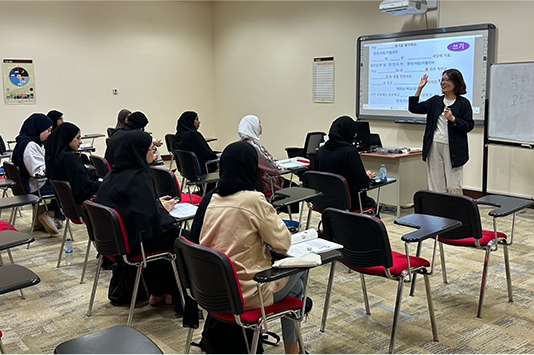
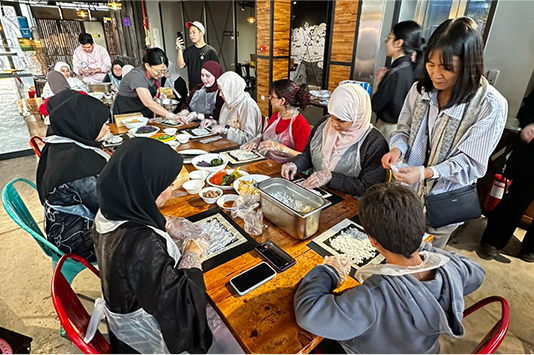
In-person classes at KSI Center Sharjah before the outbreak of the U.S.–Iran conflict
Korean language class (left) and kimbap-making workshop (right)
Korean language class (left) and kimbap-making workshop (right)
At the onset of the conflict, an emergency communication network was established among 16 Korean public institutions operating in the UAE. Centered around the Embassy of the Republic of Korea in the UAE and the Consulate General in Dubai, this network served as a real-time communication channel for key announcements from both the local and Korean governments. The institutions also discussed operational status, residency matters, and temporary repatriation plans. Even now, the insights shared through this network continue to inform the King Sejong Institute’s operational strategy in the region.
However, the transition to a digital environment also brought considerable operational challenges. System errors and unstable Internet connections occasionally impeded participation in remote classes, while it also became apparent concentration levels among learners had decreased. Some students had difficulty continuing their studies amid the uncertainty of the situation. The administrative burden was compounded by volatile local education policies, and class schedules had to be repeatedly adjusted in response to the latest remote learning mandates and vacation schedules, which required immediate and constant communication with the student body.
However, the transition to a digital environment also brought considerable operational challenges. System errors and unstable Internet connections occasionally impeded participation in remote classes, while it also became apparent concentration levels among learners had decreased. Some students had difficulty continuing their studies amid the uncertainty of the situation. The administrative burden was compounded by volatile local education policies, and class schedules had to be repeatedly adjusted in response to the latest remote learning mandates and vacation schedules, which required immediate and constant communication with the student body.
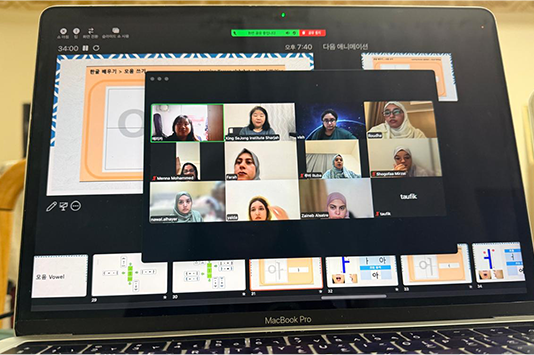
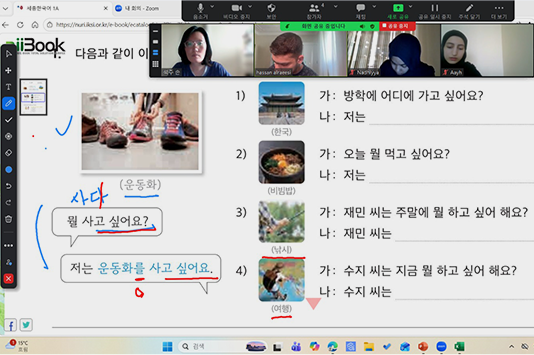
KSI Center Sharjah, UAE, conducting online classes following the outbreak of war
Despite the formidable challenges of transitioning to remote learning, the period was also marked by moments of unexpected levity. In many households, multiple family members often attended digital sessions at the same time, leading to occasional disagreements between siblings being inadvertently broadcast to the entire virtual classroom.
At present, KSI Center Sharjah remains primarily focused on digital instruction, with future class formats to be adjusted flexibly in alignment with evolving government policies. However, with remote learning continuing over such an extended period, a sense of fatigue has emerged among both faculty and students. The energy and interpersonal interaction typically seen in face-to-face classes have diminished, leading to a decline in engagement and concentration among students. In response, the KSI is exploring various ways to sustain student interest, including online speaking contests and participation in beta testing for the KSIF’s AI-driven learning program.
At present, KSI Center Sharjah remains primarily focused on digital instruction, with future class formats to be adjusted flexibly in alignment with evolving government policies. However, with remote learning continuing over such an extended period, a sense of fatigue has emerged among both faculty and students. The energy and interpersonal interaction typically seen in face-to-face classes have diminished, leading to a decline in engagement and concentration among students. In response, the KSI is exploring various ways to sustain student interest, including online speaking contests and participation in beta testing for the KSIF’s AI-driven learning program.
◇ KSI Riyadh, Kingdom of Saudi Arabia, Maintains Stable Academic Operations and Fully Resumes In-Person Classes
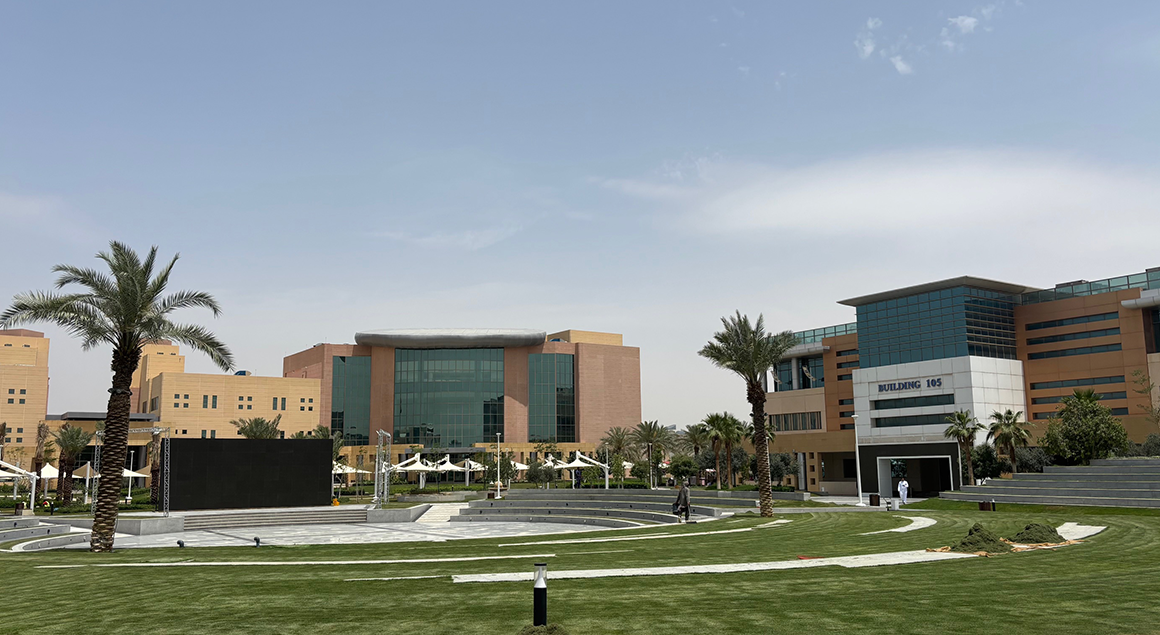
Meanwhile, KSI Riyadh, Kingdom of Saudi Arabia, located within Prince Sultan University, has maintained steady operations since opening in 2022 as a hub for Korean language education. It currently offers around 20 regular and special courses, with roughly 230 students enrolled. The teaching staff consists of nine teachers, including two dispatched teachers from Korea and seven locally hired teachers.
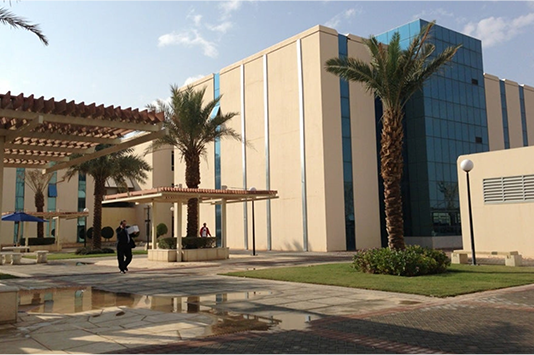
Prince Sultan University, home to KSI Riyadh,
Kingdom of Saudi Arabia
Kingdom of Saudi Arabia
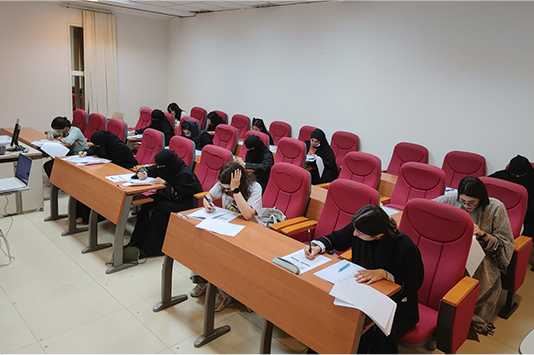
Class at KSI Riyadh, Kingdom of Saudi Arabia
The onset of the conflict coincided with the Ramadan holiday, a period when several faculty members were stationed abroad. The subsequent wave of flight cancellations significantly increased operational uncertainty by delaying the return schedules of instructors. With growing restrictions on traditional air routes, academic scheduling become highly unpredictable; overland travel through neighboring countries was even considered. However, because the disruption occurred during the Ramadan holiday period, any immediate impact on the curriculum, such as large-scale class cancellations, was successfully mitigated.
Prioritizing the safety of its faculty and student body above all else, KSI Riyadh, Kingdom of Saudi Arabia, swiftly implemented a comprehensive response framework in close coordination with the Embassy of the Republic of Korea and relevant partner organizations. Emergency safety protocols were shared, and dedicated communication channels were maintained to monitor the wellbeing of all members. Decisions about class operations were also made through close consultation between instructors and learners.
Following the end of Ramadan on March 29, the institute initiated a phased recalibration of its academic operations. From March 29 to April 9, a number of courses transitioned to temporary online instruction. Beginning April 12, however, all classes returned to in-person instruction. Even with delays in some instructors’ return schedules, disruptions were minimized through flexible and adaptive management.
Prioritizing the safety of its faculty and student body above all else, KSI Riyadh, Kingdom of Saudi Arabia, swiftly implemented a comprehensive response framework in close coordination with the Embassy of the Republic of Korea and relevant partner organizations. Emergency safety protocols were shared, and dedicated communication channels were maintained to monitor the wellbeing of all members. Decisions about class operations were also made through close consultation between instructors and learners.
Following the end of Ramadan on March 29, the institute initiated a phased recalibration of its academic operations. From March 29 to April 9, a number of courses transitioned to temporary online instruction. Beginning April 12, however, all classes returned to in-person instruction. Even with delays in some instructors’ return schedules, disruptions were minimized through flexible and adaptive management.
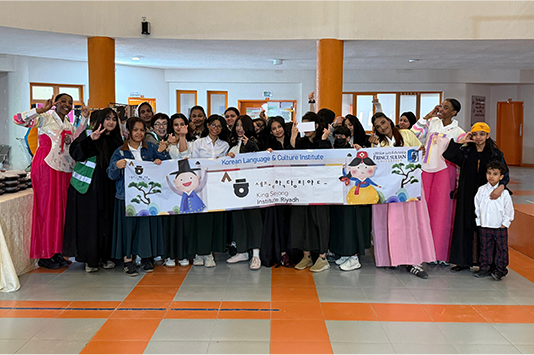
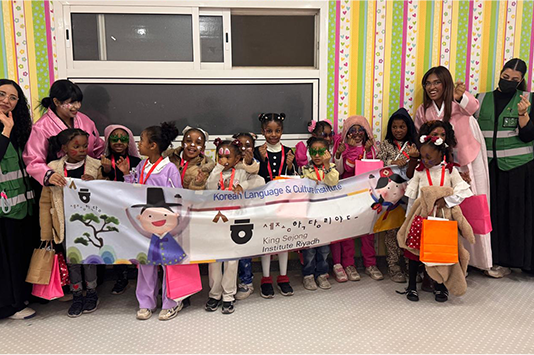
KSI Riyadh on the Go 2026
Visits to a girls’ middle school and an orphanage
Visits to a girls’ middle school and an orphanage
Promoting Cultural Exchange Through Visits to Local Public Institutions on April 16
At the moment, KSI Riyadh, Kingdom of Saudi Arabia, has fully resumed in-person classes and academic operations are stable. To cultivate a more positive learning environment amid the ongoing regional tensions and the cancellation of certain events, adjustments have been made to the academic calendar, including rescheduling the launch of special courses.
As the region continues to stabilize, KSI Riyadh, Kingdom of Saudi Arabia, plans to expand its core activities in Korean language education and cultural exchange. On April 16, as part of the KSI Riyadh on the Go 2026 initiative, staff members visited local public institutions, including a girls’ middle school in Riyadh, to conduct on-site activities and introduce the Korean language and Korean culture. The 4th Saudi Arabia Korean Language Speech Contest will be held on May 2 to identify outstanding learners, bolster student motivation, and foster a vibrant and engaged atmosphere for learners.
At the moment, KSI Riyadh, Kingdom of Saudi Arabia, has fully resumed in-person classes and academic operations are stable. To cultivate a more positive learning environment amid the ongoing regional tensions and the cancellation of certain events, adjustments have been made to the academic calendar, including rescheduling the launch of special courses.
As the region continues to stabilize, KSI Riyadh, Kingdom of Saudi Arabia, plans to expand its core activities in Korean language education and cultural exchange. On April 16, as part of the KSI Riyadh on the Go 2026 initiative, staff members visited local public institutions, including a girls’ middle school in Riyadh, to conduct on-site activities and introduce the Korean language and Korean culture. The 4th Saudi Arabia Korean Language Speech Contest will be held on May 2 to identify outstanding learners, bolster student motivation, and foster a vibrant and engaged atmosphere for learners.