“Korean LanguaAge to the World” Meet Two Dispatched Teachers Who Began Their Korean Teaching Journey This Year
글쓴이홍보협력팀
태그
작성일 2026-04-16
조회수61

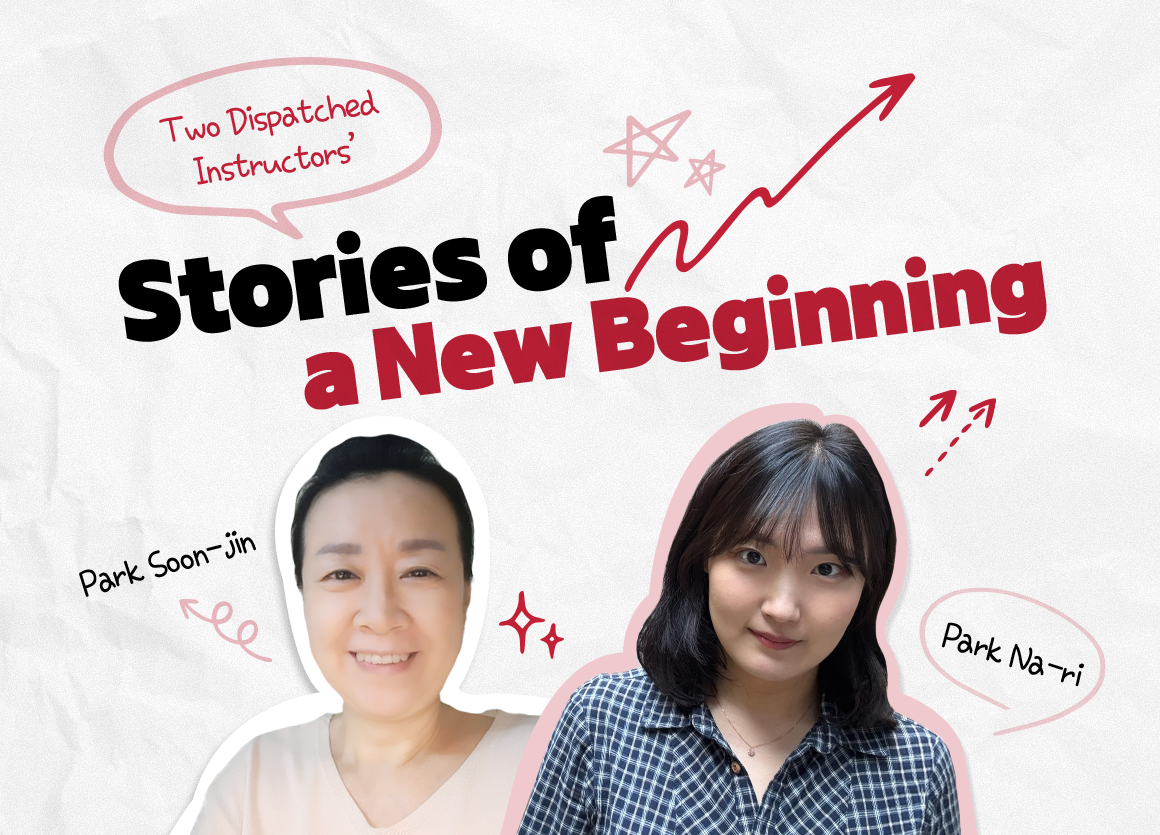
“Korean LanguaAge to the World”
Meet Two Dispatched Teachers Who Began Their Korean Teaching Journey This Year
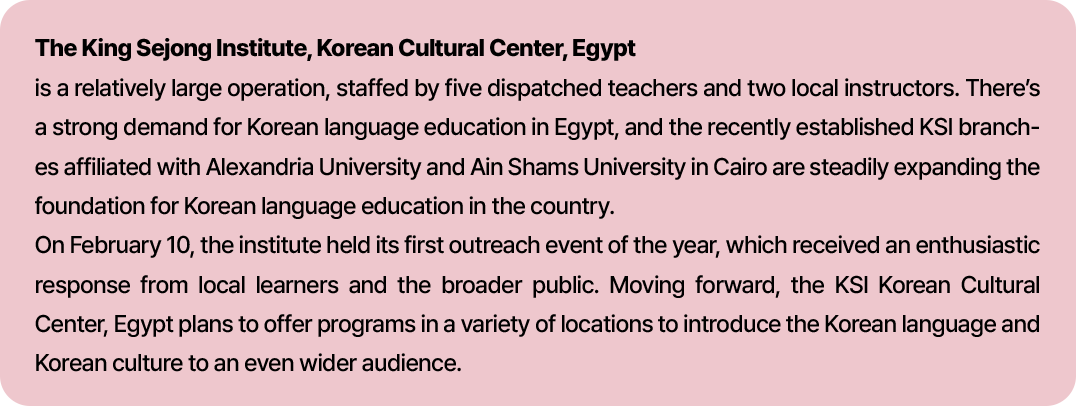
As March heralds the arrival of a new season, we introduce two dispatched teachers who have set off for classrooms far from home carrying with them the precious seeds of the Korean language. Though their beginnings differed, their passion for Korean language education is the same. We spoke with these two teachers who have embarked on new journeys in the unfamiliar cultural settings of Egypt and Germany, where they are connecting with local learners through the Korean language. They shared moments from their first classes, where excitement and apprehension intertwined, as well as their heartfelt commitment to the future of Korean language education.
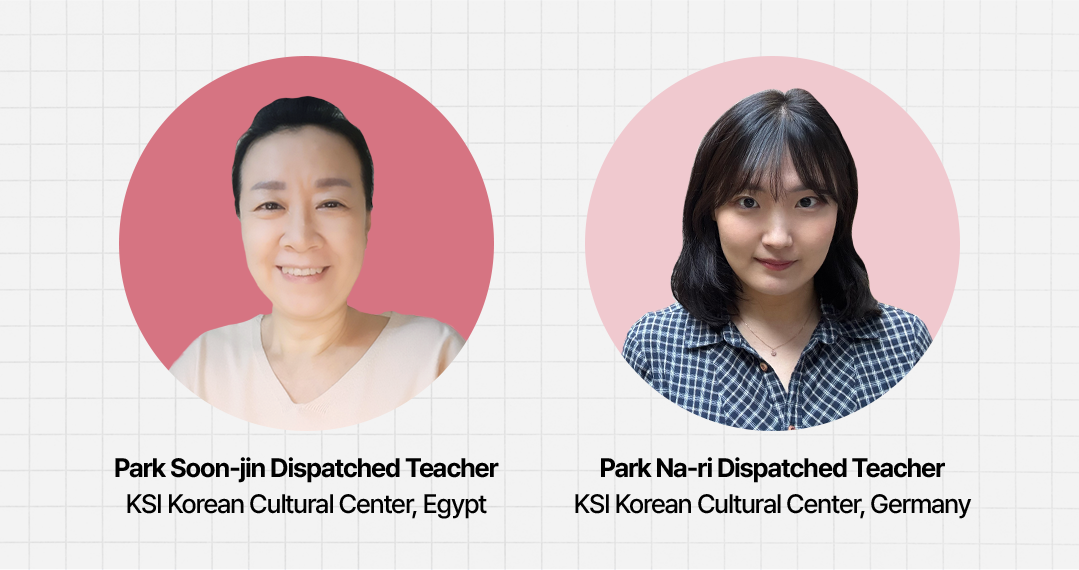
Q. Q. Hello! Could you introduce yourselves to the readers of Monthly Knock-Knock?
A. Park Soon-jin Hello. I am Park Soon-jin, a dispatched teacher at the KSI Korean Cultural Center, Egypt, which is in the capital Cairo. I am currently teaching Sejong Korean 1A and 2B.
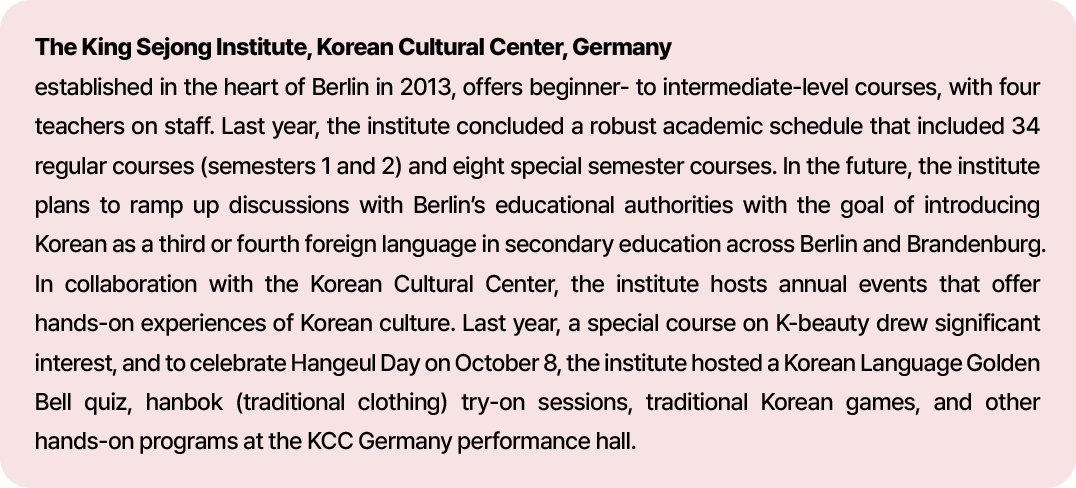
A. Park Na-ri Hello. I am Park Na-ri, a dispatched teacher at the KSI Korean Cultural Center, Germany. I am currently teaching a total of five classes in levels 1A, 2A, and 2B. I mainly focus on beginner-level courses.
A. Park Na-ri Hello. I am Park Na-ri, a dispatched teacher at the KSI Korean Cultural Center, Germany. I am currently teaching a total of five classes in levels 1A, 2A, and 2B. I mainly focus on beginner-level courses.
Q. Both of you started the first semester of 2026 in different continents and different cultural settings. How did you feel after your first class as a KSI dispatched teacher and what was the most memorable first impression that has stayed with you?
A. Park Soon-jin I was dispatched to Cairo, Egypt, this year following a previous posting in Abuja, Nigeria. I gained experience as a dispatched teacher at the KSI Korean Cultural Center, Nigeria, for about a year and a half from June 2024. Although they’re both in Africa, the two places felt worlds apart. Nigeria is in West Africa, while Egypt sits much closer to the Arab world, so they differed greatly, from the way people looked to the atmosphere of the cities. It was hard to believe they’re on the same continent. Cairo was bustling with cars and people, but inside the classroom, it was rather quiet. My most memorable first impression was seeing my new students smiling shyly and speaking softly. Their shyness was especially endearing.
A. Park Na-ri My first class at the KSI Korean Cultural Center, Germany, was conducted online. After it ended, I felt dissatisfied, and kept thinking about what I should have done differently. I took time to reflect on what I needed to improve, and in my first in-person class the next day, I made a conscious effort to address those shortcomings. Thankfully, my effort paid off, and I left the class feeling both proud and accomplished. The experience helped me accept that trial and error is a natural part of the early stages of teaching, and I’ve been trying to embrace the process ever since.
A. Park Na-ri My first class at the KSI Korean Cultural Center, Germany, was conducted online. After it ended, I felt dissatisfied, and kept thinking about what I should have done differently. I took time to reflect on what I needed to improve, and in my first in-person class the next day, I made a conscious effort to address those shortcomings. Thankfully, my effort paid off, and I left the class feeling both proud and accomplished. The experience helped me accept that trial and error is a natural part of the early stages of teaching, and I’ve been trying to embrace the process ever since.
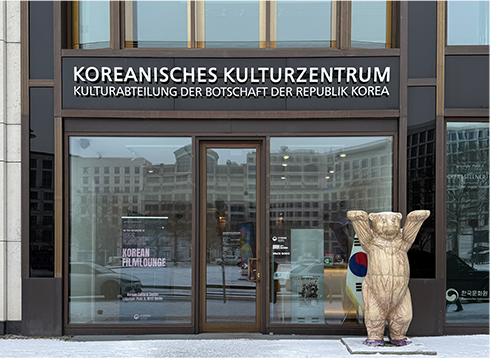
A view of KSI Korean Cultural Center, Germany
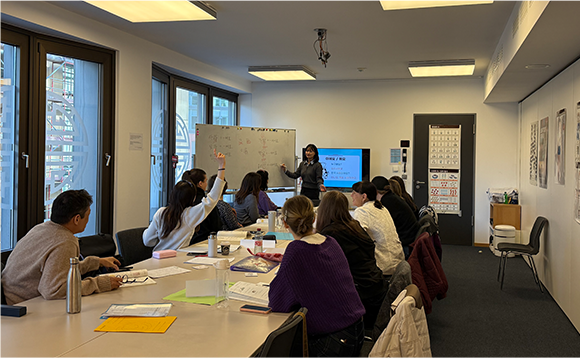
Park Na-ri teaching Sejong Korean 1A at the KSI Korean
Cultural Center, Germany
Cultural Center, Germany
Q. Preparing for your first classes must have been both exciting and nerve-wracking. What did you focus on the most?
A. Park Soon-jin This semester marked the transition from free classes to paid courses at the KSI Korean Cultural Center, Egypt. While the 1A course had previously attracted thousands of applicants, enrollment dropped significantly after fees were introduced, which made me feel more pressure than excitement. I focused on ensuring that learners wouldn’t fall into the habit of arriving late or missing class and on creating opportunities for one-on-one communication with each of them. I’m still thinking about how to make my classes enjoyable and effective, so that everyone who enrolls finishes the semester feeling it was worthwhile.
A. Park Na-ri While preparing for my first classes, the one thing I tried to keep in mind was that my students come from a different cultural background. I made an effort to understand and respect German culture, and I was also mindful that many students were learning Korean for enjoyment, which is common in Europe. With that in mind, I designed my lessons to incorporate plenty of speaking activities so that students could practice conversing in Korean naturally.
A. Park Na-ri While preparing for my first classes, the one thing I tried to keep in mind was that my students come from a different cultural background. I made an effort to understand and respect German culture, and I was also mindful that many students were learning Korean for enjoyment, which is common in Europe. With that in mind, I designed my lessons to incorporate plenty of speaking activities so that students could practice conversing in Korean naturally.
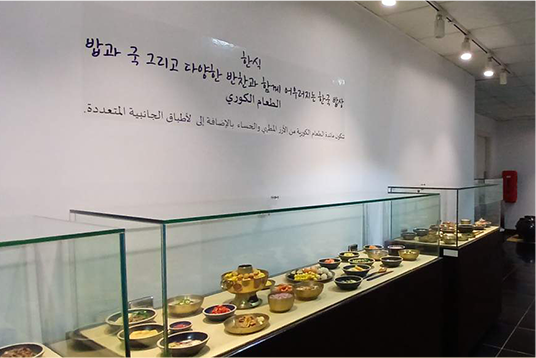
An exhibition of a Korean table (bapsang) located
inside the KSI Korean Cultural Center, Egypt
inside the KSI Korean Cultural Center, Egypt
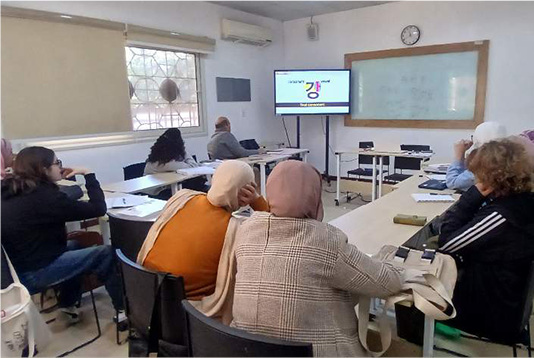
Level 1A students focusing on their course materials
during class at the KSI Korean Cultural Center, Egypt
during class at the KSI Korean Cultural Center, Egypt
Q. What advice would you give to aspiring Korean language teachers who dream of becoming dispatched teachers?
A. Park Soon-jin I believe that the ability to teach cultural classes in addition to language classes is highly beneficial. As I majored in traditional Korean painting at both the undergraduate and graduate levels, I was able to offer Hangeul calligraphy and folk painting classes at the KSI. When students struggled with certain concepts, I would sometimes use drawings to help explain. I also led Hangeul calligraphy activities at external events, which I found especially rewarding. By sharing Korean culture alongside the language, teachers can deliver far more meaningful classes.
A. Park Na-ri I had the opportunity to serve as a facilitator during the KSI Outstanding Learner Invitation Program, and that experience allowed me to better communicate with learners from various countries and get a taste for what it’s like to run an actual class. The ability to connect with people from different cultures is a valuable asset when teaching abroad. While building solid skills in Korean language education is essential, I would strongly encourage aspiring teachers to seek out as many opportunities as possible to engage directly with people from different countries.
A. Park Na-ri I had the opportunity to serve as a facilitator during the KSI Outstanding Learner Invitation Program, and that experience allowed me to better communicate with learners from various countries and get a taste for what it’s like to run an actual class. The ability to connect with people from different cultures is a valuable asset when teaching abroad. While building solid skills in Korean language education is essential, I would strongly encourage aspiring teachers to seek out as many opportunities as possible to engage directly with people from different countries.
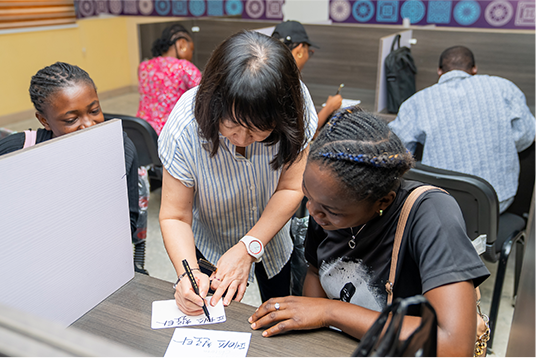
Park Soon-jin (middle) conducting a Hangeul
calligraphy class at the University of Abuja in Nigeria
calligraphy class at the University of Abuja in Nigeria
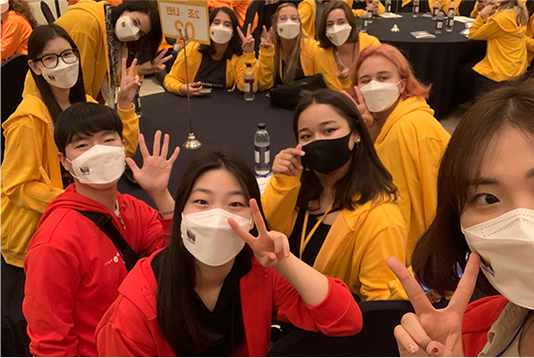
Park Na-ri (far right) participating as a facilitator in the
KSI Outstanding Learner Invitation Program and
interacting with foreign learners
KSI Outstanding Learner Invitation Program and
interacting with foreign learners
Q. Do you have a personal goal you hope to achieve during your posting?
A. Park Soon-jin The more I teach Korean, the more I realize how challenging it is and the more aware I am of my own limitations. I have mainly taught beginner-level classes so far. But the KSI Korean Cultural Center, Egypt, also offers intermediate-level courses, so I plan to improve my understanding of grammar and teaching methods so I can eventually teach at the intermediate level as well. If I ever get the chance to teach a graduating class, I would love to have the students write poems in Korean and create their own illustrated poetry pieces. Drawing on my background in Korean painting, I hope to offer a truly unique and meaningful learning experience.
A. Park Na-ri During the upcoming summer special semester, I would like to offer cultural classes on themes like K-pop or K-beauty. I believe that these topics will help me communicate more deeply with students in Korean and create memorable classes. This is also my first extended stay abroad, so on a personal level, I hope to adapt well to local life, experience diverse cultures, and make the most of my time here.
A. Park Na-ri During the upcoming summer special semester, I would like to offer cultural classes on themes like K-pop or K-beauty. I believe that these topics will help me communicate more deeply with students in Korean and create memorable classes. This is also my first extended stay abroad, so on a personal level, I hope to adapt well to local life, experience diverse cultures, and make the most of my time here.
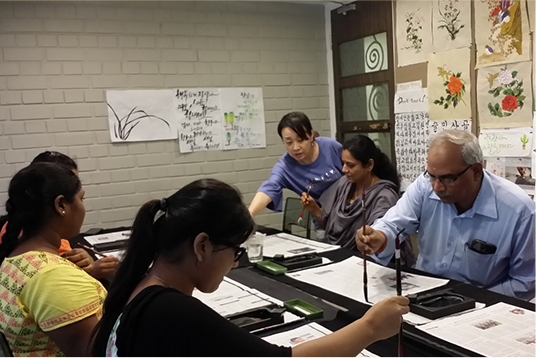
Park Soon-jin conducting a cultural workshop
at the KSI Chennai, India
at the KSI Chennai, India
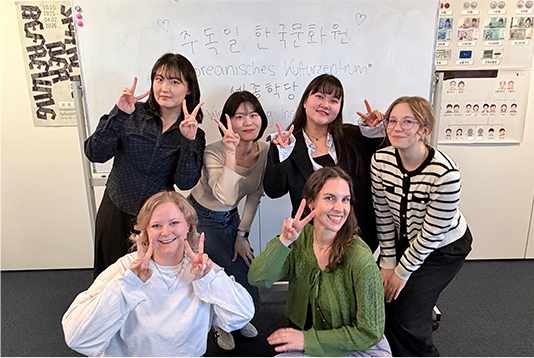
Park Na-ri (back row, far left) taking a photo with
fellow teachers and learners following a cultural
activity at the KSI Korean Cultural Center, Germany
fellow teachers and learners following a cultural
activity at the KSI Korean Cultural Center, Germany
Q. Finally, could you share a message of encouragement for KSI learners around the world who have been brought together by their shared interest in the Korean language?
A. Park Soon-jin From the bottom of my heart, thank you for coming here to learn Korean and embrace Korean culture. It’s fifteen hours by plane from Korea, so it’s because of you that I get to be here at all. I look forward to continuing to study with you, and I hope that one day we will meet again in Korea.
A. Park Na-ri In this vast world, the fact that we are able to connect through the Korean language feels truly meaningful. Your passion and enthusiasm in class give me so much strength. I hope your Korean journey is filled with joy and meaning, as we continue to learn and grow together.
A. Park Na-ri In this vast world, the fact that we are able to connect through the Korean language feels truly meaningful. Your passion and enthusiasm in class give me so much strength. I hope your Korean journey is filled with joy and meaning, as we continue to learn and grow together.
“Introducing Our Institutes”