“Small Acts Are Great Acts, Just as Sweeping a Yard Makes One Corner of the Earth Clean”
글쓴이홍보협력팀
태그
작성일 2026-04-16
조회수26

“Small Acts Are Great Acts,
Just as Sweeping a Yard Makes One Corner of the Earth Clean”
Just as Sweeping a Yard Makes One Corner of the Earth Clean”
Will I finally be able to see / what I have never seen / until now? / Will I finally be able to hear / the sound of something being born / soon? / Drawing near / is someone I am seeing for the first time / yet have long wanted to see. / You are coming.
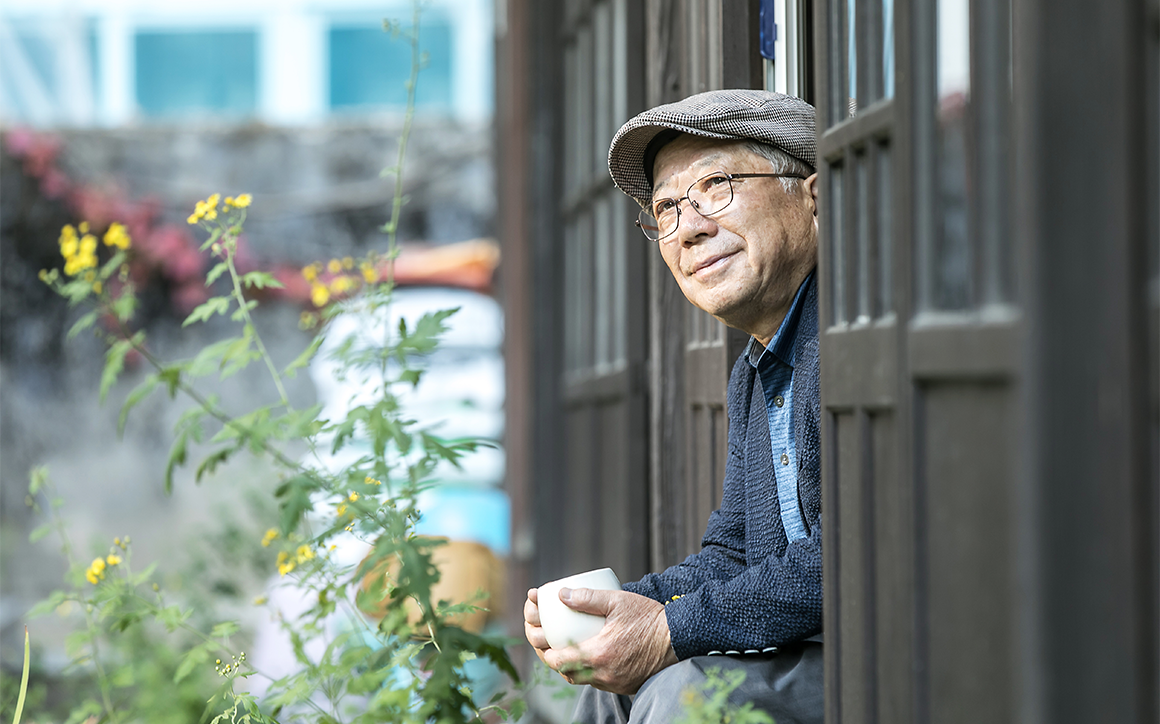
It was a great stroke of luck to meet poet Ra Tae-joo on my way out to welcome spring. On the day I met this man who has spent more than half his life writing poetry, winter jasmine was just beginning to peek out in front of the literature museum.
It was a great stroke of luck to meet poet Ra Tae-joo on my way out to welcome spring. On the day I met this man who has spent more than half his life writing poetry, winter jasmine was just beginning to peek out in front of the literature museum.
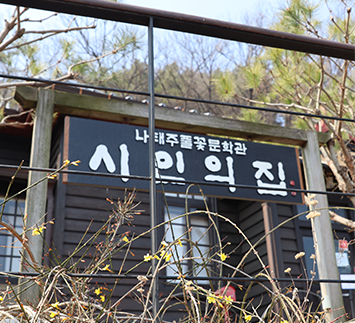
Winter jasmine in bloom in front of
the Poet’s House at the Ra Tae-joo
Grass Flower Literature Museum
the Poet’s House at the Ra Tae-joo
Grass Flower Literature Museum
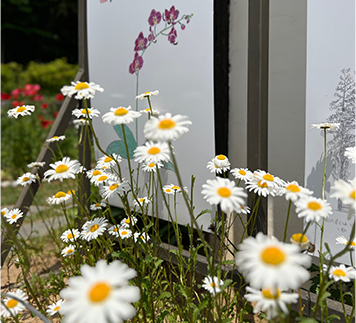
Yard of the Poet’s House
(Photo courtesy of the Ra Tae-joo
Grass Flower Literature Museum)
(Photo courtesy of the Ra Tae-joo
Grass Flower Literature Museum)
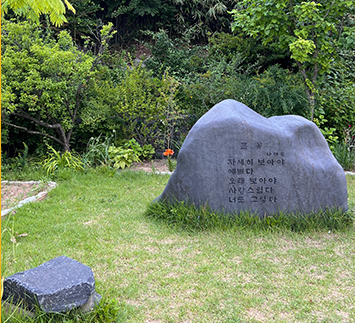
Stone gate inscribed with the full
text of “Grass Flower”
(Photo courtesy of the Ra Tae-joo
Grass Flower Literature Museum)
text of “Grass Flower”
(Photo courtesy of the Ra Tae-joo
Grass Flower Literature Museum)
◇ The Journey of Learning Is, by Nature, Full of Mysteries.
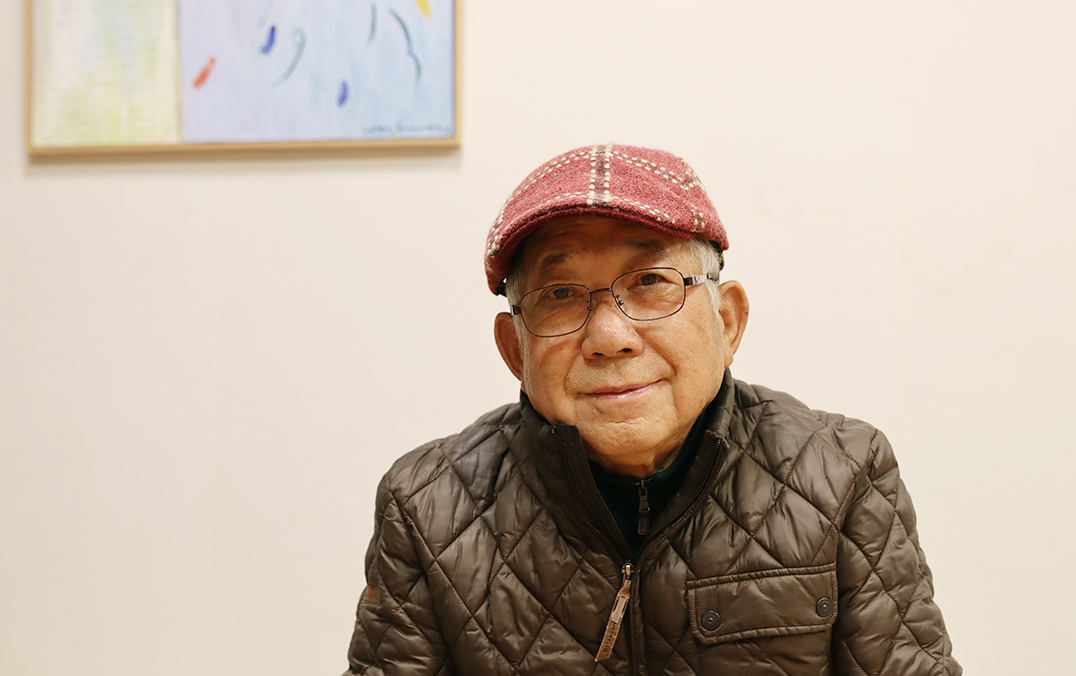
Q. Spring is coming. What does “beginning” mean to you?
A. A beginning is a departure. Confucius once said that at thirty, one stands firm. I believe that somewhere around the age of twenty, a person should set out on their own journey—pack their bag and step out the door, so to speak. If we think in terms of the calendar year, the beginning is January 1. But that’s based on the twelve-month system. In terms of the cycle of nature, wouldn’t the true beginning be spring? Spring is the season of beginnings, while winter is the season of endings.
Q. The King Sejong Institute has just begun a new semester. What mindset should we have?
A. A heart racing with anticipation, excited to look at everything with fresh eyes. That itself is already something new. We need to approach new things with that same sense of anticipation. In modern society, it seems we experience fewer moments of excitement. We also shed fewer tears. Open a book with curiosity and anticipation, as if you were setting out into an unknown world, a world that is mysterious and puzzling. Set out toward that wondrous world where the known and unknown intertwine.
◇ A Poem Written in a Miraculous Script
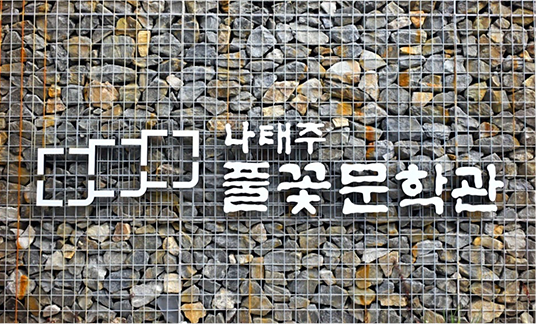
Entrance of the Ra Tae-joo
Grass Flower Literature Museum
Grass Flower Literature Museum
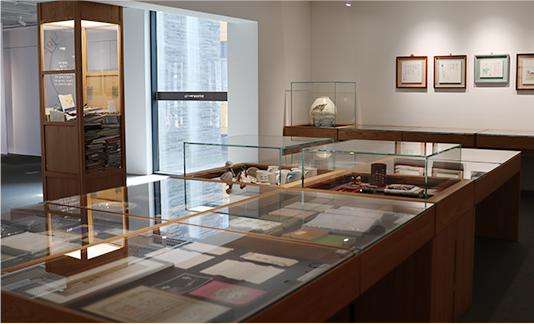
Exhibition hall of the Ra Tae-joo
Grass Flower Literature Museum
Grass Flower Literature Museum
Q. What does Hangeul mean to you?
A. To borrow from the author of Guns, Germs, and Steel, the shapes of Hangeul are square because it was created in an era when people used Chinese characters and was influenced by that form. The vowels and consonants were modeled after the speech organs, and each syllabic block is composed of an initial consonant, a medial vowel, and a final consonant. For these reasons, Hangeul is truly one of the finest examples of a phonetic writing system. Much like the alphabet, another major phonetic script, it has had the potential for global use since the time of King Sejong. Hangeul is truly a miraculous script. To have been given such a writing system is a blessing. I learned Hangeul at the age of seven and have written in it ever since, for which I remain deeply grateful.
Q. You have written thousands of poems that are short and simple, yet deeply moving.
A. This is a survival strategy to keep my poetry alive. The question is how poetry written in Hangeul can endure. I try to write with brevity, simplicity, and clarity. A poem should feel right to me, and to others as well. If it speaks only to me, it won’t resonate with others, and the connection will be lost.
Q. So it’s a kind of survival strategy for poetry?
A. Brevity and simplicity are actually the most fundamental qualities of poetry. They are truths. I struggled with this for many years, only fully realizing it later in life. Even now, I continue to write with this in mind. It’s the basis for “Grass Flower.” About seven or eight years ago, I was invited by PEN International to give a lecture in AlgeriAfter the talk, a young person from the audience approached me and asked two questions: “Are you Ra Tae-joo?” and “Are you the one who wrote ‘Grass Flower’?” I was pleasantly surprised. That was when I first learned about the KSIs. It was a remarkable experience to meet someone in Africa who had learned Hangeul through an institute named after King Sejong.
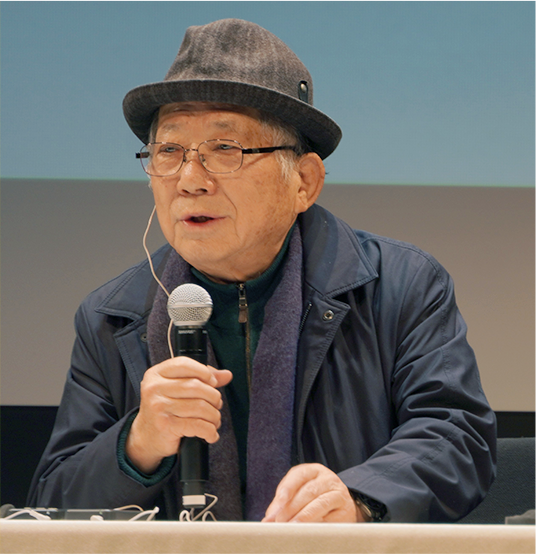
Poet Ra Tae-joo lecturing
(Photos courtesy of the Literature Translation Institute
of Korea)
(Photos courtesy of the Literature Translation Institute
of Korea)
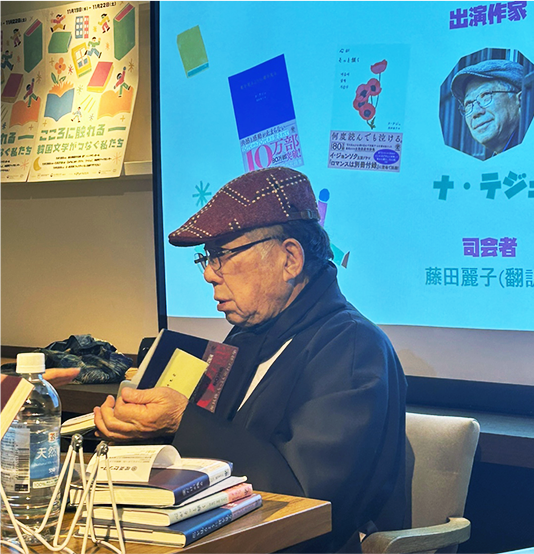
Hearts Facing Each Other: Korean Literature,
Connecting Us event held in Tokyo,
Japan in November 2025
(Photo courtesy of the Literature Translation Institute
of Korea)
Connecting Us event held in Tokyo,
Japan in November 2025
(Photo courtesy of the Literature Translation Institute
of Korea)
Q. We are also curious about the response from readers overseas.
A. Last November, I was invited to Tokyo, Japan, for an event organized by the Literature Translation Institute of KoreThere I had an opportunity to meet readers in person. A group of Japanese readers who had learned Hangeul through the King Sejong Institute came to speak with me, holding out collections of my poetry for me to sign. At that moment, I made a decision: when I return to Korea, I would compile a collection of poems for international readers to enjoy in Korean and send it to them.
◇ Walking Slowly with Poetry
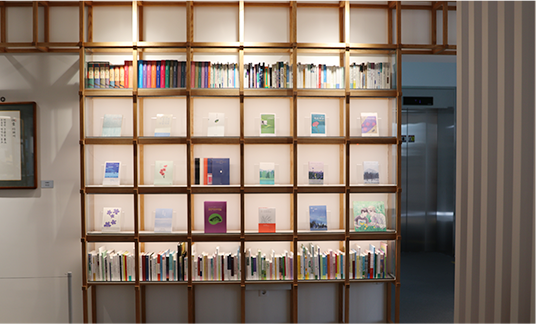
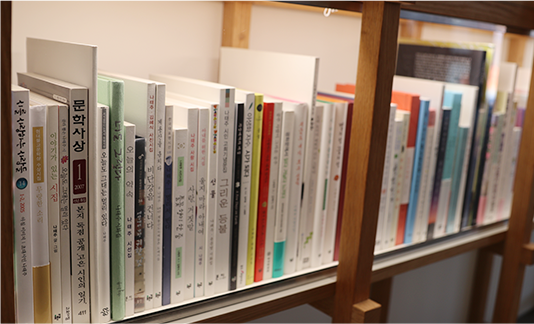
Books published by poet Ra Tae-joo
Q. What impact could reading poems in Korean have on people learning the language?
A. Language is the soul of a nation, carrying its culture and spirit. To learn Hangeul is to learn everything about the Korean people. Regardless of how you look on the outside, you must become Korean when you learn the language. People often say that between writing and speaking, writing is easier to learn, and speaking more difficult. This is a view many foreign learners share. I believe speaking calls for a special kind of dedication.
Q. Last year you published a book on transcription. It seems like a helpful guide.
A. Transcription practice has become quite popular in recent years, but it has long been a fundamental part of literary study. Rather than skimming over something and typing it out quickly, you write it out, allowing the words to settle into your hands. It’s also a foundation for deeper appreciation. For writers, it can inspire them to emulate what they read, while for readers, it helps them understand the work more deeply.
Q. Could you share the best way to practice transcription?
A. First, read the text once. Then copy it while reading aloud. When you read aloud, you hear it one more time. Transcribing while speaking is like reading it three times instead of once. It’s essentially killing three birds with one stone.
Q. It seems transcription benefits not only learners but also teachers.
A. Of course. Through transcription, you draw closer to the very essence of poetry.
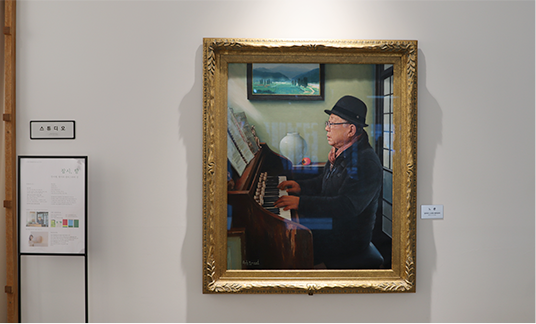
Portrait of poet Ra Tae-joo hanging in the exhibition
hall of the Ra Tae-joo Grass Flower Literature Museum
hall of the Ra Tae-joo Grass Flower Literature Museum
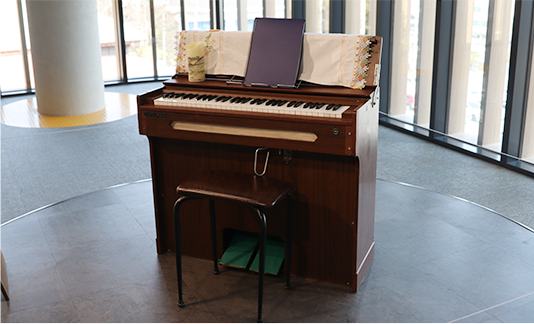
Poet Ra Tae-joo’s reed organ in the exhibition hall
Q. You spent more than four decades as a teacher yourself. Lastly, do you have any message for King Sejong Institute teachers around the world?
A. You’re doing great work. There’s a poem I would like to share with you: “I swept the yard, and one corner of the Earth became clean.” That’s the opening line of one of my poems, and it could be rephrased as: “I taught a single character of Hangeul, and all of Korea moved.” Sweeping a yard may seem like a small and insignificant act. You may feel that teaching Hangeul is no grand undertaking. But looking at it as introducing Korea to the world and enhancing national prestige can be a source of strength. It’s not only great things that matter; small acts are just as important.
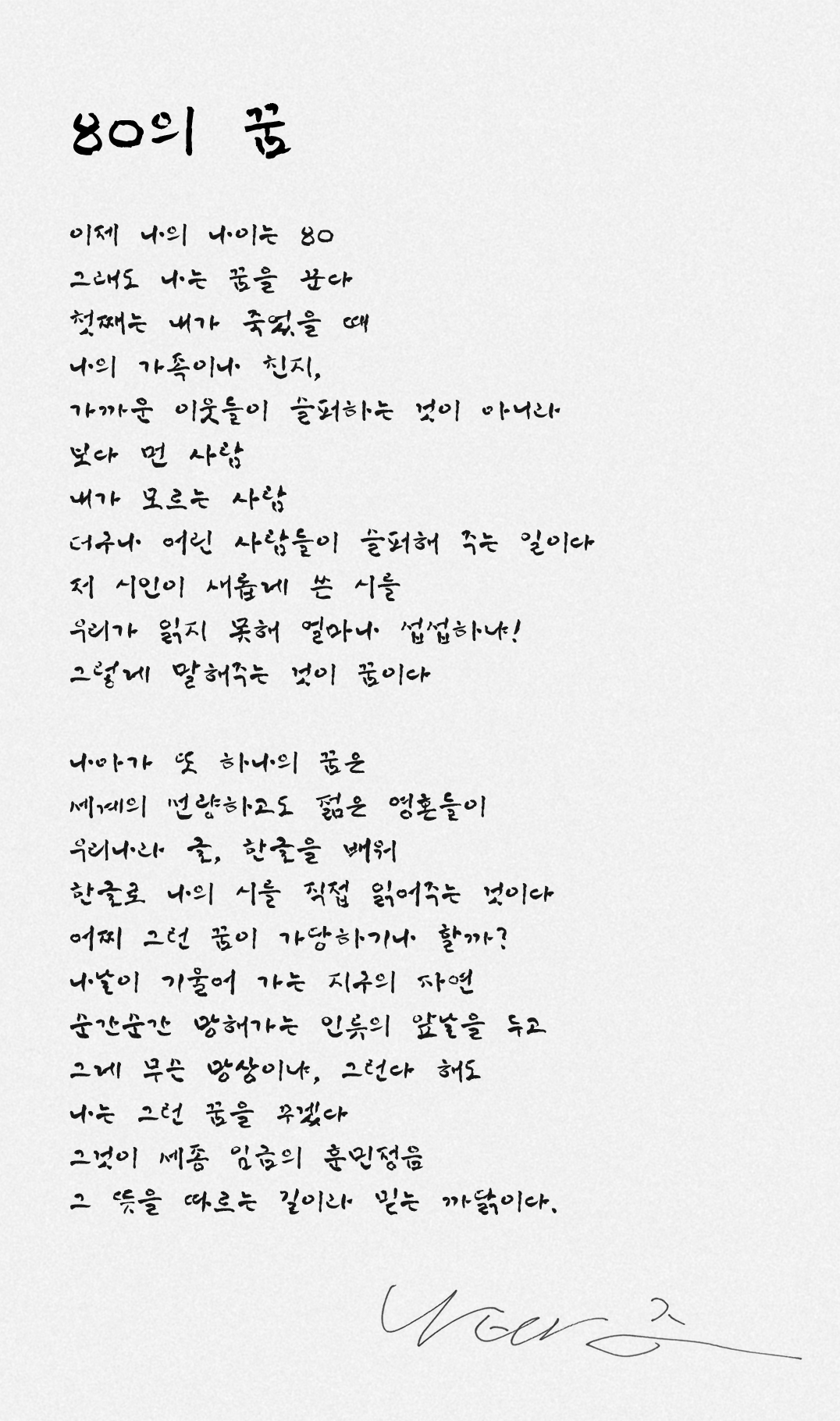
※ This poem is presented in the Ra Tae-joo typeface.