Curious about KSI operations? The Best KSIs’ Operating Secrets Counseling Center Operating Solutions for New Operating Institutes from the Best KSIs in the 2025 Operational Evaluation
글쓴이홍보협력팀
태그
작성일 2026-03-20
조회수7

Curious about KSI operations?
The Best KSIs’ Operating Secrets Counseling Center
The Best KSIs’ Operating Secrets Counseling Center
Operating Solutions for New Operating Institutes from
the Best KSIs in the 2025 Operational Evaluation
the Best KSIs in the 2025 Operational Evaluation
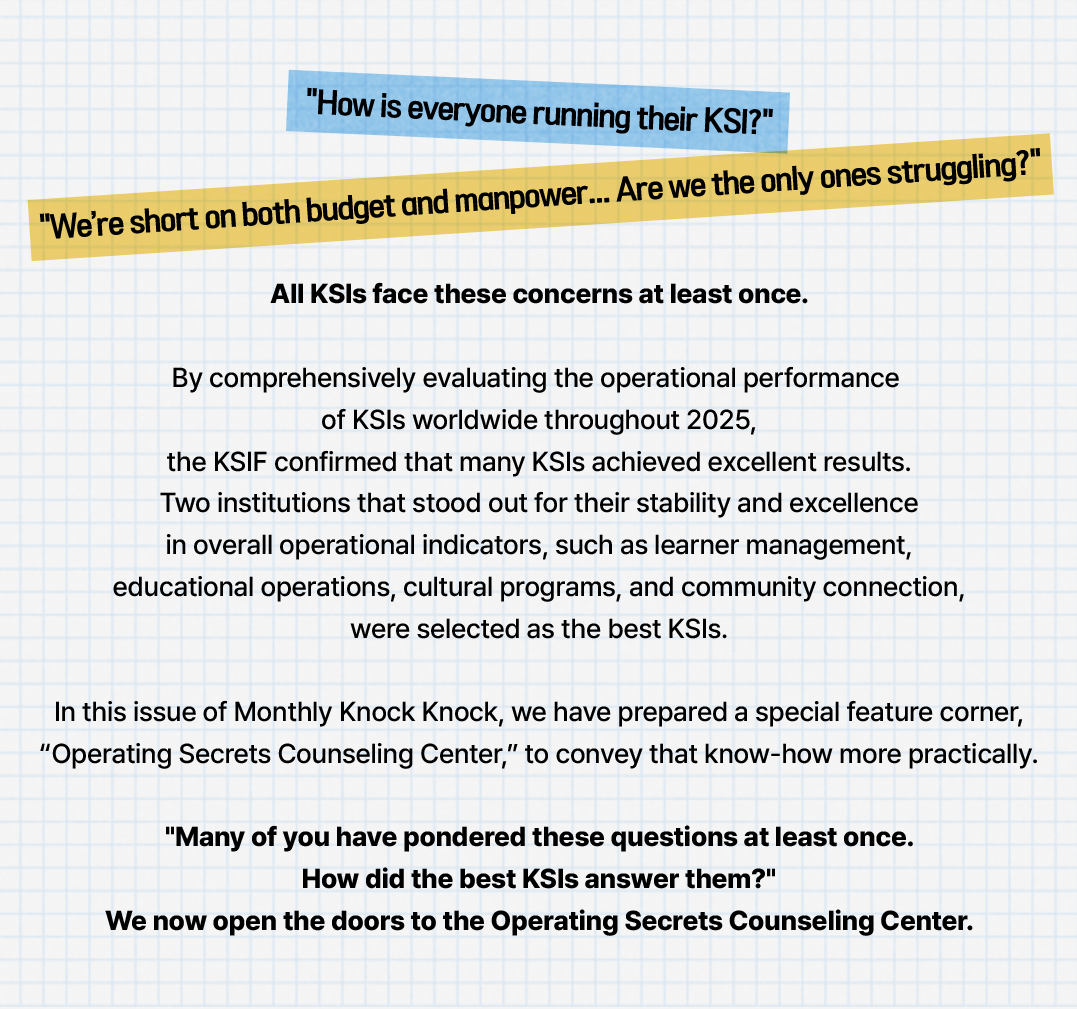
Q. You were selected as one of the best KSIs in the 2025 operational evaluation. Please share your thoughts, along with the most memorable moment looking back on the past year.
A. (KSI Bogotá, Colombia, hereinafter KSI Bogotá) I believe that being selected as one of the best KSIs in the 2025 operational evaluation was, above all, thanks to the excellent work and dedication of the teachers and operation staff over the past year. The KSIF also collected opinions from the field and provided ongoing, customized support for actual operations, which was a great help. Thanks to the teachers faithfully reflecting the educational philosophy and operational direction of the director, learners were able to study the Korean language and Korean culture in a fun yet serious atmosphere.
The most memorable moments over the past year were seeing the overseas study and career achievements of learners who had diligently studied at KSI Bogotá for a long time. Recently, we’ve felt that KSI learners are increasingly being selected for the Global Korea Scholarship (GKS). In 2025, Lady Valentina, a learner at KSI Bogotá who had studied Korean consistently for over four years, scored well in the interview and was ultimately selected as a GKS scholar. Other learners with various achievements have all told us that at the KSI, "beyond just learning the language, they developed an attitude of understanding Korean culture and respecting others." Hearing those stories, I felt that the KSI is more than just an educational institution; it’s becoming a space that broadens the life choices and perspectives of learners. This makes me very satisfied.
A. (KSI Quito, Ecuador, hereinafter KSI Quito) It is an honor for KSI Quito to be selected as one of the best institutes, but it also comes with a sense of responsibility. This achievement was made possible thanks to the cooperation of the director and faculty; the local operating institution, Central University of Ecuador; officials from the embassy, which is the domestic operating institution; and the learners who enthusiastically participated in the classes.
The KSIF’s support for specialized projects also played a major role. This allowed us to operate a Korean language class commemorating the official signing of the Strategic Economic Cooperation Agreement between Korea and Ecuador, and to host the Challenge! Hangeul Golden Bell event. Furthermore, the KSIF’s YouTube production team visited Quito to film the Damanse (Meeting Sejong Again) series, supporting the production of an embassy work-life vlog of a graduate. This provided various opportunities to promote the achievements of Korean language education.
Over the past year, the growing cooperation with various institutions, such as the embassy, the Quito Korean Association, and the Ecuadorian National Assembly, has been particularly impressive, and has increased the KSI’s influence. In addition, KSI Quito set "nurturing local Korean language teachers" as its mid-to-long-term goal when it was first established, and has made consistent efforts in this direction. Last year, at the 2025 1st Ecuadorian Korean Language Educators Workshop, our KSI conducted a cultural class demo and presented our operational results. We feel proud to contribute to solidifying the foundation of Korean language education in Ecuador.
The most memorable moments over the past year were seeing the overseas study and career achievements of learners who had diligently studied at KSI Bogotá for a long time. Recently, we’ve felt that KSI learners are increasingly being selected for the Global Korea Scholarship (GKS). In 2025, Lady Valentina, a learner at KSI Bogotá who had studied Korean consistently for over four years, scored well in the interview and was ultimately selected as a GKS scholar. Other learners with various achievements have all told us that at the KSI, "beyond just learning the language, they developed an attitude of understanding Korean culture and respecting others." Hearing those stories, I felt that the KSI is more than just an educational institution; it’s becoming a space that broadens the life choices and perspectives of learners. This makes me very satisfied.
A. (KSI Quito, Ecuador, hereinafter KSI Quito) It is an honor for KSI Quito to be selected as one of the best institutes, but it also comes with a sense of responsibility. This achievement was made possible thanks to the cooperation of the director and faculty; the local operating institution, Central University of Ecuador; officials from the embassy, which is the domestic operating institution; and the learners who enthusiastically participated in the classes.
The KSIF’s support for specialized projects also played a major role. This allowed us to operate a Korean language class commemorating the official signing of the Strategic Economic Cooperation Agreement between Korea and Ecuador, and to host the Challenge! Hangeul Golden Bell event. Furthermore, the KSIF’s YouTube production team visited Quito to film the Damanse (Meeting Sejong Again) series, supporting the production of an embassy work-life vlog of a graduate. This provided various opportunities to promote the achievements of Korean language education.
Over the past year, the growing cooperation with various institutions, such as the embassy, the Quito Korean Association, and the Ecuadorian National Assembly, has been particularly impressive, and has increased the KSI’s influence. In addition, KSI Quito set "nurturing local Korean language teachers" as its mid-to-long-term goal when it was first established, and has made consistent efforts in this direction. Last year, at the 2025 1st Ecuadorian Korean Language Educators Workshop, our KSI conducted a cultural class demo and presented our operational results. We feel proud to contribute to solidifying the foundation of Korean language education in Ecuador.
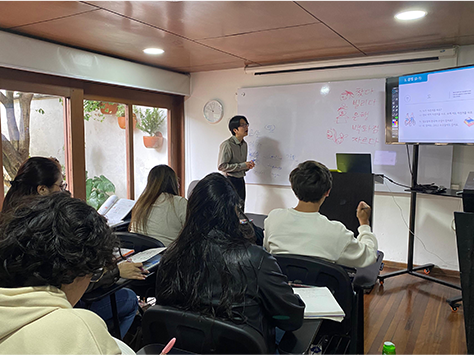
Sejong Korean 2A class in progress at KSI Bogotá
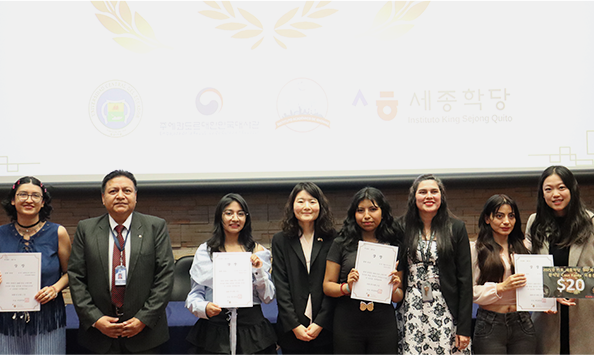
Commemorative photo of learners with excellent grades at
the KSI Quito completion ceremony
the KSI Quito completion ceremony
Q. Why do you think you were selected as one of the best KSIs in this evaluation? Are there any principles or standards you consider most important in operating the institute?
A. (KSI Bogotá) KSI Bogotá remembers our history of suffering under imperialist cultural policies in the past, and this has served as an important principle in spreading the Korean language and Korean culture locally. Rather than emphasizing the superiority of Korea or Korean culture, we focus on the fact that the lives of individuals and communities can become richer through learning.
Another important operating principle is that we stay true to the basics while putting local learners at the center. We have strictly followed basic administrative and academic procedures for attendance management, class satisfaction surveys, and faculty meetings, and whenever we plan any program, we prioritize checking, "How does this activity actually help the learners?" I believe that consistently improving our classes through regular feedback meetings with teachers also led to the positive evaluation.
KSI Bogotá started 13 years ago with 27 students, and has grown steadily ever since. Currently, in addition to quantitative growth, we are also striving for qualitative management. We also play the role of a local public culture platform, and have continuously promoted cultural programs, external events, and regional exchange projects. I believe that doing this consistently has improved our credibility and led to our growing influence in the local community, which was also reflected in this evaluation.
A. (KSI Quito) I believe the most important thing in operating a KSI is teamwork. At KSI Quito, we have regular monthly meetings where all faculty and staff discuss academic operations, cultural events, classes, and student management and make decisions together. In this process, each person takes on a role suited to their strengths. I believe that learner satisfaction and the quality of our programs have increased as a result.
Another important operating principle is that we stay true to the basics while putting local learners at the center. We have strictly followed basic administrative and academic procedures for attendance management, class satisfaction surveys, and faculty meetings, and whenever we plan any program, we prioritize checking, "How does this activity actually help the learners?" I believe that consistently improving our classes through regular feedback meetings with teachers also led to the positive evaluation.
KSI Bogotá started 13 years ago with 27 students, and has grown steadily ever since. Currently, in addition to quantitative growth, we are also striving for qualitative management. We also play the role of a local public culture platform, and have continuously promoted cultural programs, external events, and regional exchange projects. I believe that doing this consistently has improved our credibility and led to our growing influence in the local community, which was also reflected in this evaluation.
A. (KSI Quito) I believe the most important thing in operating a KSI is teamwork. At KSI Quito, we have regular monthly meetings where all faculty and staff discuss academic operations, cultural events, classes, and student management and make decisions together. In this process, each person takes on a role suited to their strengths. I believe that learner satisfaction and the quality of our programs have increased as a result.
Q. Attracting and retaining students is the biggest concern. Please share any effective recruitment strategies or learner management methods.
A. (KSI Bogotá) To attract students, KSI Bogotá regularly conducts social media-based promotions. By posting class photos, cultural activities, and videos of teachers introducing their classes, we have continuously showcased the institute"s atmosphere and class quality. Consistently uploading content has naturally led to inquiries and registrations. In addition, we have collaborated closely with the Korean Embassy, and as a result, the KSI is officially introduced and recommended when locals inquire about learning Korean. The public nature of this channel has become an important foundation for building trust.
In terms of student retention, we conduct individual counseling for learners who have difficulty keeping up with the curriculum or are frequently absent. If it’s difficult to advance to the next level, we allow them to retake the course for free to help them maintain their learning motivation. Furthermore, to create a sense of fellowship among learners, we operate various programs, including cultural clubs, the Sejong Culture Academy, homecoming festivals, and special lectures, and operate as a communal space where learning continues even after graduation.
A. (KSI Quito) Whenever there is a promotional opportunity, KSI Quito staff introduce the institute in an eye-catching way by wearing Hanbok and visiting the site in person. We actively promote our Korean language classes by operating promotional booths at events such as university student recruitment presentations, K-food fairs, and EXPO KOREA.
To boost the motivation of learners, we provide awards for excellent attendance and grades at the completion ceremony every semester. We also give information on KSI Korean speaking and writing contests and scholarship opportunities. In 2025, we selected supporters to participate in both events hosted by the institute and external promotional activities. Through these activities, learners gained practical experience that focused on using Korean and felt a sense of belonging as members of the institute. The response was very good, and we plan to recruit a second cohort this year to continue these promotional activities.
In terms of student retention, we conduct individual counseling for learners who have difficulty keeping up with the curriculum or are frequently absent. If it’s difficult to advance to the next level, we allow them to retake the course for free to help them maintain their learning motivation. Furthermore, to create a sense of fellowship among learners, we operate various programs, including cultural clubs, the Sejong Culture Academy, homecoming festivals, and special lectures, and operate as a communal space where learning continues even after graduation.
A. (KSI Quito) Whenever there is a promotional opportunity, KSI Quito staff introduce the institute in an eye-catching way by wearing Hanbok and visiting the site in person. We actively promote our Korean language classes by operating promotional booths at events such as university student recruitment presentations, K-food fairs, and EXPO KOREA.
To boost the motivation of learners, we provide awards for excellent attendance and grades at the completion ceremony every semester. We also give information on KSI Korean speaking and writing contests and scholarship opportunities. In 2025, we selected supporters to participate in both events hosted by the institute and external promotional activities. Through these activities, learners gained practical experience that focused on using Korean and felt a sense of belonging as members of the institute. The response was very good, and we plan to recruit a second cohort this year to continue these promotional activities.
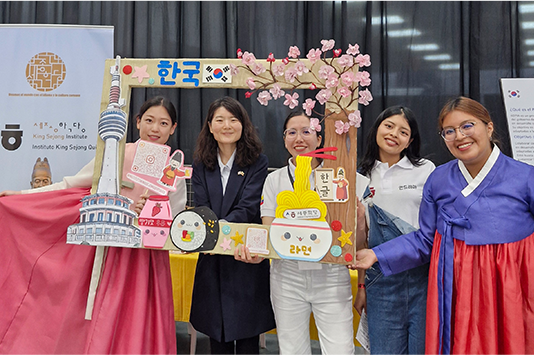
KSI Quito operating a promotional booth
at EXPO KOREA 2025
at EXPO KOREA 2025
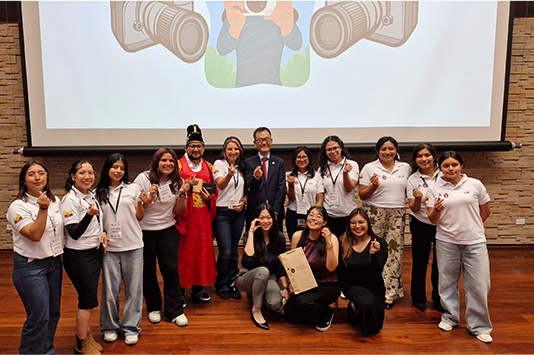
Ambassador Shim Jae-hyun (center) of the Embassy
of the Republic of Korea in Ecuador and learners from
the 1st cohort of KSI Quito supporters
of the Republic of Korea in Ecuador and learners from
the 1st cohort of KSI Quito supporters
Q. Are there any differentiated programs, cultural classes, or event operations that are unique to your institute?
A. (KSI Quito) At KSI Quito, we operate regular Korean culture classes every year using the Sejong Korean Culture textbook, and we are making efforts to develop this into a structure where education leads to practice, and practice to expansion. First, learners learn about Korean culture systematically through classes, and later they practice what they have learned by participating as helpers or supporters at cultural events. Based on these experiences, they move on to the next stage where they convey and teach Korean culture to people around them.
A. (KSI Bogotá) KSI Bogotá has been hosting the homecoming festival Fiesta Sejong since 2024. This event is designed for graduates and current students to gather in one place, interact, and share their experiences. The goal is to create a structure where learners can connect with each other and maintain contact with Korea even after leaving the KSI.
In 2025, we further systematized this program through a specialized project, reorganizing it so that learners could enjoy and experience Korean culture by participating in event preparations and operations directly. We also provided scholarship information and hosted special lectures related to studying abroad and careers. We designed the festival not as a one-day event, but as a continuous program running from September to December that catered to the demands of learners with various interests. In this process, graduates came to recognize the KSI as a community-based educational platform where they could return and maintain relationships even after completing their studies. I believe this also had a positive effect on learner retention and the formation of a network for the institute.
A. (KSI Bogotá) KSI Bogotá has been hosting the homecoming festival Fiesta Sejong since 2024. This event is designed for graduates and current students to gather in one place, interact, and share their experiences. The goal is to create a structure where learners can connect with each other and maintain contact with Korea even after leaving the KSI.
In 2025, we further systematized this program through a specialized project, reorganizing it so that learners could enjoy and experience Korean culture by participating in event preparations and operations directly. We also provided scholarship information and hosted special lectures related to studying abroad and careers. We designed the festival not as a one-day event, but as a continuous program running from September to December that catered to the demands of learners with various interests. In this process, graduates came to recognize the KSI as a community-based educational platform where they could return and maintain relationships even after completing their studies. I believe this also had a positive effect on learner retention and the formation of a network for the institute.
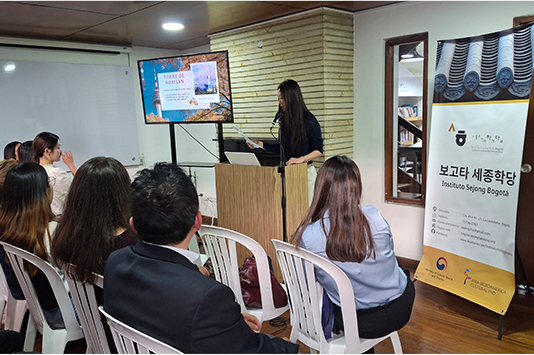
Korean Embassy Special Culture Lecture and
GKS Scholarship Briefing Session held at KSI Bogotá
GKS Scholarship Briefing Session held at KSI Bogotá
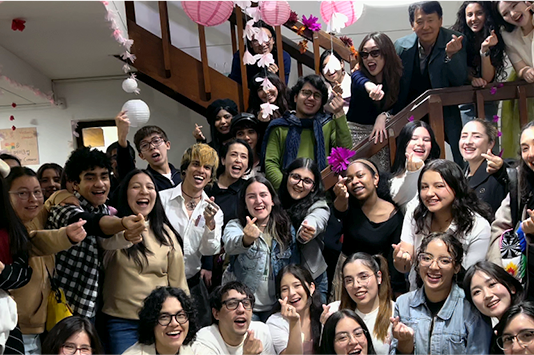
Commemorative photo of
KSI Bogotá"s homecoming festival, Fiesta Sejong
KSI Bogotá"s homecoming festival, Fiesta Sejong
Q. How do you divide tasks and set priorities when operating an institute with such a small staff? What was the core element that allowed you to keep the institute running stably, even when budget and manpower were lacking?
A. (KSI Bogotá) I still vividly remember the early difficulties of operating on a small scale after opening in 2012. KSI Bogotá went through a lot of trial and error back then. When operating with a small staff, rather than just trying to do more, you have to clearly establish priorities to ensure stable operation. When the workload is heavy, it is effective to prioritize things in the following order: (1) basic administration such as KSIF reporting and settlement; (2) classes, attendance, and learner responses; and (3) monthly meetings and minimal promotional and cultural programs.
There were two core elements that allowed us to keep going even when we had insufficient budget or manpower. First, securing assistant operational staff, even on a minimal scale, to distribute the administrative burden. If it’s difficult to hire full-time personnel, you can hire short-term or assistant staff and actively utilizing local talent.
Second, turning the weakness of small-scale operation into the strength of close learner management. The fewer learners there are, the more minutely you can understand the needs of each individual, and the easier it is to create a sense of intimacy and belonging with just small activities. Actually, it was helpful to manage the class atmosphere through a class representative system or to do small-scale activities. And once you build trust with learners, you can quickly reflect their needs, leading to improvements in satisfaction and learning retention rates. Ultimately, it’s possible to keep a KSI running by maintaining basic administration and consistent communication with learners.
A. (KSI Quito) If you are operating as a one-person operation, I would advise you to keep the number of courses and class hours to a minimum and, above all, take care of the teacher"s health. If you are worried about a sudden teacher vacancy, it is important to first let the learners know, as they are the most important people at the institute. It is unfortunate when learners are unable to take classes due to a shortage of teachers. To prevent them from being too disappointed, it’s very important to offer an explanation. For example, "Due to a sudden teacher vacancy, some classes will be suspended temporarily. We will soon hire a new teacher and normalize the schedule."
Regarding task division, circumstances will differ by country, but I believe it is desirable for the operational staff to handle basic administration such as budgets, operations, promotions, planning, and reporting. Tasks related to classes, such as lecturing, academic management within the system, checking homework, printing test papers, and grading, should be handled by the teachers. And even if the operational staff has difficulties with the budget or reporting, in my opinion, routinely transferring those tasks to the teachers, or conversely, teachers leaving classroom tasks to the operational staff, should be avoided. Of course, complementing one another"s work and cooperating in temporary situations can develop into positive teamwork, but you have to be careful about insisting on doing just your own work as if that were a given. If people are overworked even when they’re just doing their assigned tasks, I believe it’s time to hire additional staff. If immediate hiring is difficult due to a lack of budget, one method is to recruit institute helpers such as supporters.
There were two core elements that allowed us to keep going even when we had insufficient budget or manpower. First, securing assistant operational staff, even on a minimal scale, to distribute the administrative burden. If it’s difficult to hire full-time personnel, you can hire short-term or assistant staff and actively utilizing local talent.
Second, turning the weakness of small-scale operation into the strength of close learner management. The fewer learners there are, the more minutely you can understand the needs of each individual, and the easier it is to create a sense of intimacy and belonging with just small activities. Actually, it was helpful to manage the class atmosphere through a class representative system or to do small-scale activities. And once you build trust with learners, you can quickly reflect their needs, leading to improvements in satisfaction and learning retention rates. Ultimately, it’s possible to keep a KSI running by maintaining basic administration and consistent communication with learners.
A. (KSI Quito) If you are operating as a one-person operation, I would advise you to keep the number of courses and class hours to a minimum and, above all, take care of the teacher"s health. If you are worried about a sudden teacher vacancy, it is important to first let the learners know, as they are the most important people at the institute. It is unfortunate when learners are unable to take classes due to a shortage of teachers. To prevent them from being too disappointed, it’s very important to offer an explanation. For example, "Due to a sudden teacher vacancy, some classes will be suspended temporarily. We will soon hire a new teacher and normalize the schedule."
Regarding task division, circumstances will differ by country, but I believe it is desirable for the operational staff to handle basic administration such as budgets, operations, promotions, planning, and reporting. Tasks related to classes, such as lecturing, academic management within the system, checking homework, printing test papers, and grading, should be handled by the teachers. And even if the operational staff has difficulties with the budget or reporting, in my opinion, routinely transferring those tasks to the teachers, or conversely, teachers leaving classroom tasks to the operational staff, should be avoided. Of course, complementing one another"s work and cooperating in temporary situations can develop into positive teamwork, but you have to be careful about insisting on doing just your own work as if that were a given. If people are overworked even when they’re just doing their assigned tasks, I believe it’s time to hire additional staff. If immediate hiring is difficult due to a lack of budget, one method is to recruit institute helpers such as supporters.
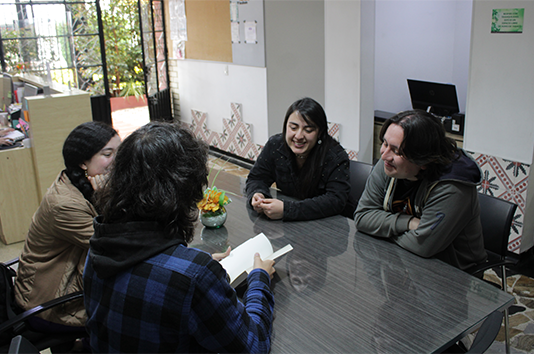
KSI Bogotá learners participating
in a study group and chatting
in a study group and chatting
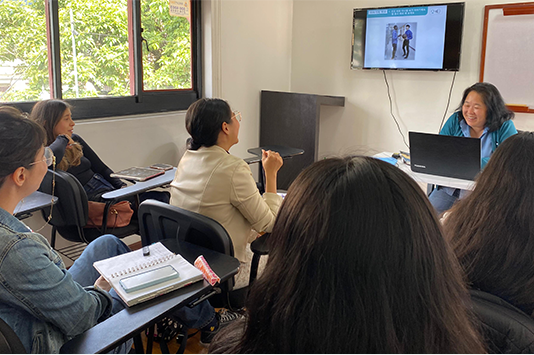
2025 Sejong Reading Club class
in progress at KSI Bogotá
in progress at KSI Bogotá
Q. Sometimes when you’re operating an institute, you can’t run the programs you want to because the budget falls short of what was planned. In this case, where do you make adjustments first? Please introduce some events or programs that have produced a great effect with a small budget.
A. (KSI Bogotá) The annual operating budget of an institute is often insufficient. KSI Bogotá is also anticipating financial burdens, especially this year due to exchange rate fluctuations and a 23% increase in the legal minimum wage. However, suddenly tightening the budget can negatively affect the institute"s atmosphere and the number of learners. Therefore, if the budget is insufficient, it is important to first evaluate the importance of each program within the annual plan. KSI Bogotá also shares the principle that "The more difficult things are, the more important it is to stick to the core and increase operational efficiency." So we distribute the budget according to program importance.
KSI Bogotá has chosen to keep the completion ceremonies for the first and second halves of the year, as they hold great significance, and to focus resources where they are needed most to ensure stability. We are balancing this by adjusting the scale or simplifying the operation of other events. For smaller programs, reflecting learners" opinions or making participation voluntary can minimize costs while still producing a good effect.
A. (KSI Quito) Even in Ecuador, which uses the US dollar, the budget sometimes shrinks more than expected due to exchange rate fluctuations. Whenever this happens, we respond by adjusting the overall budget ratio rather than reducing specific budget categories. And there are a variety of cultural events that are possible even on a small budget. KSI Quito focuses on programs that are completely feasible even in small spaces, such as Korean food experiences utilizing affordable local ingredients, origami, singing, Hangeul calligraphy, and sebae experiences. Because space and teaching materials are limited, we focus mainly on participatory activities within the classroom.
However, I do not believe that unconditionally reducing costs just because the budget is lacking is the right approach. KSI Quito operated free classes from 2020 to 2024 and had no separate revenue structure, but based on advice from the KSIF, we started collecting retake fees from students retaking the courses. This experience has shown me that to operate sustainably, we must consider revenue structures along with cost reductions.
KSI Bogotá has chosen to keep the completion ceremonies for the first and second halves of the year, as they hold great significance, and to focus resources where they are needed most to ensure stability. We are balancing this by adjusting the scale or simplifying the operation of other events. For smaller programs, reflecting learners" opinions or making participation voluntary can minimize costs while still producing a good effect.
A. (KSI Quito) Even in Ecuador, which uses the US dollar, the budget sometimes shrinks more than expected due to exchange rate fluctuations. Whenever this happens, we respond by adjusting the overall budget ratio rather than reducing specific budget categories. And there are a variety of cultural events that are possible even on a small budget. KSI Quito focuses on programs that are completely feasible even in small spaces, such as Korean food experiences utilizing affordable local ingredients, origami, singing, Hangeul calligraphy, and sebae experiences. Because space and teaching materials are limited, we focus mainly on participatory activities within the classroom.
However, I do not believe that unconditionally reducing costs just because the budget is lacking is the right approach. KSI Quito operated free classes from 2020 to 2024 and had no separate revenue structure, but based on advice from the KSIF, we started collecting retake fees from students retaking the courses. This experience has shown me that to operate sustainably, we must consider revenue structures along with cost reductions.
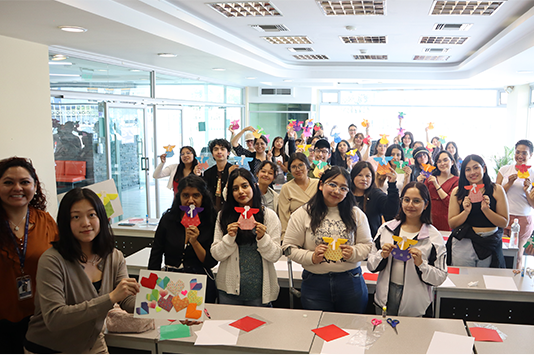
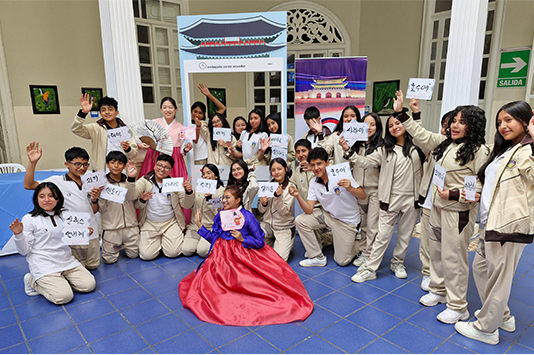
Commemorative photos of KSI Quito"s Hanbok Origami and Hangeul Calligraphy cultural events
Q. How have you formed partnerships with universities or institutions in the region around the KSI, and what collaborations yielded the greatest results?
A. (KSI Bogotá) As the director, the areas I pay the most attention to are external projects and building partnerships. With the recent interest in K-culture and Korea"s rising status, it has become easier to create partnership opportunities, but there may still be institutes that find it difficult to connect with the local mainstream society. However, these days the demand for Korean language lectures is steadily increasing at many universities, so if you share information about the KSI, the schools might contact you first. This could be a good way to actively promote the institute.
Rather than aiming for agreements with external institutions from the beginning, KSI Bogotá’s method is to first create touchpoints with international cooperation offices, lifelong education centers, and language institutes, and then demonstrate results through small-scale joint programs. This approach has led to agreements with or lecture requests from seven or eight universities so far, and currently, we are regularly dispatching lecturers to the Colombian National Police and the Metropolitan Technological Institute (ITM) in Medellín. In particular, our ongoing exchanges with the ITM have borne fruit, and they’re now officially considering establishing a Korean studies department.
A. (KSI Quito) KSI Quito actively participates in embassy-hosted seminars and various events together with its learners. Before and after the events, we try to expand cooperative projects through networking with attendees from other institutions. In particular, last year, over 26,000 citizens of Quito visited EXPO KOREA 2025, co-hosted by the Korea Trade-Investment Promotion Agency (KOTRA) and the embassy, and KSI Quito operated a program to write visitors" names in Hangeul, which drew over 5,000 participants. Through this, the awareness of the institute greatly improved, with the number of social media followers increasing by nearly 1,000, so the promotional effect was great.
Rather than aiming for agreements with external institutions from the beginning, KSI Bogotá’s method is to first create touchpoints with international cooperation offices, lifelong education centers, and language institutes, and then demonstrate results through small-scale joint programs. This approach has led to agreements with or lecture requests from seven or eight universities so far, and currently, we are regularly dispatching lecturers to the Colombian National Police and the Metropolitan Technological Institute (ITM) in Medellín. In particular, our ongoing exchanges with the ITM have borne fruit, and they’re now officially considering establishing a Korean studies department.
A. (KSI Quito) KSI Quito actively participates in embassy-hosted seminars and various events together with its learners. Before and after the events, we try to expand cooperative projects through networking with attendees from other institutions. In particular, last year, over 26,000 citizens of Quito visited EXPO KOREA 2025, co-hosted by the Korea Trade-Investment Promotion Agency (KOTRA) and the embassy, and KSI Quito operated a program to write visitors" names in Hangeul, which drew over 5,000 participants. Through this, the awareness of the institute greatly improved, with the number of social media followers increasing by nearly 1,000, so the promotional effect was great.
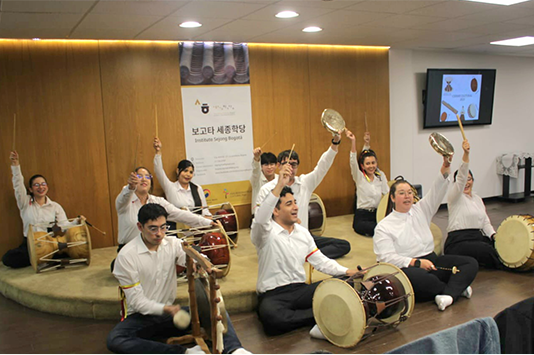
KSI Bogotá learners performing samulnori at the 2025
Culture Class end-of-term event
Culture Class end-of-term event
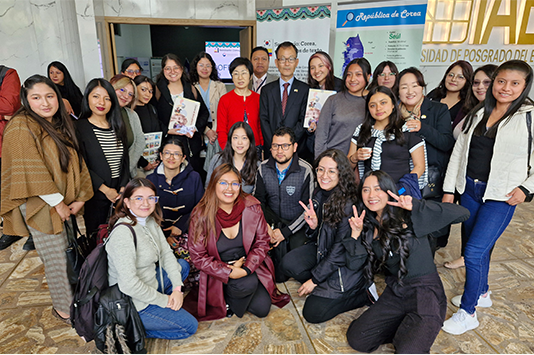
KSI Quito learners attending a seminar held at the
Embassy of the Republic of Korea in Ecuador
Embassy of the Republic of Korea in Ecuador
Q. Lastly, do you have any advice for the personnel in charge of the new KSI operating institutes that have just started?
A. (KSI Quito) If difficulties arise after you start operations, rather than keeping your worries to yourself, how about asking for help from those around you and seeking solutions together? Sending an inquiry email to the KSIF asking, "What do other institutes do in this case?" and referencing the examples of other institutes could be helpful.
A. (KSI Bogotá) “Rather than looking at the big picture from the outset, first establish a firm and basic operating structure. In the beginning, you may lack manpower or budget, but the process of establishing a framework by faithfully following basic procedures such as attendance management, satisfaction checks, communication with teachers, and KSIF reporting and settlement is more important than anything else.
Also, the newer the institute, the more important retention is over recruitment. The learners" sense of belonging, relationships with teachers, and joy of studying together are the core reasons that keep them coming back to KSIs. For those who are frequently absent or have difficulty keeping up with the curriculum, it is very important to check up on them through individual counseling and, if necessary, provide realistic alternatives such as retaking a course to ensure they don’t give up.
Furthermore, creating the perception that the institute is not just a classroom space but a community space through various activities such as clubs, small-scale cultural experiences, and lectures will naturally lead to re-registrations and recommendations. Recently, as the dissemination of the Korean language and Korean studies has emerged as a major task under the government’s K-Initiative policy, cooperative projects with embassies and related institutions are expected to expand further, so we believe that KSIs will see more opportunities for cooperation as well.”
A. (KSI Bogotá) “Rather than looking at the big picture from the outset, first establish a firm and basic operating structure. In the beginning, you may lack manpower or budget, but the process of establishing a framework by faithfully following basic procedures such as attendance management, satisfaction checks, communication with teachers, and KSIF reporting and settlement is more important than anything else.
Also, the newer the institute, the more important retention is over recruitment. The learners" sense of belonging, relationships with teachers, and joy of studying together are the core reasons that keep them coming back to KSIs. For those who are frequently absent or have difficulty keeping up with the curriculum, it is very important to check up on them through individual counseling and, if necessary, provide realistic alternatives such as retaking a course to ensure they don’t give up.
Furthermore, creating the perception that the institute is not just a classroom space but a community space through various activities such as clubs, small-scale cultural experiences, and lectures will naturally lead to re-registrations and recommendations. Recently, as the dissemination of the Korean language and Korean studies has emerged as a major task under the government’s K-Initiative policy, cooperative projects with embassies and related institutions are expected to expand further, so we believe that KSIs will see more opportunities for cooperation as well.”