A 45-Year Journey Devoted to the Korean Language Meeting with Professor Ross King of the University of British Columbia, Canada
글쓴이홍보협력팀
태그
작성일 2026-02-20
조회수114

A 45-Year Journey Devoted to the Korean Language
Meeting with Professor Ross King of the University
of British Columbia, Canada
of British Columbia, Canada
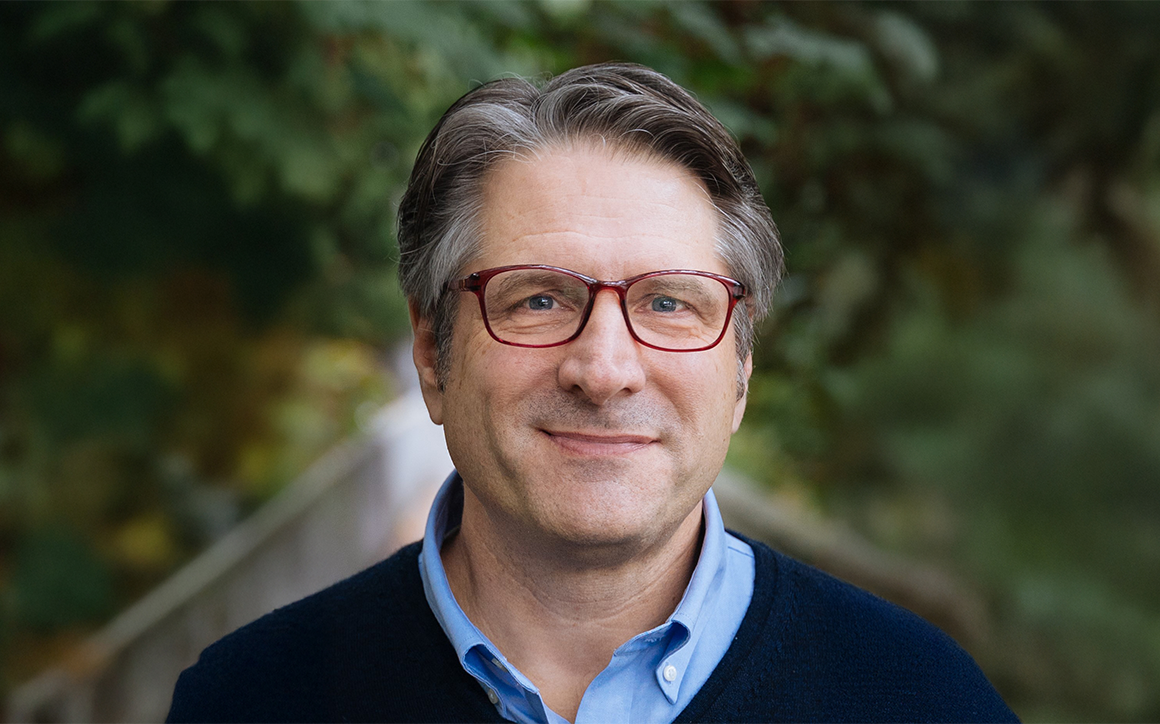
Professor Ross King of the Department of Asian Studies at the University of British Columbia (UBC), Canada, is a Korean linguist who has devoted more than 30 years to the Korean language and Korean studies in North America as both a researcher and a teacher of the next generation of scholars. He is especially known for founding Sup sogŭi Hosu, the world’s first Korean language immersion village, and has been a leading advocate for cultivating “lifelong learners of Korean.” In this interview, we met with Professor Ross King to discuss how he first began studying Korean 45 years ago, the essentials of Korean language education that must not be overlooked even amid the global popularity of Korean culture, and his thoughts on the importance of building long-term educational infrastructure.
Q. Hello, Professor. Thank you for taking the time to join us for this interview, despite your busy schedule. Since earning your PhD in Korean linguistics from Harvard University, you have spent more than 30 years at the University of British Columbia in Canada as a researcher and educator in Korean language and Korean studies, and as a mentor for younger scholars. For KSI officials and learners around the world, could you briefly introduce how you came to pursue Korean language education and the research and teaching journey that you have followed to this day?
A. Hello. I am Ross King, a professor at the University of British Columbia in Canada. Becoming a professor of Korean was not something I had planned from the beginning. I grew up in a small town in Wisconsin in the 1970s and began developing an interest in foreign languages by studying Russian, Spanish, and German during the summers at Concordia Language Villages in Minnesota. Later I attended a boarding school, which gave me the opportunity to meet peers from diverse cultural backgrounds and further deepened my interest in languages.
I then entered Yale University, where I majored in linguistics and met Professor Samuel Martin, an outstanding linguist who became a great inspiration to me. At the age of nineteen, I began studying Korean in earnest. At the time, most American universities did not offer Korean language programs, so Professor Martin arranged for me to receive private lessons. It’s thanks to his support that I was able to begin learning Korean.
In 1986, when I was a graduate student at Harvard, I attended a conference on Altaic studies in Tashkent, Uzbekistan. There, I encountered the Koryo-saram, who spoke a unique variety of the Hamgyŏngbuk-do dialect mixed with Russian. At the time, I was scheduled to enter Seoul National University as a Fulbright scholar, but this experience led me to begin researching Korean dialectology, particularly the Hamgyŏng dialect. As a result, I wrote my doctoral dissertation on Korean dialect materials available in Russian and published some of the earliest studies on “Soviet Korean.” This remains a central focus of my research.
Since becoming a professor, I have spent more than 30 years developing a wide range of teaching materials, from textbooks for beginner and intermediate learners to resources on modern Korean short stories, Chinese characters, Middle Korean, and Classical Chinese. I have also devoted more than 25 years to translating and annotating a copy of Samgang Haengsildo held by the British Library. More recently, my research has focused on Middle Korean, the interaction between Classical Chinese and Korean, and how Koreans historically read texts written in Classical Chinese.
I then entered Yale University, where I majored in linguistics and met Professor Samuel Martin, an outstanding linguist who became a great inspiration to me. At the age of nineteen, I began studying Korean in earnest. At the time, most American universities did not offer Korean language programs, so Professor Martin arranged for me to receive private lessons. It’s thanks to his support that I was able to begin learning Korean.
In 1986, when I was a graduate student at Harvard, I attended a conference on Altaic studies in Tashkent, Uzbekistan. There, I encountered the Koryo-saram, who spoke a unique variety of the Hamgyŏngbuk-do dialect mixed with Russian. At the time, I was scheduled to enter Seoul National University as a Fulbright scholar, but this experience led me to begin researching Korean dialectology, particularly the Hamgyŏng dialect. As a result, I wrote my doctoral dissertation on Korean dialect materials available in Russian and published some of the earliest studies on “Soviet Korean.” This remains a central focus of my research.
Since becoming a professor, I have spent more than 30 years developing a wide range of teaching materials, from textbooks for beginner and intermediate learners to resources on modern Korean short stories, Chinese characters, Middle Korean, and Classical Chinese. I have also devoted more than 25 years to translating and annotating a copy of Samgang Haengsildo held by the British Library. More recently, my research has focused on Middle Korean, the interaction between Classical Chinese and Korean, and how Koreans historically read texts written in Classical Chinese.
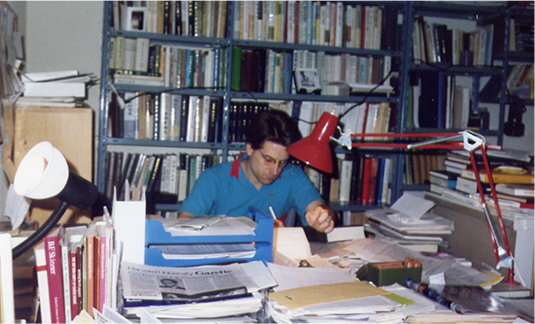
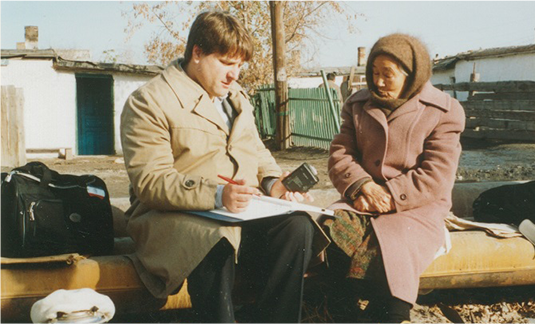
Professor Ross King deeply engaged in research
during his time as a graduate student at Harvard
during his time as a graduate student at Harvard
Professor Ross King in Astana, Kazakhstan, in the early
2000s interviewing a Koryo-saram woman from the
Blagoslovennoe Korean settlement in Russia
2000s interviewing a Koryo-saram woman from the
Blagoslovennoe Korean settlement in Russia
Q. With the recent spread of Korean culture, global demand for Korean lessons has been growing continuously. From your perspective in the field, how do you think the motivations and backgrounds of Korean language learners in North America have changed over time? Also, we would like to hear your thoughts on the role that the Korean Wave has played in this process.
A. When I first began learning Korean, very few universities in North America offered Korean language courses. In the 1990s, Korean studies gradually expanded, but the majority of Korean learners remained Korean American, with very few non-Koreans. In fact, many universities couldn’t have filled even a single Korean language class with non-heritage learners.
This environment began to change with Korea’s democratization in 1987 and subsequent economic growth, the establishment of the Korea Foundation in 1992, and the spread of the Korean Wave. Over the past 15 to 20 years, the Korean Wave has clearly contributed to the increased enrollment in introductory Korean courses. However, this outward growth has not always translated into meaningful progress in Korean language education.
There are still challenges that must be addressed to achieve more substantive development in Korean language education. Korean requires considerable time and effort to master, yet long-term motivational support systems such as scholarships remain insufficient. As a result, it is common to see learners give up partway through their studies. If we want this interest in Korean driven by the Korean Wave to have staying power, it’s now time to move beyond quantitative growth and focus more seriously on thoughtful policy planning and investment to build systematic and sustainable educational infrastructure overseas.
This environment began to change with Korea’s democratization in 1987 and subsequent economic growth, the establishment of the Korea Foundation in 1992, and the spread of the Korean Wave. Over the past 15 to 20 years, the Korean Wave has clearly contributed to the increased enrollment in introductory Korean courses. However, this outward growth has not always translated into meaningful progress in Korean language education.
There are still challenges that must be addressed to achieve more substantive development in Korean language education. Korean requires considerable time and effort to master, yet long-term motivational support systems such as scholarships remain insufficient. As a result, it is common to see learners give up partway through their studies. If we want this interest in Korean driven by the Korean Wave to have staying power, it’s now time to move beyond quantitative growth and focus more seriously on thoughtful policy planning and investment to build systematic and sustainable educational infrastructure overseas.
Q. In 1999, you founded Sup sogŭi Hosu, the world’s first Korean immersion language village, in Minnesota, USA. What issues or educational limitations did you notice in the North American Korean language education environment at the time, and what led you to begin this new experiment of creating a “language village outside the classroom”?
A. I had two main motivations for founding the Korean language village. One was the limitations I personally encountered as both a learner and a professor of Korean, and the other was my experience learning foreign languages at Concordia Language Villages.
In the 1980s and 1990s, what I felt most strongly about Korean language education was that even Koreans themselves had accumulated very little know-how or experience in teaching Korean to non-native speakers. At the same time, Korean language education in the United States tended to focus primarily on Korean American learners, which often made non-heritage learners feel marginalized. Heritage and non-heritage learners were also generally placed in the same classroom, which led to many non-heritage learners becoming frustrated and giving up on Korean partway through.
Most importantly, as I realized early on, after entering college was too late to begin studying Korean. To become truly proficient, learners need to start at a much younger age. With this in mind, I wanted to create an environment where learners could begin studying Korean naturally and enjoyably through engaging activities from an early age. At the Korean language village Sup sogŭi Hosu, effective language learning takes place through a residential immersion approach, which avoids the common tension between heritage and non-heritage learners seen in adult programs.
In the 1980s and 1990s, what I felt most strongly about Korean language education was that even Koreans themselves had accumulated very little know-how or experience in teaching Korean to non-native speakers. At the same time, Korean language education in the United States tended to focus primarily on Korean American learners, which often made non-heritage learners feel marginalized. Heritage and non-heritage learners were also generally placed in the same classroom, which led to many non-heritage learners becoming frustrated and giving up on Korean partway through.
Most importantly, as I realized early on, after entering college was too late to begin studying Korean. To become truly proficient, learners need to start at a much younger age. With this in mind, I wanted to create an environment where learners could begin studying Korean naturally and enjoyably through engaging activities from an early age. At the Korean language village Sup sogŭi Hosu, effective language learning takes place through a residential immersion approach, which avoids the common tension between heritage and non-heritage learners seen in adult programs.
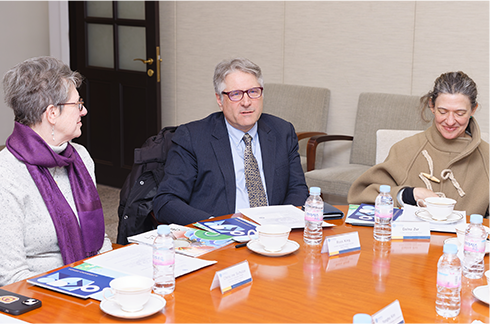
Professor Ross King (center) speaks about
Concordia Language Villages with colleagues at
Yonsei University in February 2025
Concordia Language Villages with colleagues at
Yonsei University in February 2025
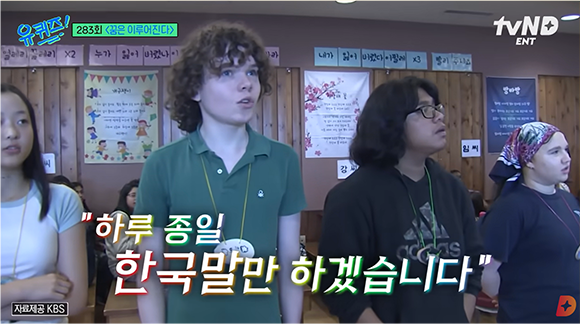
A scene featuring the Korean language village Sup sogŭi
Hosu that aired on tvN’s You Quiz on the Block in March
2025 (Photo source: tvN D ENT YouTube channel)
Hosu that aired on tvN’s You Quiz on the Block in March
2025 (Photo source: tvN D ENT YouTube channel)
Q. Sup sogŭi Hosu is known for combining language education with a wide range of cultural activities such as K-pop dance, art, taekwondo, and traditional games, all within an immersion environment where learners see, hear, and speak Korean. What kind of Korean users do you ultimately hope learners will become, and how have you observed this transformation in the field?
A. The ultimate goal of Sup sogŭi Hosu is to cultivate lifelong learners of Korean. We aim to help participants form a deep connection with the Korean language and Korean culture from an early age and to maintain it throughout their lives.
This goal is reflected in tangible outcomes. Every summer there are returning villagers at Sup sogŭi Hosu, and it is not uncommon to see the same individuals for five to ten years, or even longer. When applying to college, many of them consider whether Korean language and Korean studies courses are offered, choose related majors, and hope to study in Korea through exchange programs. After graduating from college, some even return to the village to work, and these former participants often become our most capable staff members.
As adults, many participants stay closely connected through social media and the language village network, and maintain strong personal and professional ties with Korea. Seeing this brings me great pride and a deep sense of fulfillment.
This goal is reflected in tangible outcomes. Every summer there are returning villagers at Sup sogŭi Hosu, and it is not uncommon to see the same individuals for five to ten years, or even longer. When applying to college, many of them consider whether Korean language and Korean studies courses are offered, choose related majors, and hope to study in Korea through exchange programs. After graduating from college, some even return to the village to work, and these former participants often become our most capable staff members.
As adults, many participants stay closely connected through social media and the language village network, and maintain strong personal and professional ties with Korea. Seeing this brings me great pride and a deep sense of fulfillment.
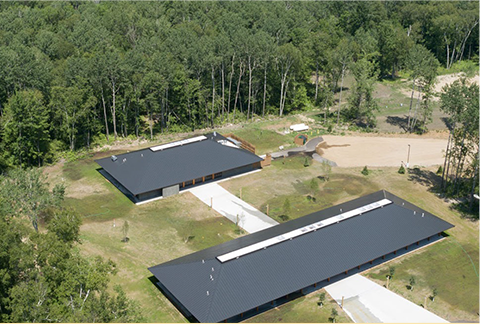
Groundbreaking ceremony for the Korean
language village Sup sogŭi Hosu located
in Minnesota, USA
language village Sup sogŭi Hosu located
in Minnesota, USA
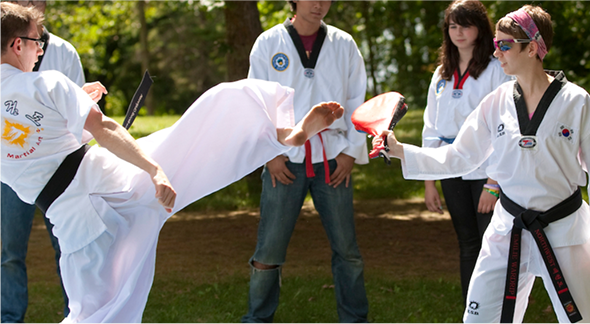
Program participants practicing taekwondo
at Sup sogŭi Hosu
at Sup sogŭi Hosu
Q. Many international learners say that they encounter major barriers in vocabulary and literacy after moving beyond the beginner level. In your view, what abilities should learners focus on developing in order to grow beyond the functional communication level into advanced users who can think and express themselves with sophistication? Also, what kinds of learning methods or environments do you believe best support this growth?
A. The issue of advanced Korean ability is a central topic that has been discussed continuously in the field of Korean language education. In North America, truly advanced users whose first language is not Korean are extremely rare, and the current educational infrastructure is still not sufficient to produce such advanced users.
There are three main reasons why advanced Korean users remain so rare. The first relates to teaching methodology. There’s not really a sufficient body of high-quality instructional materials for advanced learners. Because advanced-level materials must address a wide range of professional needs, they are also costly to develop. In addition, the number of students applying for advanced Korean courses at universities is frequently below the minimum enrollment, so the courses are canceled.
The second issue is the lack of institutional infrastructure. Moving on to the advanced level requires strong motivation, which in turn calls for scholarships, prizes, and research funding to cover both tuition and living expenses. When we consider programs such as the Interuniversity Consortium for Japanese Language Studies in Yokohama or intensive Chinese language programs in Beijing, the need for this type of support becomes even more evident. In Korea, there are ongoing efforts such as the Interuniversity Consortium at Sungkyunkwan University, but in order to achieve global competitiveness, more diverse support and substantial, sustained investment are still needed.
The final issue concerns education in Chinese characters. At least in the context of Korean studies, learning Chinese characters is essential for achieving true fluency. However, since the Chinese character portion of Korean language education was cut back about 20 years ago, there has been ongoing discussion about the resulting limitations in vocabulary acquisition. In the field of Korean studies in particular, understanding Chinese characters is often emphasized as the key to expanding vocabulary. I believe that scaling back this aspect of education was, in many ways, an unfortunate decision for deeper Korean language learning.
Ultimately, in order to cultivate advanced Korean users, it is important to develop high-quality instructional materials that support specializations of learners, along with a more systematic scholarship support system that can compete with those of other language fields. Combining these measures with educational efforts to strengthen vocabulary and literacy through the study of Chinese characters will help Korean learners finally move beyond basic communication and grow into truly advanced users who can think and express themselves at a deeper level.
There are three main reasons why advanced Korean users remain so rare. The first relates to teaching methodology. There’s not really a sufficient body of high-quality instructional materials for advanced learners. Because advanced-level materials must address a wide range of professional needs, they are also costly to develop. In addition, the number of students applying for advanced Korean courses at universities is frequently below the minimum enrollment, so the courses are canceled.
The second issue is the lack of institutional infrastructure. Moving on to the advanced level requires strong motivation, which in turn calls for scholarships, prizes, and research funding to cover both tuition and living expenses. When we consider programs such as the Interuniversity Consortium for Japanese Language Studies in Yokohama or intensive Chinese language programs in Beijing, the need for this type of support becomes even more evident. In Korea, there are ongoing efforts such as the Interuniversity Consortium at Sungkyunkwan University, but in order to achieve global competitiveness, more diverse support and substantial, sustained investment are still needed.
The final issue concerns education in Chinese characters. At least in the context of Korean studies, learning Chinese characters is essential for achieving true fluency. However, since the Chinese character portion of Korean language education was cut back about 20 years ago, there has been ongoing discussion about the resulting limitations in vocabulary acquisition. In the field of Korean studies in particular, understanding Chinese characters is often emphasized as the key to expanding vocabulary. I believe that scaling back this aspect of education was, in many ways, an unfortunate decision for deeper Korean language learning.
Ultimately, in order to cultivate advanced Korean users, it is important to develop high-quality instructional materials that support specializations of learners, along with a more systematic scholarship support system that can compete with those of other language fields. Combining these measures with educational efforts to strengthen vocabulary and literacy through the study of Chinese characters will help Korean learners finally move beyond basic communication and grow into truly advanced users who can think and express themselves at a deeper level.
Q. As you mentioned earlier, the growing number of Korean language learners brought about by the Korean Wave is an encouraging development. However, it is becoming increasingly important to ensure that this interest doesn’t fade away, but instead leads to a sustainable Korean language learning ecosystem. In your view, beyond the achievement of “increased learner numbers,” what long-term direction should Korean language education institutions, including KSIs, pursue? We would appreciate your insights as an educator.
A. The increase in Korean language learners with the Korean Wave is certainly a very encouraging development. However, for this interest to evolve into a long-term learning ecosystem, it is necessary to engage in thoughtful discussions about overall direction as well.
At present, Korean language education policy and financial support are largely structured around institutions within Korea. This system has contributed to rapid growth, but there is also an ongoing discussion in academic circles about the need to more broadly reflect the experiences and perspectives of diverse educational settings. In particular, incorporating more input into policy discussions from educators who have lived abroad for extended periods or who have extensive experience learning foreign languages could broaden our understanding of learners’ needs.
There is also an ongoing discussion about the need for changes in how Korean language and culture are introduced. While explanations that emphasize the distinct characteristics of Korean and its cultural value are meaningful, it is becoming increasingly clear that, for learners, experiences that allow them to connect Korean to real life and communicate meaningfully are even more important.
At the same time, although there are many positive aspects to the attention Korean is receiving as a form of cultural content amid the Korean Wave, efforts are needed to maintain balance so that language learning is not perceived merely as a form of cultural consumption. Rather than viewing Korean as the exclusive asset of a particular group, spreading the idea that it is a shared linguistic resource for people around the world can further enhance its long-term sustainability.
I believe this is a time not only for quantitative growth but also for reflection on philosophy and attitudes. Korean language education has grown rapidly, but it still occupies a relatively small share of the global foreign language education market. In this context, fostering long-term learning communities is likely to be more impactful than short-term expansion.
To achieve this, investing in open and long-term talent development models is essential. For example, one effective approach could be inviting overseas learners to Korea for advanced study opportunities and helping them build ongoing personal and professional networks connected to Korea. If such a long-term perspective continues to garner more support, it will strengthen the stability and sustainability of the Korean language learning ecosystem.
At present, Korean language education policy and financial support are largely structured around institutions within Korea. This system has contributed to rapid growth, but there is also an ongoing discussion in academic circles about the need to more broadly reflect the experiences and perspectives of diverse educational settings. In particular, incorporating more input into policy discussions from educators who have lived abroad for extended periods or who have extensive experience learning foreign languages could broaden our understanding of learners’ needs.
There is also an ongoing discussion about the need for changes in how Korean language and culture are introduced. While explanations that emphasize the distinct characteristics of Korean and its cultural value are meaningful, it is becoming increasingly clear that, for learners, experiences that allow them to connect Korean to real life and communicate meaningfully are even more important.
At the same time, although there are many positive aspects to the attention Korean is receiving as a form of cultural content amid the Korean Wave, efforts are needed to maintain balance so that language learning is not perceived merely as a form of cultural consumption. Rather than viewing Korean as the exclusive asset of a particular group, spreading the idea that it is a shared linguistic resource for people around the world can further enhance its long-term sustainability.
I believe this is a time not only for quantitative growth but also for reflection on philosophy and attitudes. Korean language education has grown rapidly, but it still occupies a relatively small share of the global foreign language education market. In this context, fostering long-term learning communities is likely to be more impactful than short-term expansion.
To achieve this, investing in open and long-term talent development models is essential. For example, one effective approach could be inviting overseas learners to Korea for advanced study opportunities and helping them build ongoing personal and professional networks connected to Korea. If such a long-term perspective continues to garner more support, it will strengthen the stability and sustainability of the Korean language learning ecosystem.

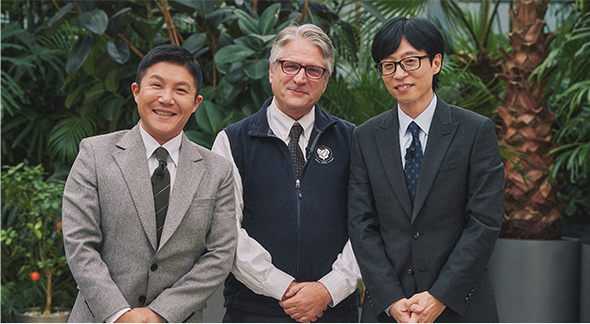
Professor Ross King (center) poses for commemorative photos with the hosts after appearing
on KBS1’s AM Plaza and tvN’s You Quiz on the Block
on KBS1’s AM Plaza and tvN’s You Quiz on the Block
Q. Finally, as we welcome the new year 2026, what words of encouragement or advice would you like to share with KSI learners around the world who are taking on the challenge of learning Korean and Korean culture? Or for the teachers who continue to dedicate themselves to the field?
A. To everyone learning Korean, I encourage you to study Chinese characters and Sino-Korean vocabulary systematically and to read widely across a variety of genres. TikTok, YouTube, and K-dramas are excellent resources for learning Korean, but they have their limits. Only by understanding the roots of the Korean language and strengthening your literacy will you be able to discover the true depth and appeal of Korean. And if you are truly serious about learning Korean, I recommend investing at least five years in your studies.
To the teachers who are quietly devoted to their work in the field, I would like to offer a few thoughts as a fellow educator. While continuing to take pride in “our” language and writing system, I believe that you can enrich your classes by making an effort to view Korean and Hangeul from the learner’s perspective. In addition, if teachers continue learning foreign languages other than Korean themselves, they will be able to understand both the challenges and the joys of their students more deeply. Building this kind of empathy will enable more meaningful and genuine communication in the classroom. I wholeheartedly support the journeys of teachers around the world who continue to learn and grow alongside their Korean students.
To the teachers who are quietly devoted to their work in the field, I would like to offer a few thoughts as a fellow educator. While continuing to take pride in “our” language and writing system, I believe that you can enrich your classes by making an effort to view Korean and Hangeul from the learner’s perspective. In addition, if teachers continue learning foreign languages other than Korean themselves, they will be able to understand both the challenges and the joys of their students more deeply. Building this kind of empathy will enable more meaningful and genuine communication in the classroom. I wholeheartedly support the journeys of teachers around the world who continue to learn and grow alongside their Korean students.