KSIF at a Glance for 2026
글쓴이홍보협력팀
태그
작성일 2026-02-20
조회수45

KSIF at a Glance for 2026
> Major institutional changes to be implemented in 2026, including reorganization of KSI operational models and expansion of qualification requirements for local instructors
> Alignment with local educational environments to establish foundation for continued global growth of Korean language education
The King Sejong Institute Foundation (Acting President and Secretary General Choi Hyun-Seung, hereafter referred to as the KSIF) will begin implementing institutional changes across its operational framework and key programs starting in 2026 to drive qualitative growth in the global spread of the Korean language and Korean culture. This reorganization will focus on responding flexibly to the rapidly increasing demand in the field while strengthening educational professionalism.
◆ Changes to Application Types and Preparation Requirements for New KSIs
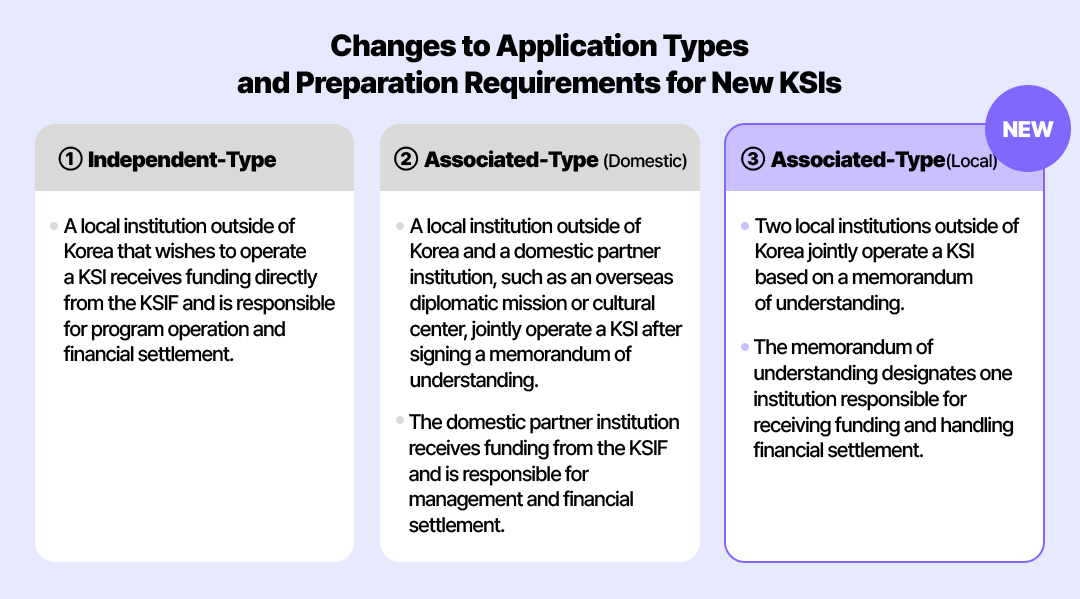
Beginning in 2026, the KSIF will diversify the operational models for general KSIs in order to strengthen cooperation among local operating institutions. Previously, applications for joint operation required a memorandum of understanding signed by a local operating institution and a domestic partner institution. Starting in 2026, the new “Associated-Type (Local)” option will allow two local operating institutions to apply jointly. This change will respect the autonomy of institutions that are well-versed in local conditions while enhancing the localization of Korean language education through complementary partnerships. As a result, in regions where collaboration with a domestic institution is difficult, it will still be possible to establish a KSI through cooperation between local institutions.
Beginning in 2026, the KSIF will diversify the operational models for general KSIs in order to strengthen cooperation among local operating institutions. Previously, applications for joint operation required a memorandum of understanding signed by a local operating institution and a domestic partner institution. Starting in 2026, the new “Associated-Type (Local)” option will allow two local operating institutions to apply jointly. This change will respect the autonomy of institutions that are well-versed in local conditions while enhancing the localization of Korean language education through complementary partnerships. As a result, in regions where collaboration with a domestic institution is difficult, it will still be possible to establish a KSI through cooperation between local institutions.
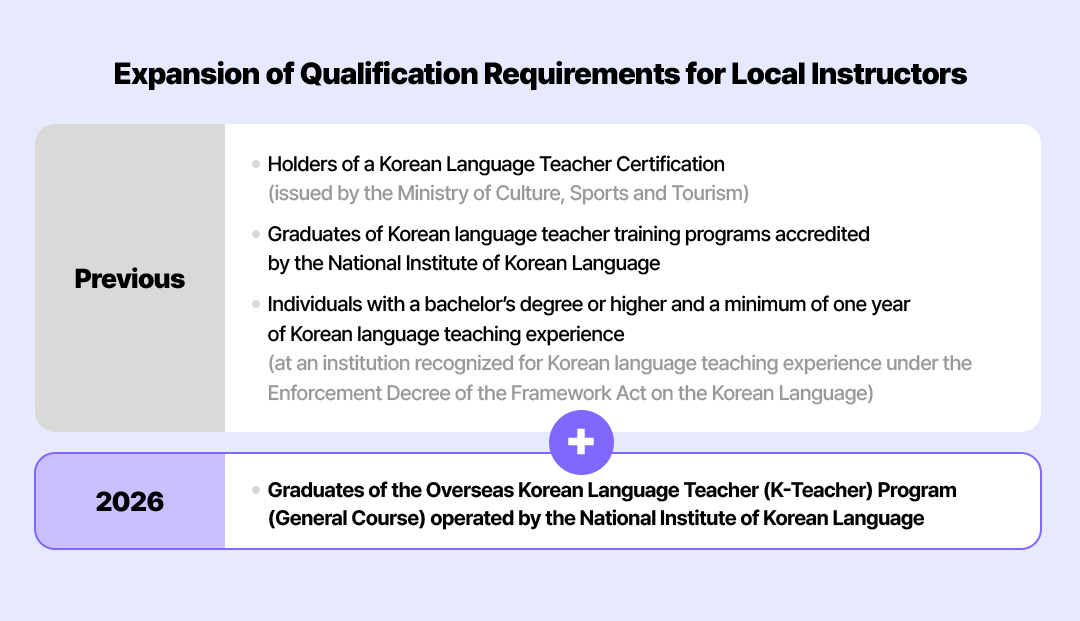
To enhance the professionalism of Korean language education, the qualification requirements for local Korean language instructors will also be expanded. The existing criteria included holding a Korean Language Teacher Certification, completing a teacher training program accredited by the National Institute of Korean Language, possessing a bachelor’s degree or higher, and meeting specified teaching experience requirements. Beginning in 2026, individuals who complete the Overseas Korean Language Teacher (K-Teacher) Program (General Course) operated by the National Institute of Korean Language will be deemed to meet the qualification requirements.
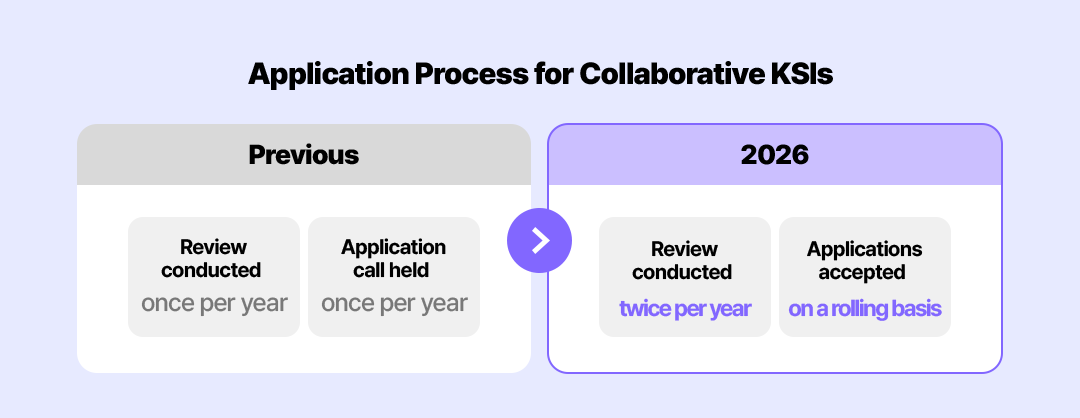
In addition, there will be changes to the application process for collaborative KSIs. The previous system of one application call and one review per year will expand to two review cycles per year and an open, rolling application system. As a result, institutions will be able to apply at any time throughout the year.
◆ Continued Expansion of KSI Enrollment and Dispatch of Korean Language Instructors
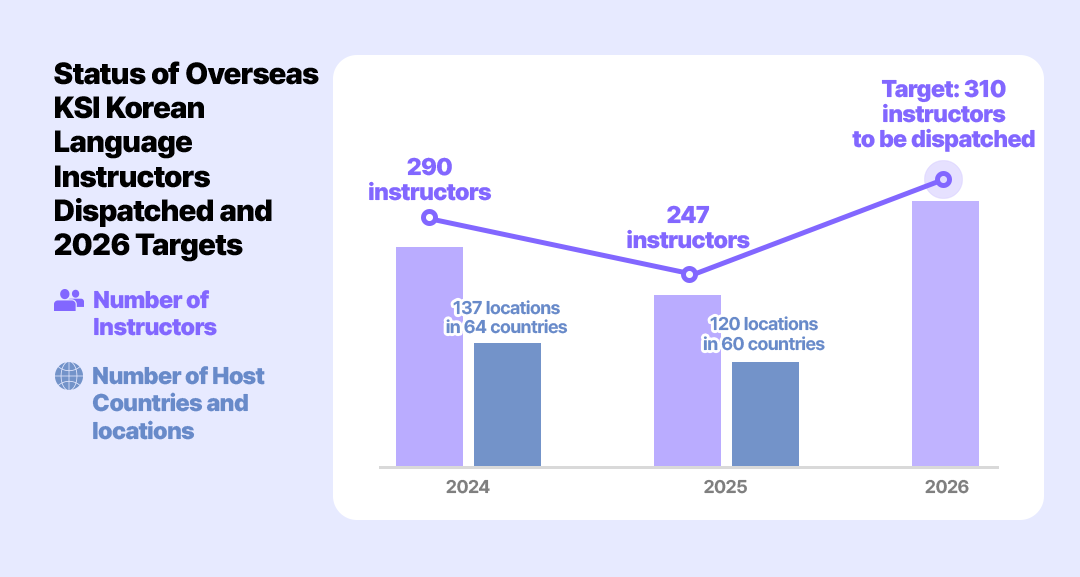
In 2026, the KSIF hopes to continue expanding the number of KSI learners by diversifying its language education methodology, such as by providing digital learning environments. To provide high-quality instruction to support this growth, the number of Korean language instructors dispatched to overseas KSIs must be steadily maintained or expanded.
In 2026, the KSIF hopes to continue expanding the number of KSI learners by diversifying its language education methodology, such as by providing digital learning environments. To provide high-quality instruction to support this growth, the number of Korean language instructors dispatched to overseas KSIs must be steadily maintained or expanded.
◆ Expansion of Sejong Culture Academy Programs at KSIs and Implementation of the Sejong Korean Language Assessment
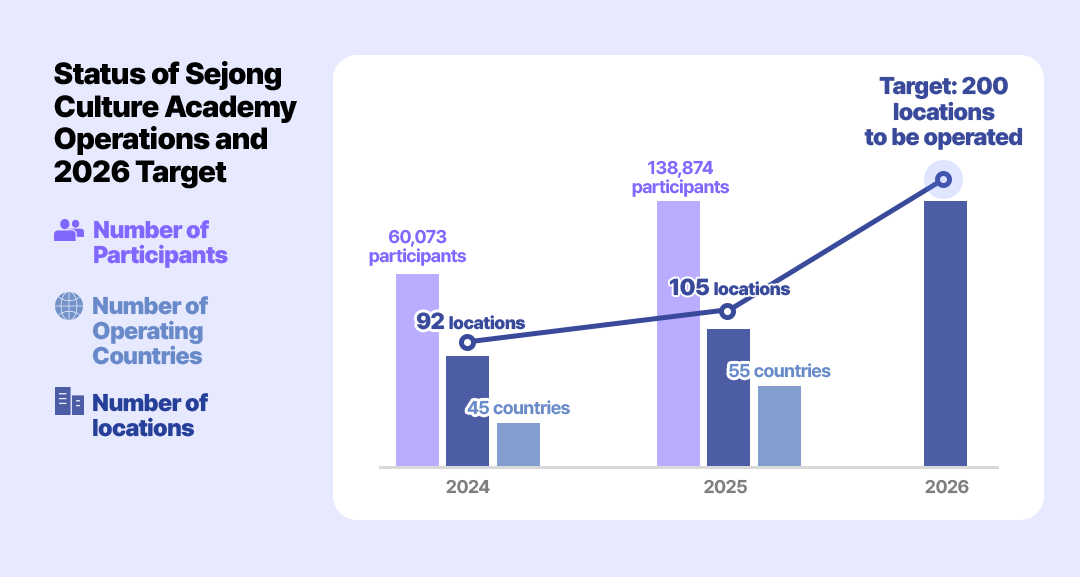
The Sejong Culture Academy, which promotes the spread of Korean culture, will also expand its operations starting in 2026 through a curriculum reorganization and the development of new courses. The program grew from 92 locations in 2024 to 105 locations in 2025, and the goal is to increase participation to 200 locations in 2026, which will further broaden opportunities for people around the world to experience and share Korean culture.
The Sejong Culture Academy, which promotes the spread of Korean culture, will also expand its operations starting in 2026 through a curriculum reorganization and the development of new courses. The program grew from 92 locations in 2024 to 105 locations in 2025, and the goal is to increase participation to 200 locations in 2026, which will further broaden opportunities for people around the world to experience and share Korean culture.
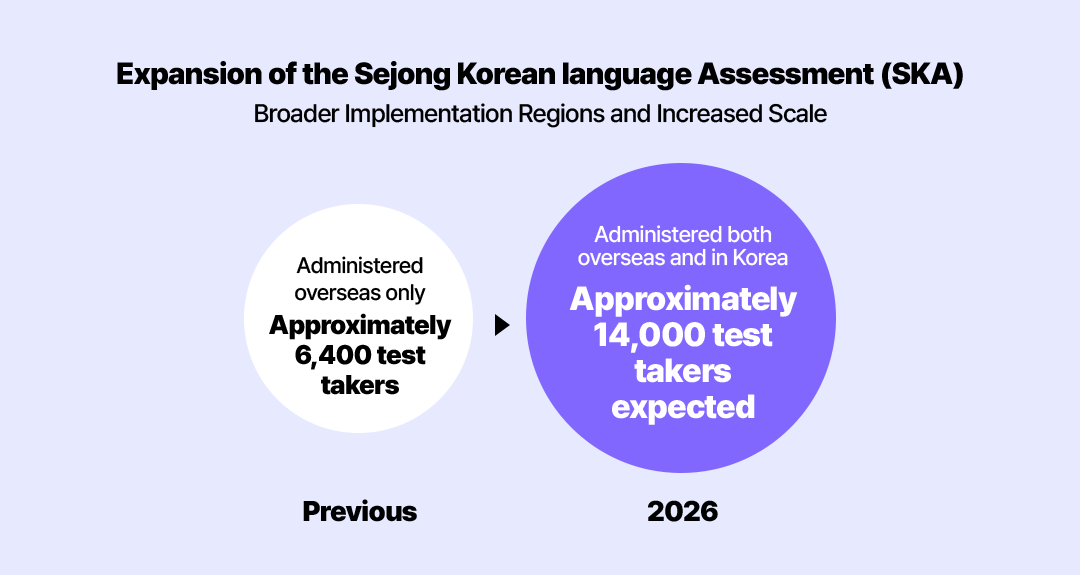
In addition, the Sejong Korean language Assessment (SKA), which objectively measures Korean language proficiency, will expand from overseas only to both overseas and domestic locations in order to meet the growing demand for Korean language assessment both in Korea and abroad. The number of test takers is expected to grow to approximately 14,000.
Through these operational changes, the KSIF hopes to support Korean language learners worldwide so that they can receive standardized, high-quality education wherever they are. Beyond simply expanding in scale, the KSIF will also pursue harmonious growth aligned with local educational environments and further strengthen the sustainability of global Korean language education.