KSIF Publishes Issue No. 3 of KSI Casebook Dream
글쓴이홍보협력팀
태그
작성일 2026-02-20
조회수34

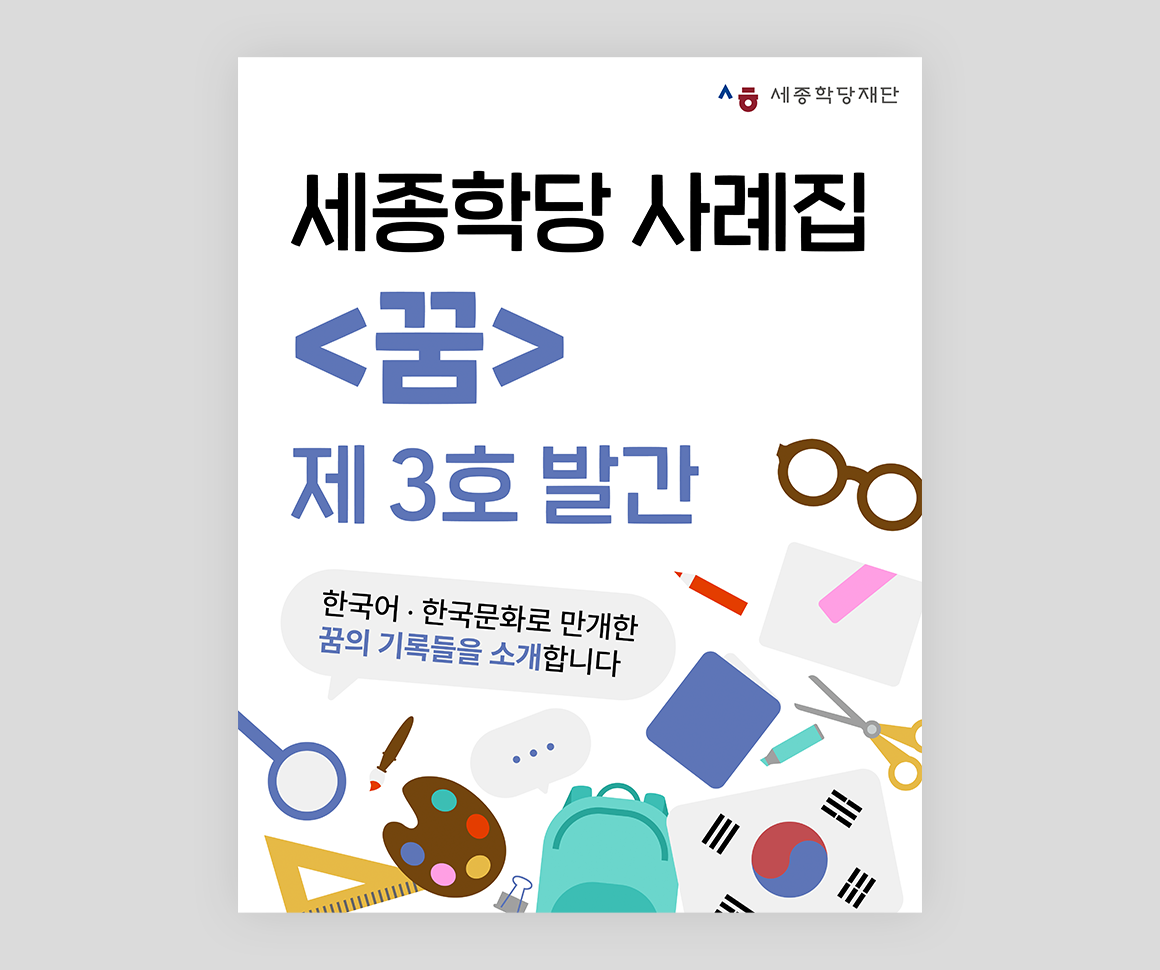
KSIF Publishes Issue No. 3 of KSI Casebook Dream
> Introduces educational innovation cases from seven KSIs under the themes of policy, growth, and role, presented in three parts
> Highlights the establishment of locally tailored education models and the potential for expanding Korean language education within local communities
The King Sejong Institute Foundation (Acting President and Secretary General Choi Hyun-Seung, hereafter referred to as the KSIF) published Issue No. 3 of the KSI Casebook Dream on December 31. This casebook shares the stories of KSIs around the world that have spread the Korean language and Korean culture while growing together with their local communities. The subtitle is “Records of Dreams that Have Blossomed through Korean Language and Culture.”
This issue of Dream vividly captures the changes and possibilities created by KSIs through the operational cases and achievements of seven institutes that have led educational innovation and expanded cultural exchanges in their respective countries. The book is organized into three parts: Part 1 covers meaningful education outcomes that have developed into policy; part 2 highlights moments of growth created together by teachers and learners; and part 3 focuses on the roles of KSIs in connection with local communities.
The seven KSIs featured in the casebook are KSI Binh Duong, Vietnam; KSI Bukhara, Uzbekistan; KSI Quito, Ecuador; KSI Korean Cultural Center, Kazakhstan; KSI Tashkent 1, Uzbekistan; KSI Nairobi, Kenya; and KSI Sofia, Bulgaria. Despite operating in different regions and environments, each institute has continuously provided Korean language and Korean culture education while bringing meaningful change not only to individual career paths of learners but also to their broader local communities.
This issue of Dream vividly captures the changes and possibilities created by KSIs through the operational cases and achievements of seven institutes that have led educational innovation and expanded cultural exchanges in their respective countries. The book is organized into three parts: Part 1 covers meaningful education outcomes that have developed into policy; part 2 highlights moments of growth created together by teachers and learners; and part 3 focuses on the roles of KSIs in connection with local communities.
The seven KSIs featured in the casebook are KSI Binh Duong, Vietnam; KSI Bukhara, Uzbekistan; KSI Quito, Ecuador; KSI Korean Cultural Center, Kazakhstan; KSI Tashkent 1, Uzbekistan; KSI Nairobi, Kenya; and KSI Sofia, Bulgaria. Despite operating in different regions and environments, each institute has continuously provided Korean language and Korean culture education while bringing meaningful change not only to individual career paths of learners but also to their broader local communities.
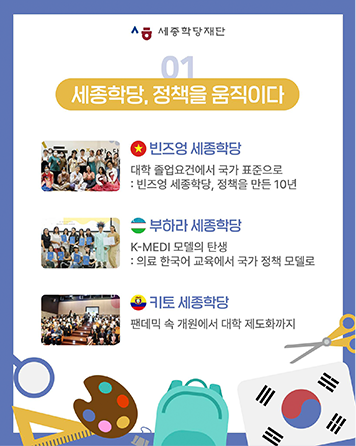
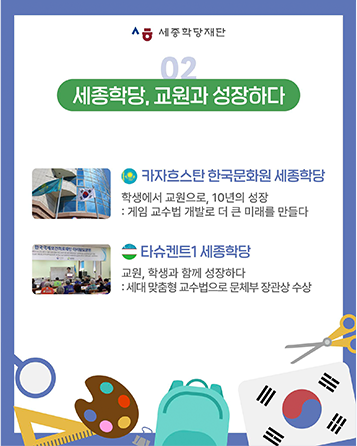
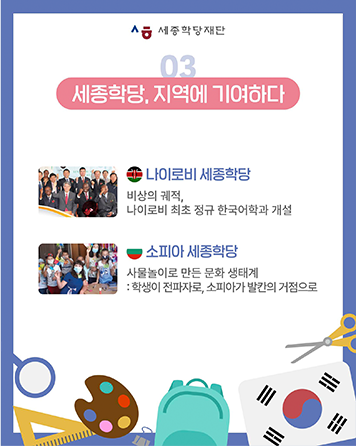
KSIs Featured in Issue No. 3 of the KSI Casebook Dream
The casebook draws particular attention to concrete examples of educational innovation tailored to local educational environments and social needs. KSI Binh Duong, Vietnam, led changes in the local education environment by linking Korean language education with the university academic system and establishing it as a second foreign language requirement for graduation. KSI Bukhara, Uzbekistan, presented a new model for training specialized professionals through the Medical Korean curriculum designed for healthcare workers. KSI Nairobi, Kenya, laid the foundation for Korean language education in Africa by establishing the first regular Korean language department in the country. KSI Quito, Ecuador, has become a hub connecting universities and local communities through language education. And finally, KSI Sofia, Bulgaria, has hosted cultural events and community-linked programs to help Korean language and Korean culture take root as cultural assets within the local community. This issue of Dream demonstrates how each of these institutes has brought about meaningful change, not only in individual learners but also in local communities.
The stories of the seven institutes featured in this casebook are not records of short-term achievements, but of long-term efforts and dedication through which learners, teachers, operating institutions, and local communities have grown together. They also provide concrete examples of how Korean language and culture education can lead not only to individuals fulfilling their dreams but also to broader community transformation. The KSIF will continue to identify and share diverse educational cases and achievements from KSIs in order to further spread the value and significance of Korean language education abroad.
The KSIF has now officially published Issue No. 3 of the KSI Casebook Dream, subtitled “Records of Dreams that Have Blossomed through Korean Language and Culture,” and it is available for download on the KSIF website under News and Promotion > Promotion of KSIF > Promotional Periodicals > Casebook.
The stories of the seven institutes featured in this casebook are not records of short-term achievements, but of long-term efforts and dedication through which learners, teachers, operating institutions, and local communities have grown together. They also provide concrete examples of how Korean language and culture education can lead not only to individuals fulfilling their dreams but also to broader community transformation. The KSIF will continue to identify and share diverse educational cases and achievements from KSIs in order to further spread the value and significance of Korean language education abroad.
The KSIF has now officially published Issue No. 3 of the KSI Casebook Dream, subtitled “Records of Dreams that Have Blossomed through Korean Language and Culture,” and it is available for download on the KSIF website under News and Promotion > Promotion of KSIF > Promotional Periodicals > Casebook.