“Connecting with the World Through K-Beauty” Meeting with Lee Jin-su, Team Leader at Amorepacific and K-Beauty Expert Who Served as Judge on Coupang Play’s JUST MAKEUP
글쓴이홍보협력팀
태그
작성일 2026-01-21
조회수95

“Connecting with the World Through K-Beauty”
Meeting with Lee Jin-su, Team Leader at Amorepacific
and K-Beauty Expert Who Served as Judge on
Coupang Play’s JUST MAKEUP
and K-Beauty Expert Who Served as Judge on
Coupang Play’s JUST MAKEUP
Since last year, the KSIF has been working in collaboration with Amorepacific to engage directly with international learners at various sites, including the Sejong Culture Academy, and share the value of K-beauty on the ground. We met with Lee Jinsu, a team leader at Amorepacific who has extensive experience in product development, global content creation, and international cultural exchanges, to hear about his on-site experiences working with the KSI and the current state and future potential of K-beauty from a global perspective.
Q. Hello, Lee Jin-su. Thank you for taking the time to speak with us. To start, could you please introduce yourself to the readers of Monthly Knock Knock and tell us about your current role and responsibilities at Amorepacific?
A. Hello. My name is Lee Jin-su, and I’m the team leader of the Makeup Pro Team and a makeup master at Amorepacific. I am currently in charge of the HERA brand, and I work closely with the Brand Manager Team not only on product development but also on the production of content such as advertising and detailed product page shoots.
In addition, I participate in the representative corporate social responsibility (CSR) activities the company. Through the 2025 Touring K-Arts program hosted by the Ministry of Culture, Sports and Tourism and the Korea Foundation for International Cultural Exchange, I took part in initiatives that support overseas tours of outstanding Korean cultural and arts programs using Korean Cultural Centers and cultural promotion centers as hubs, while spreading K-beauty to audiences around the world. Last year, I personally conducted Sejong Culture Academy classes in collaboration with the KSIF, and this year, I supported junior makeup artists in going into Sejong Culture Academy classrooms and engaging directly with international learners.
Beyond this, I carry out various other activities related to makeup and I’m contributing to the development of new talent by helping to run the Makeup Artist Training Program for young people aspiring to become makeup artists.
In addition, I participate in the representative corporate social responsibility (CSR) activities the company. Through the 2025 Touring K-Arts program hosted by the Ministry of Culture, Sports and Tourism and the Korea Foundation for International Cultural Exchange, I took part in initiatives that support overseas tours of outstanding Korean cultural and arts programs using Korean Cultural Centers and cultural promotion centers as hubs, while spreading K-beauty to audiences around the world. Last year, I personally conducted Sejong Culture Academy classes in collaboration with the KSIF, and this year, I supported junior makeup artists in going into Sejong Culture Academy classrooms and engaging directly with international learners.
Beyond this, I carry out various other activities related to makeup and I’m contributing to the development of new talent by helping to run the Makeup Artist Training Program for young people aspiring to become makeup artists.

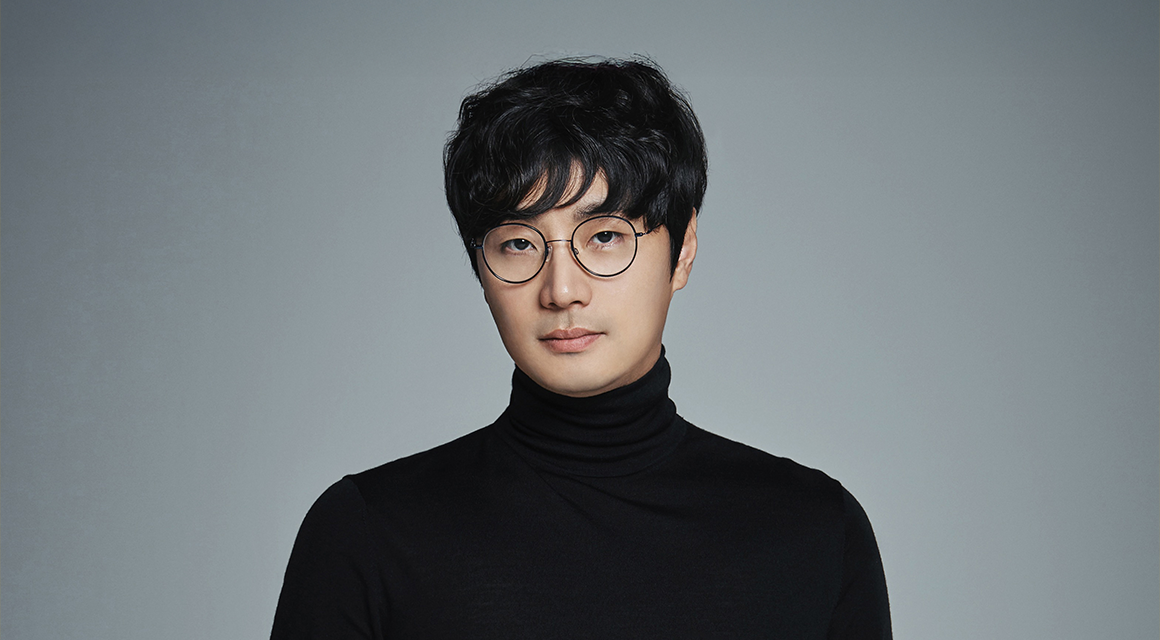
Lee Jin-su attending the production presentation
for Coupang Play’s JUST MAKEUP
for Coupang Play’s JUST MAKEUP
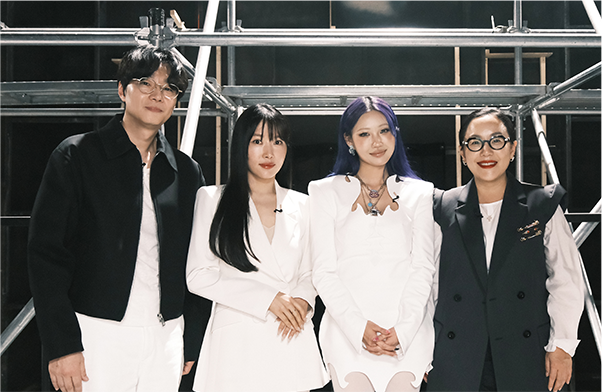
The four judges of JUST MAKEUP
(from left: Lee Jin-su, Seo Ok, Risabae, Jung Saem-mool)
(from left: Lee Jin-su, Seo Ok, Risabae, Jung Saem-mool)
Q. You recently participated as a judge on Coupang Play"s makeup artist survival program JUST MAKEUP. What was the most interesting moment for you during the show? Also, as both an expert and a team leader at a global brand, what criteria did you consider most important when evaluating an artists’ work?
A. Although I am a makeup artist, I’m also involved in cosmetic planning and development, so I paid the closest attention to how the contestants translated characteristics of the products such as color and texture into their makeup looks. Next, I focused on what they initially planned when creating their work and whether those intentions were ultimately reflected with a high level of completeness in the final result.
During the judging process, the second mission was the most interesting for me. It was the only one conducted using a blind evaluation system, where we evaluated the final results without knowing which contestant created the work and without watching the makeup process itself. It was my first experience with such a format, and it led me to assess the outcomes in a very objective way. The mission was structured as a one-on-one battle where we had to choose one of two results, so I made a conscious effort to analyze the works more closely and not miss any details.
Out of the 60 participants, the contestants who were selected for the TOP 10 were all exceptionally skilled. There were many impressive moments when they expressed their individual creativity. In particular, the mission inspired by the mermaid from actor Cha In-pyo’s full-length novel Mermaid Hunt showcased artistic aspects of makeup that are not commonly seen. Seeing them visualize and reinterpret text through their own unique makeup styles was especially striking.
During the judging process, the second mission was the most interesting for me. It was the only one conducted using a blind evaluation system, where we evaluated the final results without knowing which contestant created the work and without watching the makeup process itself. It was my first experience with such a format, and it led me to assess the outcomes in a very objective way. The mission was structured as a one-on-one battle where we had to choose one of two results, so I made a conscious effort to analyze the works more closely and not miss any details.
Out of the 60 participants, the contestants who were selected for the TOP 10 were all exceptionally skilled. There were many impressive moments when they expressed their individual creativity. In particular, the mission inspired by the mermaid from actor Cha In-pyo’s full-length novel Mermaid Hunt showcased artistic aspects of makeup that are not commonly seen. Seeing them visualize and reinterpret text through their own unique makeup styles was especially striking.
Q. Since signing an MOU with the KSIF in 2024, Amorepacific has participated in various KSIF programs, including the Sejong Culture Academy, the World Korean Educators Conference, and the KSI Outstanding Learners’ Invitational Training. Compared to Amorepacific’s previous overseas K-beauty collaborations, were there any aspects of your work with the KSIF that felt particularly new or especially meaningful?
A. There are many KSIs around the world, and I found it quite interesting to see how each institute has its own distinct characteristics. From the overall systems to the directors, teachers, and other staff members, and even the learners themselves, each country revealed its own unique traits.
That said, everyone shared the same level of passion for K-beauty, and the classes were prepared in a way that allowed them to flow naturally so they didn’t feel rigid. The learners showed tremendous enthusiasm by continuously asking questions and actively participating, even though their Korean was not yet fluent. Being able to present HERA products, which represent Korea, to such engaged audiences was also very meaningful to me.
Through the classes, I had the opportunity to interact closely with many international learners and meet people from diverse racial and cultural backgrounds. Learning about their makeup methods and habits was particularly valuable. Just as KSI learners were discovering and learning about K-beauty, the instructors—including myself—were also able to learn about beauty cultures from various countries. It was truly an on-site experience where we gained and experienced even more than we expected.
That said, everyone shared the same level of passion for K-beauty, and the classes were prepared in a way that allowed them to flow naturally so they didn’t feel rigid. The learners showed tremendous enthusiasm by continuously asking questions and actively participating, even though their Korean was not yet fluent. Being able to present HERA products, which represent Korea, to such engaged audiences was also very meaningful to me.
Through the classes, I had the opportunity to interact closely with many international learners and meet people from diverse racial and cultural backgrounds. Learning about their makeup methods and habits was particularly valuable. Just as KSI learners were discovering and learning about K-beauty, the instructors—including myself—were also able to learn about beauty cultures from various countries. It was truly an on-site experience where we gained and experienced even more than we expected.
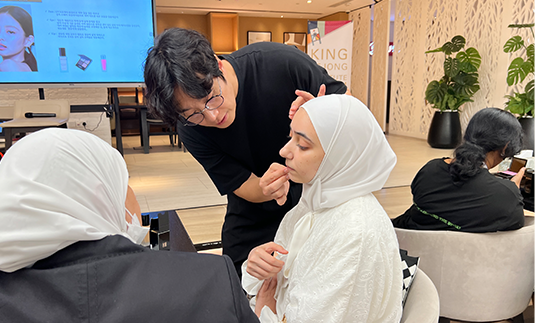
Lee Jin-su giving a makeup demonstration during a
K-beauty course at the 2024 Sejong Culture Academy
at KSI Dubai
K-beauty course at the 2024 Sejong Culture Academy
at KSI Dubai
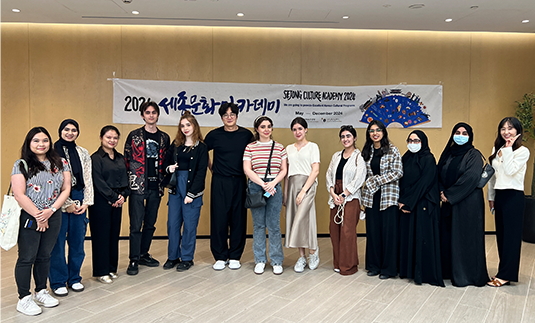
Commemorative photo taken with participants of the
K-beauty course
K-beauty course
Q. Last year, you made personal visits to KSIs overseas and served as a cultural expert in the K-beauty field for the Sejong Culture Academy. How did K-beauty resonate with local audiences on site? Were there any particularly memorable moments or episodes you would like to share?
A. In 2024, I conducted Sejong Culture Academy classes at KSI Dubai. I joined the program because I wanted to experience countries and places that were unfamiliar to me, and as expected, Dubai was a truly multicultural society very different from KoreMakeup styles there also differed significantly from K-beauty, which made the classes especially engaging. Many learners mentioned that the beauty routines and makeup techniques I demonstrated were different from what they usually practiced, and given the popularity of K-dramas and K-pop, I also got many questions about the makeup of Korean actors and idols.
One particularly memorable moment was receiving a gift of Dubai chocolate from an Indian learner who loved makeup. They told me it was so hard to find that they had to order it online. Even though the class period was short, I was very grateful for such kindness. I also remember a learner from Sri Lanka who attended the class with her mother. Her mother runs a cosmetics business, and maybe because of that she even asked me for consulting. After the class ended and I returned to Korea, she continued the conversation by sending me DMs on Instagram. She was truly passionate, and that left a strong impression on me.
One particularly memorable moment was receiving a gift of Dubai chocolate from an Indian learner who loved makeup. They told me it was so hard to find that they had to order it online. Even though the class period was short, I was very grateful for such kindness. I also remember a learner from Sri Lanka who attended the class with her mother. Her mother runs a cosmetics business, and maybe because of that she even asked me for consulting. After the class ended and I returned to Korea, she continued the conversation by sending me DMs on Instagram. She was truly passionate, and that left a strong impression on me.
Q. When you actually met international learners, what aspects of K-beauty did you find they were most interested in? Compared to local makeup cultures, what do you see as K-beauty’s distinctive strengths?
A. One surprising thing I noticed on site was that international learners were familiar with even small Korean cosmetic brands. Some of the brands they mentioned were ones I wasn’t very familiar with myself. These days, many smaller brands are focusing on skincare and face makeup, and even international learners seem to have recognized this trend. They were using a wide range of K-beauty products to create a healthy glow and smooth skin texture. This showed that even products that are not famous or expensive can earn trust when they offer solid technical quality. This is a major strength of K-beauty.
One of K-beauty’s defining characteristics is the speed at which trends change. For example, semi-matte makeup was popular last year, but this year the trend has shifted to glow makeup. Brands respond quickly by planning and launching new products, and as a result, new and diverse products are continuously entering the market. This allows global consumers to experience K-beauty at reasonable prices with a wide range of choices. Consumers often try products casually and repurchase the ones they like.
Another area where K-beauty excels is lowering barriers to entry through content. Consumers can easily access information through K-beauty tutorials, shopping content, and similar mediFurthermore, these are well connected to our TikTok Shop and global e-commerce channels, which creates stronger engagement. For consumers, the ability to easily find products suited to their skin type, preferred colors, and lifestyle is a major advantage. With its broad and well-segmented product range and its agility in responding to trends, K-beauty is inevitably appealing.
One of K-beauty’s defining characteristics is the speed at which trends change. For example, semi-matte makeup was popular last year, but this year the trend has shifted to glow makeup. Brands respond quickly by planning and launching new products, and as a result, new and diverse products are continuously entering the market. This allows global consumers to experience K-beauty at reasonable prices with a wide range of choices. Consumers often try products casually and repurchase the ones they like.
Another area where K-beauty excels is lowering barriers to entry through content. Consumers can easily access information through K-beauty tutorials, shopping content, and similar mediFurthermore, these are well connected to our TikTok Shop and global e-commerce channels, which creates stronger engagement. For consumers, the ability to easily find products suited to their skin type, preferred colors, and lifestyle is a major advantage. With its broad and well-segmented product range and its agility in responding to trends, K-beauty is inevitably appealing.
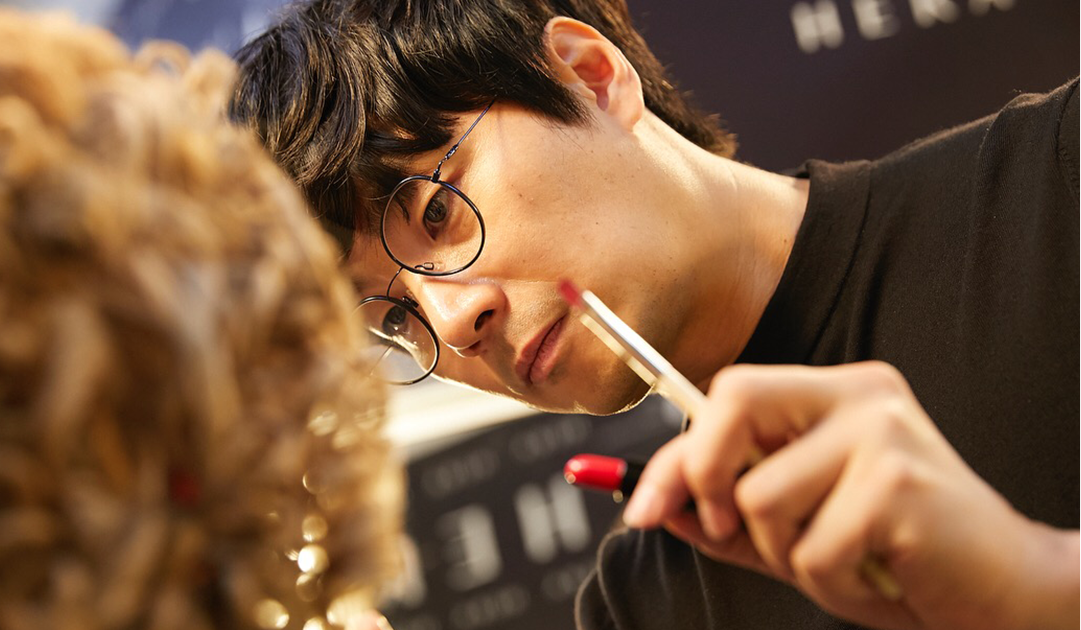
Q. Finally, what efforts do you think are needed to ensure ongoing love for K-beauty around the world, beyond just a temporary trend?
A. For K-beauty to succeed over the long term, it’s not enough to simply lead trends; the product quality, safety, and efficacy must also be clearly proven. These days, what the MZ generation values most is “authenticity.” For example, when promoting a product, there is a clear difference in authenticity between real models and AI. No matter how convenient AI technology may be, nothing resonates with consumers as strongly as authenticity. To earn lasting love, brands need to create many moments where the promotional message aligns with the actual experience consumers have of purchasing and using the product.
It is also essential to understand the characteristics of each country. Cosmetics contain a wide range of ingredients, and even if a certain ingredient is approved for distribution in Korea, it may not be permitted in other countries due to local regulations. To effectively introduce our creations, it’s important to first understand the countries and markets we are targeting. I’ve felt this strongly while conducting makeup classes in different countries. Understanding how local people apply makeup and what habits they have makes a huge difference in teaching.
If you visit Sephora, a comprehensive cosmetics retailer in France, you’ll see that many brands offer over 100 shades for the skin. This reflects consideration for diverse ethnic backgrounds. Likewise, for K-beauty to appeal more strongly in the global market, it needs to approach consumers with a spectrum of options tailored to local needs. Above all, you need a deep understanding of whether products will blend naturally into local usage, as well as knowledge of local demand and preferences.
Lastly, I think it’s important to continue building our own culture, like creating a “persona,” or identity. Until now, K-beauty has shaped the image, values, and lifestyle that come to mind when people think of “Seoul women.” By expanding beyond the level of what makeup is used or which products are applied and developing a broader cultural dimension, we can share K-beauty with the world in an even more positive way.
It is also essential to understand the characteristics of each country. Cosmetics contain a wide range of ingredients, and even if a certain ingredient is approved for distribution in Korea, it may not be permitted in other countries due to local regulations. To effectively introduce our creations, it’s important to first understand the countries and markets we are targeting. I’ve felt this strongly while conducting makeup classes in different countries. Understanding how local people apply makeup and what habits they have makes a huge difference in teaching.
If you visit Sephora, a comprehensive cosmetics retailer in France, you’ll see that many brands offer over 100 shades for the skin. This reflects consideration for diverse ethnic backgrounds. Likewise, for K-beauty to appeal more strongly in the global market, it needs to approach consumers with a spectrum of options tailored to local needs. Above all, you need a deep understanding of whether products will blend naturally into local usage, as well as knowledge of local demand and preferences.
Lastly, I think it’s important to continue building our own culture, like creating a “persona,” or identity. Until now, K-beauty has shaped the image, values, and lifestyle that come to mind when people think of “Seoul women.” By expanding beyond the level of what makeup is used or which products are applied and developing a broader cultural dimension, we can share K-beauty with the world in an even more positive way.