
“Taekwondo Is a Language That Connects Hearts.” An Interview with Kim Hwan-soo, Instructor at the Taekwondo Promotion Foundation
글쓴이홍보협력팀
태그
작성일 2025-11-21
조회수38

“Taekwondo Is a Language
That Connects Hearts.”
An Interview with Kim Hwan-soo,
Instructor at the Taekwondo
Promotion Foundation
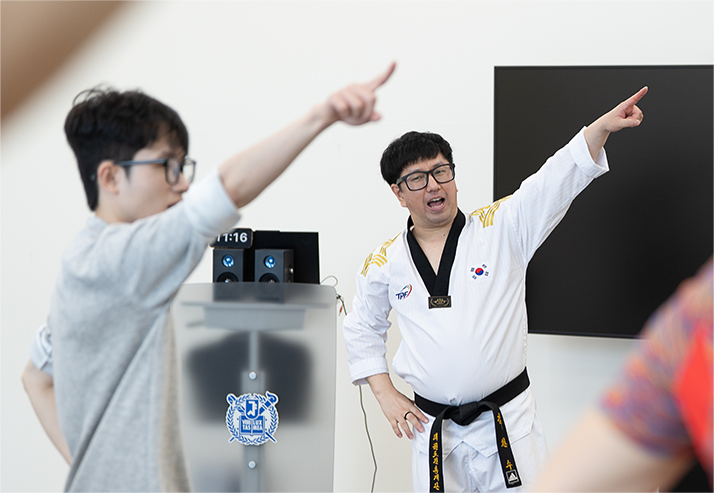
On October 15 and 16, during the KSIF’s 2025 KSI Outstanding Learners Invitation Program, the Taekwondo Cultural Experience class was held for outstanding learners from KSIs around the world. We met with Instructor Kim Hwan-soo, who led the class, to hear about the lively atmosphere on site, the educational value of the taekwondo experience, and the message he wanted to share with learners worldwide.
Hello, Instructor Kim Hwan-soo. Thank you for taking the time to speak with us. To begin, could you please introduce yourself to the readers of Monthly Knock Knock?
Hello. My name is Kim Hwan-soo, and I work in the Content Promotion Department at the Taekwondo Promotion Foundation. I hold a seventh-degree black belt in taekwondo and previously traveled to many countries as a member of the Korean national demonstration team to promote taekwondo around the world. I currently work at Taekwondowon in Muju, Jeollabuk-do, where I design and run programs that allow both domestic and international visitors to easily and enjoyably experience taekwondo.
You led the Taekwondo Cultural Experience class for participants of the 2025 KSI Outstanding Learners Invitation Program on October 15 and 16. Could you tell us more about how the class was structured?
The Taekwondo Cultural Experience class lasted about three hours and was divided into three stages, allowing participants to gradually experience the essence and charm of taekwondo. In the first session, participants learned taekwondo’s basic stances and hand and foot techniques, and were also introduced to elements of Korean etiquette and traditional forms of greeting. The second session involved breaking techniques, where participants used the kicks they learned earlier to challenge themselves and experience a sense of accomplishment by overcoming their limits. Finally, in the third session, participants learned “taekwon aerobics,” a combination of taekwondo movements and music, which gave them the opportunity to move freely and enjoy themselves while experiencing the rhythm and spirit of taekwondo.
While leading the class, my main focus was ensuring that even beginners could participate comfortably and enjoy the experience, so I made sure to adjust the level of difficulty accordingly and maintain an engaging atmosphere. The core goal of this class was not simply technical training, but helping participants experience taekwondo as a form of culture. I wanted them to not only learn taekwondo movements but also feel the Korean values of respect and discipline that they embody.
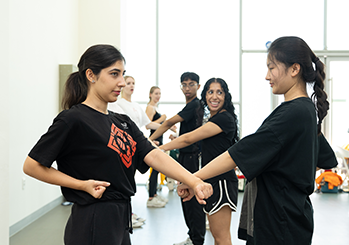
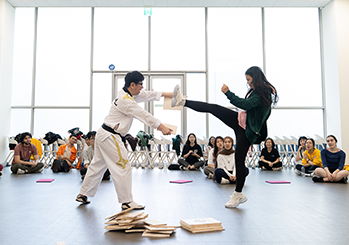
Learners Invitation Program
(From left) Participants practicing basic stances and one participant attempting a breaking technique
While preparing for the class, what did you focus on most to effectively convey the spirit and cultural values of Korea embodied in taekwondo to the international participants?
Korea has long been known for its courtesy, often referred to as “the nation of propriety in the East.” Taekwondo fully reflects this Korean spirit. The foundation and essence of taekwondo lie in etiquette, which begins with greetings, mutual respect, and consideration for others. Therefore, while preparing for this class, I focused on helping the foreign participants experience these values naturally. At the beginning and end of each session, participants greeted one another, and during the activities, they worked in pairs or teams to learn through cooperation. In doing so, they not only practiced taekwondo techniques but also experienced the spirit of taekwondo—respecting one another and growing together.
I also wanted to show first-time participants that taekwondo is a sport where heart is more important than strength. So I tried to create a more meaningful class by incorporating the values of greeting, consideration, and teamwork into the lesson plan. Ultimately, the goal was to help participants realize that the true essence of taekwondo lies not in the power to defeat others, but in the heart that respects others.
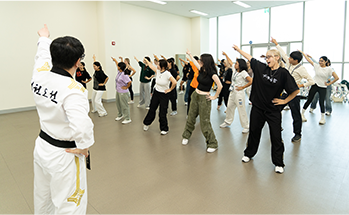 Participants following the taekwon aerobics
movements of Instructor Kim Hwan-soo
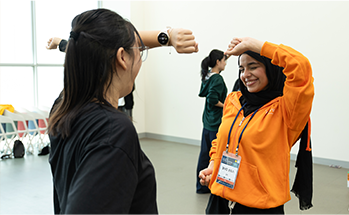 Participants practicing the movements
they learned
How was the overall atmosphere of the class, and how did the participants respond? Were there any particularly memorable or enthusiastic moments?
Many of the foreign participants joined the class out of simple curiosity about taekwondo. However, as the session progressed, I could see their eyes light up with genuine interest. Many said, “It was much more enjoyable and exciting than I expected,” and everyone participated with smiles and enthusiasm, making the class a joyful experience for all.
I especially remember the final taekwon aerobics session, where participants freely expressed their energy and personality to the rhythm of the music. At first, they were cautious and shy learning the unfamiliar moves, but gradually, they began to smile naturally, shout out the kihap (spirited yell), and move in unison. Toward the end, the participants were divided into teams to practice their routines, and then we had a friendly group showcase. The moment the music started, everyone became one, moving together on stage like they were dancing, and when other teams performed, they responded with loud applause and cheers. Watching them, I was reminded once again that culture, like language, can be a powerful tool for connecting people.
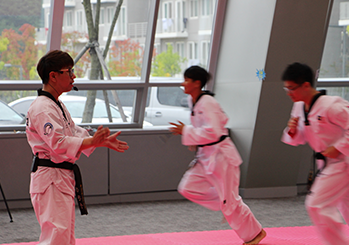
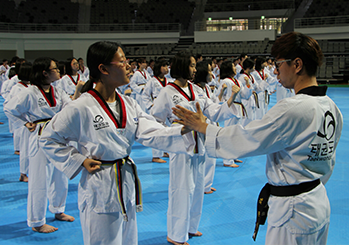
Although the time was short, was there a particular moment that was especially memorable or rewarding while teaching KSI learners from various countries? Also, was there a moment when you felt that the participants had gained a deeper understanding of Korean culture through taekwondo?
I especially remember the breaking session, which was the second part of the class. At first, many participants found the kicking techniques difficult, but when they kept trying and finally succeeded in breaking the board, I could feel their joy. Even though the class was short, I still vividly recall the moment when the participants who had never practiced taekwondo before successfully broke the boards using the kicks they learned during the session and cheered and celebrated with their friends.
Through the Taekwondo Cultural Experience, I wanted to convey the message, “Even when something seems difficult, if you keep trying, you can succeed.” I believe the participants genuinely understood and related to that message, which made this class especially meaningful for me. Whenever I meet people like these outstanding KSI learners, people looking to experience and enjoy Korea through its culture, I feel really fulfilled.
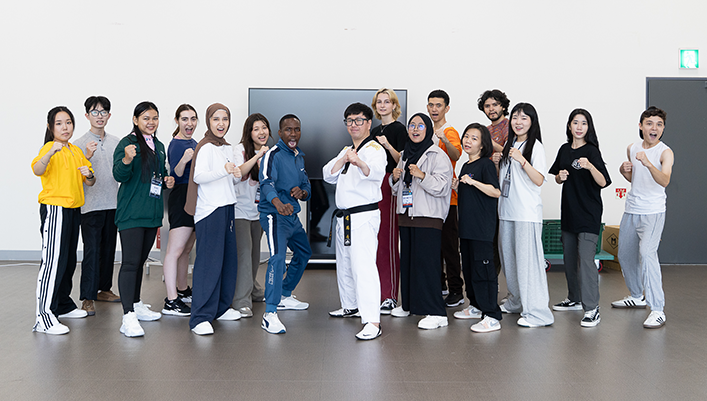 Instructor Kim Hwan-soo (center) with KSI foreign learners who participated
in the Taekwondo Cultural Experience class
Lastly, could you share a message or hope you would like to convey to KSI learners around the world through taekwondo?
I believe taekwondo is not merely a martial art or sport, but a language that connects hearts. Even if we speak different languages, the courtesy we show in greetings and the passion we expresse in challenges are universal values that everyone can relate to. The message I want to share with KSI learners around the world is this: while learning about Korean culture through taekwondo, also share your own culture and heart with others. I believe the true spirit of taekwondo is realized in the process of understanding and respecting one another. I look forward to the day we meet again at Taekwondowon to build deeper connections and friendships.
